The Cinematheque is showing a retrospective of Kamila Andini’s feature films and short films, so far.
Empathy, intuition. These are the keywords to unlock the code that takes us to Kamila Andini’s film-making pathway.
She says it herself: “When the stories find me, and they are not complete but come to me organically as I work.” The way Kamila told it on Saturday 8th February, 2025, at the Cinematheque, at the Gallery of Modern Art ( GoMA) in Brisbane, Queensland, Australia, she clearly works in an ultra-feminine way and puts her trust in her own empathetic nature, and also in the way of womanhood. These meaningful stories of the lives of women and children, in a traditional society, reveal themselves to her.
Indonesia is extremely 21st Century/modern, and yet this booming and rapidly modernising economy, exists alongside the old traditional ways of the land, which still have a strong influence.
I thought of the male dominated Hollywood way of thinking, where they want a “pitch” that tells them everything, and they want it fast! I mentioned to Kamila ( Dini, as I call her), that her way of working would not go over too well in Hollywood mainstream scene. She laughed and knew it was true. Now is a good time to mention that I have known Kamila Andini since she was in her early teens, as she is the daughter of my friend Garin Nugroho, a highly respected Indonesian film-maker, from the era, back before “Reformasi, 1998), who made ‘risky business’ films, during the time of the military dictatorship of President Suharto. However, I must mention that Garin Nugroho has never been more active in film and theatre than right now!
At the GoMA Cinematheque last weekend, Dini spoke of her teenage days when she was the only one at school who had a father who was a film director. When her friends asked questions about film-making and she didn’t have all the answers, she realised that she had a unique opportunity, and made it her business to become informed about film-making in Indonesia, during those days. When I first met her she was working after high school days, at her father’s downtown Jakarta, Film Studios…and here she learned the technical things, and maybe absorbed the lore and magic of The Cinema.The precious gift of love for cinema infected her!
It is clear to me after observing her progress, her professional development, and her personal life, that she has a strong talent. Here is a young woman who has within her, a talent for visualising a concept and then creating very moving cinematic stories, of the people of her land and water, as they say in Indonesia. Dini’s first feature film, ‘The Mirror Never Lies”, was about “the Water” side of Indonesian life – about the Sea Gypsies, or Bajau people. They are a very small number within the total Indonesian population of 280 million.
However, Dini has made a completely personal cinematic journey. After all, she is a young woman. When she made her first film she was still ‘single’ and as she told me about it one day in Jakarta, she was asking if she should submit it to the Asia Pacific Screen Awards in Australia… This was “The Mirror Never Lies”. After I had the opportunity to see it, I advised, “Yes, yes, yes, because you could quite likely win a major award with this gorgeous film!” And sure enough, that is what happened. The award for Best Youth Feature Film in 2012 went to “Laut Bercermin”/ “The Mirror Never Lies”, which was a very unique piece of work, shot on location in Wakatobi, South Eastern Suluwesi, in a rare and never before seen on film location – a village of the Sea Gypsies, or Bajao people… who live a life completely from the sea, in the sea, over the sea, in the waters of Indonesia, the Philippines, and Thailand. These people have deep knowledge of the sea, extraordinary abilities relating to the sea, and bamboo houses on stilts that are built on coral reefs, which are covered by tropical waters. The film is extremely valuable as an anthropological record of a fast disappearing way of life.
By now Kamila Andini has made four feature films and several short films too.
She married another film-maker, Ifa Isfansyah in April, 2012, and now they are the parents of two daughters. Dini told the audience at the Brisbane Cinematheque, about how after the birth of their first daughter, she spent around nine months, at home loving every minute of being a mother . Then an opportunity came up for her, to work on a short film and after discussing with Ifa, her husband, she took up the chance and found herself back on set making another film. She observed herself closely, and was totally surprised to see that she was over-joyed to be in the director’s chair again. She loved this film-making life, as much as she loved the life of Motherhood.
Since then she has successfully combined her two lives, film writer/director, and mother of two daughters. Her husband Ifa Isfansyah has mostly taken the role of producer, but during their exciting opportunity to make a Series for Netflix Asia, “Gadis Kretek” (“Cigarette Girl”) they both directed during the five episode series which was a huge success in Indonesia. This was an adaptation from a novel, which Ifa Isfansyah had dreamed of filming during the years since its publication 2011.
Returning to my opening remarks about Dini’s empathy and intuition… these are 100% the motivation and feminine power that enables her to create her films, both the feature films and the short films. As a young woman and mother, of Javanese descent and upbringing, and brought up in the culture of Java, she inherited a great depth of cultural wisdom which she combined with her life as a modern young woman growing up in a nation traversing massive social change, which particularly changed the lives of women. With these two different but rich Indonesian experiences which she lived through in her lifetime, Kamila Andini arrived at adulthood with a powerful awareness, understanding and vision. She used these gifts that came to her because of her lucky time to be born, and being lucky enough to be the daughter of Indonesia’s most well known film-maker of the times that included the dramatic period of Reformasi. (Reformation/Revolution). With her innate gift of visualising a film which can tell a story of young women of her generation, she makes films which speak of the complex changing times she lived through, along with her own entire generation of young women.
Indonesia has undergone immense and rapid social and political change during Kamila’s lifetime, and this has brought a huge store of “issues” to be faced by contemporary women of these times… Kamila’s times.
Kamila told the audience in the Cinematheque about the way that her subjects for a new film find her, come to her from “out there” in the society around her, and about how she then begins receiving and writing the story – as if it were channeling its way to her from within her own Society. It was made clear how her sensitive films about women and children and their experiences in contemporary times, are so true, so real, so empathetic! Yes, the source of Kamila’s inspiring screenplay concepts, is the richness of her homeland, Java, Indonesia. Empathy is her connection to all the delicate stories of the past and present and even the future is not out of reach for her. In traditional cultures, the heroes in the history books are all men, however Kamila knows that the women and children are heroic too, and that their experiences are every bit as important as the exploits of the more obvious male heroes that Indonesian children learn about.
Having already had considerable success in Asian Film Festivals, and also a breakthrough at the Toronto Film Festival, with “Sekala Niskala”, Kamila now has support from the Hubert Bals Foundation to make her next film, which I am confident will be another ‘treasure’ of Asian Cinema, and not to be missed under any circumstances!
Copyright, Article and photo of Ms Kamila Andini, February, 2025, Cynthia Webb
Wins for April, All We Imagine as Light, The Missing, Boong, No Other Land
Ia Sukhitashvili for April
Gold Coast, Australia: Dea Kulumbegashvili’s April has had a stunning double win at the 17th Asia Pacific Screen Awards (APSA). The gripping cinematic drama took home the APSA for Best Film, with the APSA for Best Performance going to Ia Sukhitashvili for her phenomenal portrayal of a Georgian Ob Gyn providing women’s health services.
Ia Sukhitashvili was at the prestigious APSA ceremony in Australia on Saturday night to accept both awards. The event was held at The Langham, Gold Coast, on the traditional land of the Kombumerri families of the Yugambeh language region.
The international film event, held in strategic partnership with Jewel Private Residences, honours the cinematic excellence of 78 countries and areas of the Asia Pacific, and films that best reflect their cultural origins and the diversity of the vast region.
April is the second feature for Dea Kulumbegashvili, who was a recipient of an MPA APSA Academy Film Fund grant for early development of the film, which is produced by David Zerat, Ilan Amouyal, Luca Guadagnino, Francesco Melzi d’Eril, Archil Gelovani, Gabriele Moratti and Alexandra Rossi.
In a particularly strong year for women’s stories, the International Jury awarded its Jury Grand Prize toAll We Imagine as Light, the highly acclaimed second feature from India’s Payal Kapadia. The Prize, selected at the discretion of the jury, was awarded to this story of two working-class nurses amidst the nocturnal landscape of Mumbai.
Best Youth Film also goes to a female director from India, Lakshmipriya Devi, and producers Alan McAlex, Vikesh Bhutani, Ritesh Sidhwani, Farhan Akhtar and Shujaat Saudagar, for Boong, the heartwarming story of a young boy in remote Manipur who goes on an adventure to reunite his family.
The APSA for Best Animated Film has been won byThe Missing(Iti Mapukpukaw, Philippines). The film, a groundbreaking adult sci-fi animation, is a personal tale from director Carl Joseph Papa who accepted the award on the night.
Best Documentary Film at the 17th APSA has been won by No Other Land (Palestine, Norway), directed as a group by Palestinian and Israeli filmmakers Basel Adra, Rachel Szor, Hamdan Ballal and Yuval Abraham, and giving their perspective on the violence and destruction surrounding them. The film is currently in theatrical release in Australia and the UK.
Georgian director Tato Kotetishvili was awarded the APSA for Best Director for his debut feature, the dark comedy Holy Electricity (Georgia, Netherlands), which sees cousins selling neon crucifixes door to door in Tbilisi, in a cinematic ode to the city and its people.
From Türkiye, the tense legal thrillerHesitation Wound (Tereddüt Çizgisi, Türkiye, Spain, Romania, France) has seen writer/director Selman Nacar win the APSA for Best Screenplay for his second feature, the story of a fiercely intelligent female defence attorney facing mounting professional, personal and moral challenges.
Winning Best Cinematography is French cinematographer Michaël Capron (Blue Is the Warmest Colour) for Mongrel, the contemplative Taiwanese drama that puts the unseen life of an undocumented Thai carer in the spotlight.
New Zealand’s prolific producer, actor and APSA winner Cliff Curtis is the recipient of the prestigious FIAPF Award, determined by APSA founding partner FIAPF–International Federation of Film Producers Associations, and awarded for outstanding achievement in film in the Asia Pacific region.
FIAPF President Luis Alberto Scalella said, “Cliff Curtis’ impressive career has been built on a strong commitment to screen storytelling that truly speaks to all audiences, both within the New Zealand screen industry, and internationally. His support for emerging Indigenous filmmakers from New Zealand has enabled the production of many compelling films, and he is a producer known for bold and demanding choices in the stories he chooses to tell.”
FIAPF Award winner Cliff Curtis said “A good meal feeds the body for that day a great story sustains the hearts and minds of generations past, present and future. My heart is filled with gratitude for the privilege of working alongside the artists, collaborators and mentors whose works have made this award possible. Thank you to FIAPF and to APSA for recognising Asia Pacific voices and bringing us together to share our stories of humanity, courage and purpose.”
The three previously announced winners were all in attendance in Australia to accept their awards: Neo Sora received APSA’s Young Cinema Award in partnership with NETPAC for Happyend and Nepali director Min Bahadur Bham’s accepted the Cultural Diversity Award forShambhala. Georgia’s Data Chachua accepted his APSA for Best New Performer for Panopticon, a film which also stars APSA Best Performance winner Ia Sukhitashvili.
All three of these awards were presented by the soon-to-launch Top 51 World Filmmakers Club, of which the three winners become members. A dynamic hub for creativity, encouraging innovative collaborations and cultural exchange among global filmmakers, the Top 51 World Filmmakers Club will be located on the 51st level of The Langham, Gold Coast, and will launch in early 2025.
Unprecedentedly, the winners of the 17th edition of APSA have been for films almost exclusively by first- or second-time filmmakers. Amongst some of the winners at the 17th APSA are renowned filmmakers mentoring this next generation, Luca Guadagnino for April and Hou Hsiao-hsien for Mongrel, creating continuity, connection and growth for the region’s cinema. This is one of the aims of APSA – for its established and growing Academy, already comprising many of region’s leading auteurs and emerging talent, to help celebrate and amplify the talented creative voices of a new generation as they share their stories.
The 17th APSA International Jury was headed by President Pen-ek Ratanaruang (Thailand), one of Asia’s leading film directors and screenwriters, alongside Crazy Rich Asians star Chris Pang (Australia), Papua New Guinea and New Zealand producer Kerry Warkia, Korean filmmaker, educator and policymaker Park Kiyong, and Kazakh producer Yuliya Kim.
The APSA Youth, Animation, Documentary International Jury, determining the winners in those three categories, was led by President of Italy’s Udine Far East Film Festival Sabrina Baracetti, joined by Japan and US-based producer Alex C Lo, Indonesian program director Gugi Gumilang and Australian actress Jillian Nguyen.
Also announced during the 17th Asia Pacific Screen Awards Ceremony are the four recipients of the MPA APSA Academy Film Fund grants of US$25,000 wholly supported by the MPA (Motion Picture Association) Asia Pacific.
Following the incredible tenure of Andrew Pike OAM as Chair of the MPA APSA Academy Film Fund Jury, Hong Kong curator Kiki Fung headed the Jury in 2024 and was joined by Indian director Ridham Janve and Singaporean film and TV producer Tan Si En.
The recipients are producer Estelle Fialon for animated documentary Outside Kabul, producer Yulia Evina Bhara and writer/director Makbul Mubarak for Indonesian feature Watch It Burn, cinematographer Robbin Yuchao Feng and director Qiu Jiongjiong for Chinese feature Fuxi: Joy in Four Chapters and producer/writer Aiko Masubuchi with writer/director Neo Sora for youth feature A Trip to Australia.
All APSA nominees, Nominations Councils and Jury members are inducted into the prestigious APSA Academy presided over by Australian screen legend Jack Thompson AM PhD. In 2024 the Academy will total more than 1,650 of the region’s leading filmmakers.
Chair of the Asia Pacific Screen Awards Tracey Vieira said “Tonight we celebrate cinematic stories from 24 countries and areas of Asia Pacific and I congratulate all the winners of the 17th Asia Pacific Screen Awards. As the next generation of filmmakers comes to the fore, with a record-breaking number of emerging filmmakers, the stories on screen represent the most diverse collection of voices ever heard at APSA.
“Through the expertly crafted storytelling of the winners, we are able to explore a more expansive view of the world around us, amplifying the compelling voices, experiences and lives of those otherwise not often seen: nurses, carers, lawyers, women’s health workers and children.
“Thanks to our growing partnerships with AW Jewel, The Langham, the City of Gold Coast, Screen Queensland, the MPA, The Post Lounge, Top 51 World Filmmakers Club and Screen Australia, the future of APSA and the filmmaking it celebrates looks brighter than ever,” she said.
Jewel Private Residences General Manager Yutao Li said “I heartily congratulate the winners of the 17th Asia Pacific Screen Awards. Like APSA, AW Jewel prides itself on celebrating excellence and it has been an incredible experience to welcome these talented filmmakers from all over the region to come together here at Jewel Private Residence and The Langham, Gold Coast. It is an honour to embrace the cultural and geographical diversity of these cinematic stories. Uniting us all, this rich sense of place is echoed in APSA’s 2024 theme of ‘Land’, and the architecture of three Jewel Towers, representing the local land and the gemstones found within. I believe many meaningful connections have been made.”
Gold Coast Mayor Tom Tate said, “Congratulations and well done to all this year’s APSA winners, presented at the Langham here on the Gold Coast. To have such a talented group of international filmmakers gathering here to sharing stories and ideas highlights the Gold Coast’s growing reputation as an international screen location.
CEO of Screen Queensland Jacqui Feeney said, “Screen Queensland is a proud supporter of the Asia Pacific Screen Awards which continue to shine as a platform for cinematic excellence and cultural exchange across our region. We congratulate this year’s winners on their achievements in filmmaking and hope that the connections created here between local and international screen practitioners during the Forum help enrich many films to follow.”
Belinda Lui, President and Managing Director Asia Pacific, Motion Picture Association, said “Our goal is to support filmmakers in the early stages of script development and to provide the MPA-APSA endorsement to attract further interest in their projects. Over the past 15 years, we have supported 60 feature films, documentaries, and animation titles. Many have achieved success at festivals and awards, with some winning Academy, Emmy, and APSA Awards. The MPA APSA Academy Film Fund is now recognized as a valued and respected source of support for Asia-Pacific filmmakers with compelling and original stories. We look forward to seeing this year’s outstanding projects come to life on screen.”
Head of Global Production for The Post Lounge Bronwyn Ketels said “It has been an honour and a delight to spend time with each of these exquisite films in crafting and delivering the APSA ceremony packages. It is also wonderful to be working at the filmmaking hub of the Gold Coast, where we will be opening The Post Lounge’s newest state-of-the-art post-production facility very soon – further expanding our capacity to partner with and deliver technical excellence to the screen industry in Australia and internationally.”
APSA has a reason for existence, and that is to provide a platform where film-makers from the nominal region which makes up one third of the world, and has within it, all three of the biggest film-making and television series distributing countries of contemporary times – India, South Korea, and Turkey. Yes, it is these three who have been supplying more cinema and television to the world, than the entire English speaking sector, or Europe for well over a decade. This is according to the research of Fatimah Bhutto, for her 2019 book, “New Kings of the World”.
Since the advent of massive change in the way people view their video entertainment (at home, on Streaming platforms, mainly) people are overcoming their dislike of subtitles and this has opened up the world of international film and television. This is absolutely GREAT!
However this was not the situation in 2007 when APSA began, to provide a competitive platform, so that the Asia Pacific films could go into competition in a high level awards event. They were mostly not able to get their films into the European Film festivals or competitions, nor into the Academy Awards, nor the BAFTAs. Strange the way we who live in the English speaking world, thought that we were “the main event”. No, not so.
Consequently, submissions flooded in to APSA from such places as Kazahkstan, Kyrgystan, Saudi Arabia, Bangladesh, Sri Langka, Indonesia, Vietnam, Thailand, Afghanistan, South Korea, Turkey, Iran, China, Turkey, India, Iran, Lebanon, Israel, Palestine – and more. It is a long list of places and some of which we had never before had the opportunity to see a film from. APSA’s territory is 60% of the earth’s population, half the world’s film output, and 4.5 billion people… 71 countries and areas, one-third of Planet Earth’s land masses. Now do you see why it matters?
A tragic thing I must now mention is that four countries who frequently submitted in the past to APSA, (an organisation aiming to unite and create friendship and understanding between cultures,) have not appeared in the nominations this year, because they have been at war with each other! You all know who I mean if you are not living in a cave or in a remote Asian monastery! This is heart-breaking to me and I think, to all of us involved in APSA who have previously had friendly relations with filmmakers from all four of these nations and hope to again.
Sometimes a journalist just has to write an “Opinion Piece” and all the great newspapers have a place for those as they are so effective. I had one published in The Jakarta Post once, not about cinema, but about matter of the Islamic face-covering in some countries but not others, and how covering the face also leads into a quagmire of misunderstanding. That piece was in response to a film about the issue by a previous APSA guest filmmaker, Nurman Hakim, whose film “Khalifah” was a religiously clever screenplay talking about what turned out to be a “hot-potato” subject. This director had a previous film submitted to APSA, and that is what brought it to my attention. When my piece was published, I saw the massive tirade of Indonesian readers’ responses under my Opinion Piece, on The Jakarta Post’s Website. Politics, Art and Religion went to war online! The paper closed down the option for readers’ remarks after a day, as it got a bit out of hand. I might just say for your information to help you understand why it was so controversial, is that covering the face entirely with only a narrow gap for the eyes, is NOT popular in Indonesia, and Muslim women who wish to wear a headscarf, cover their hair, but not their face. It’s a personal choice. Very few Indonesian women would wear the Saudi style face-covering niqab, because it has an association with terrorism in Indonesia. Some years ago the police shot a black-robed terrorist and underneath the niqab was a man with explosive belt.
Even in Saudi Arabia, the face covering niqab is no longer necessary. In my writing a lot of reasons, but non-religious ones, why it is not a good a thing, for “the human race” as a species considering that most of our person to person communication involves facial expression, including the smallest of expression and or difference. This story also demonstrates the power of the cinema to talk about something controversial, but in a nuanced way.
Back to APSA now – I am going to commit myself again, and say that I personally do not agree with ever having politics deny us access to art, so I did not feel it was right to refuse the Russian Federation’s previously welcome submissions to APSA in 2022. That was a political decision, not an artistic one.
Here are my reasons for saying so, and it is made topical again by the current situation with Palestine/Israel, two nations whose films we have previously welcomed with open arms to APSA.
Art holds up a mirror to the world, and survives into the future, to tell the people as yet unborn, about what happened before their time, in the hope that we humans might learn from this, wake up one day and rise above all the deception and lies of politics. All the people of a country are never responsible for the actions of their politicians, even if they did vote for them. Things are much more complex than that.
We have seen that making films under censorship and repression in Iran, in contemporary times, has led to subtlety and brilliance in film making, where the brave Iranians found ways to speak their opinion, and tell the world what is happening in their country, and even to slip it past the censors who read their screenplays before giving permission to go ahead and make the films. This sub text trick was used by filmmakers in Eastern Europe during the Soviet Era too, because political or religious censors are usually not as smart as the filmmakers at knowing how to read and understand a screenplay. Eastern European comedies often told us more about their governments than dramas, as did Charlie Chaplin with The Great Dictator!
Because of my close connection with Indonesia over 30 years, I saw for myself and wrote in The Jakarta Post about the artists of Indonesia, including filmmakers, who were courageous enough to continue holding up that mirror to the society they lived in, via the various arts, and did so at risk of being killed or jailed in the Suharto era. The 2009 documentary film, “Kantata Takwa” told the story of the immensely popular music group of the same name and their courage but also, their terror, in taking a stand against the Government.
The artists of Indonesia continued to use socio-political themes in the years after the Reformasi, (Revolution), of May 1998. They were musicians, painters, film-makers, writers, poets, many of whom became my friends and still are. There were some years of shifting sands and dangerous times between Dictatorship and Democracy in Indonesia. These Indonesian artists showed me that ART is sometimes the only thing left that is still telling the truth.
Back to today: The risk to APSA’s international image would have been clear, if their nominations council had chosen films from Palestine and Israel this year, as has happened in past years. I do not know if that decision cropped up or not. However I have been thinking that to be consistent with their anti-Russian action in 2021/2022, they’d have been in deep trouble trying to choose a side in 2023, having always been pro-Palestine even up until just last year, and also having welcomed and awarded Israeli films too. Or would they again, follow the Australian government, who followed the USA’s stated views?
I see APSA as a friend of the art form of cinema, not to be involved in taking sides in any conflict in other peoples’ countries. History has shown us, without doubt that many world conflicts are not what the public is told, and that there have been lies told by governments to justify going into wars on the basis of those lies.
I believe that it is not APSA’s task to concern itself with anything but the matter of the quality of Asia-Pacific countries’ cinema, and leave their politics to them. APSA exists to identify and award the best films and appreciate their cultural contribution to peace and understanding, not to concern itself when that latter aspect goes horribly wrong somewhere. As much as I hate to say so, it is a volatile region and this issue is possibly going to be cropping up again in the future. APSA might again find itself stuck between its own stated raison d’etre and politics.
Last year’s Best Youth Film, was Darin J. Sallam’s “Farha”. Her film tells the story of a teenage girl’s experience of “the Nakba/catastrophe” for the Palestinians in 1948, when the Zionists/Israelis entered their lands, villages, streets, and homes and their lives, and not without violence either. This issue is the very issue at the top of world headlines today.
This is how you can get stuck in that deadly quicksand of entangling political opinions with access to Art. Art comes from the hearts of the people – individuals and often their collaborators and friends. The film “Farha” can be found to view now, on Netflix. It is highly recommended by APSA and by me, at any time, but especially right now. It is a first feature film from a young woman director, Darin J. Sallam, who is of Palestinian heritage but lives in Jordan. She has told me that 60% of the population living in Jordan now are of Palestinian heritage, having had to leave their homeland for a better life, and this figure does not include the current wave of refugees, being told to get out, although there is no place to go.
For me, thinking about APSA in 2023 puts a focus on two major issues this year.
The other issue is that of the rapid revolution in the way people are viewing films and television, the shift from the cinemas to home viewing, on streaming web sites. This provides great potential for films from the Asia-Pacific region. Many of these Asia Pacific region films which have in the past been entered into APSA and even won major awards, have now ended up on Streaming services, such as Netflix, Amazon-Prime, Apple-tv, Mubi and others.
These streaming platforms have provided what APSA originally tried to help with! APSA at first wanted to provide the awards and recognition, to help the Asia Pacific films get distribution, in the old system which also used Film Festivals, to try to get to the attention of the world’s major film distributors. Before 2007, films of such then remote (to The West) countries were almost invisible to the wider world, except for a very small number of the region’s directors who had managed to make the break through, via the European film festivals, or the “Oscars” category of Best International Film. Such people as Jafar Panahi, Nuri Bilge Ceylan, Lee Chang Dong, even Australia’s own Warwick Thornton.
It’s interesting, the way my two issues link together, because films can be about “political matters”, but they are presented to us through an art-form. It takes an artist to make a film, (or a painting, or write a novel etc). Think of Francisco Goya, whose drawing series told the horrors of the wars during his time… or Picasso’s “Guernica” which is widely recognizable to the whole world, including its meaning.
How can we mere mortals be expected to understand this world and its politics, except by using the world of Art, which speaks so clearly to the masses and does not lie. OK, yes, it CAN be used to lie. There have been notorious incidences of using art to create propaganda and lies. Hitler’s regime hired Leni Reifenstahl to film the Berlin Olympics in the Pre WW2 era. There’s an example in Indonesia, where Suharto’s government hired a film director to create a film telling about the infamous night of 30th September 1965, the night of the Military Coup that brought him to power – except that it was a total fabrication of lies. It was compulsorily screened to schools and to the public on large outdoor screens, on the annual anniversary of 30 September for almost 40 years, to brainwash the population. I saw it myself on such an open air screen in Yogyakarta, Java, one year with a crowd of the local people.
Interesting and relevant information following: It was a film which was submitted to APSA, by Joshua Oppenheimer, “The Act of Killing”, which finally destroyed the Indonesian peoples’ deceitfully implanted concept of what had happened that dark night. Of course the Oppenheimer film was banned in Indonesia, but this was the time of the internet, so the producers made the film available for free download, in Indonesia only. Vast numbers of the huge Indonesian population watched it, and this created an opening for the long established and highly respected Indonesian magazine TEMPO to publish an entire issue telling the real story! I still remember reading it in a café in Yogyakarta, amazed that at last the time had come, when truths hidden for about 38 years were in the magazine in front of me, and by this previously unthinkable act of daring. Here is an example of the power of cinema, which in this case actually changed history of a nation by destroying a web of lies created by Suharto’s New Order government, and giving much more strength to Indonesia’s relatively new (at the time) Democracy. Oppenheimer’s second instalment of his two part work, “The Look of Silence” was also submitted to APSA, and both films were awarded at APSA and around the world.
So in today’s cinematically democratic era, the streaming services have now provided a “short-cut” for the films of the Asia-Pacific. A lot of these films can find an audience via Netflix, or Amazon-Prime which covers so many countries and languages. This is great news for the film-makers that only APSA has recognized up until now, by their coveted awards. Also it is great news for many as yet unknown directors who will submit their work to APSA in future, because APSA serves as an important step up on the ladder used by an as yet not internationally known director.
One of APSA’s most frequently awarded young directors who has three times received the APSA Best Youth Feature Film award, is now the talk of all Indonesia, and the Indonesian diaspora. She and her producer/director husband Ifa Isfansyah, have just launched a new five episode series on Netflix, “Gadis Kretek”/Cigarette Girl. Here is a demonstration of how APSA has played a part in the career of a talented young woman, Kamila Andini, to help her gain an international reputation.
APSA 2023 publically screened to the public, five of the nominated films, and for attendees at APSA’s Forum Events. All of the films were of a high standard, and this year one of them just took my breath away. Ryusuke Hamaguchi, of Japan, has been entering his work into APSA since 2016. Last year’s “Drive My Car” won the top award at APSA, as well as awards other international festivals in Europe and Asia. Now this year’s entry from him, “Evil Does Not Exist” has surpassed all his previous work and for me it’s a masterpiece.
While Hollywood sinks into a low standard and lack of variety of movies, (now known as “content” – very insulting terminology), international cinema is replacing Hollywood’s frequently repetitive, formulaic film output with works of film art that if made in Hollywood, would be feted, and awarded and raved about. The Asia Pacific region is creating a large proportion of them and they are what used to be called “Indie films”. I must add that there are exceptions, when a film of quality emerges from Hollywood, thanks to Martin Scorsese, or Christopher Nolan, or Greta Gerwig. Nolan has recently put an end to his long connection with Warner Bros Studio, and even Scorsese is losing hope, because he has recently made a widely reported speech about “theme park movies” and saying he fears that real cinema according to his definition, might be dying.
This profits-driven lack of originality or variety from Hollywood passes the responsibility to the Indie Filmmakers. Now it is up to them, to save the situation, and they will. They will become the new leaders, to fix a situation where in a list of the 50 top grossing films made over the last ten years, only three of them were films of original source – not a prequel, sequel, Marvel film, or super hero thing. (I think it was a list from a couple of years ago, or surely Barbie and Oppenheimer would have been in there!) The three films were “Zootopia”, “The Secret Life of Pets”, and for the grownups “Bohemian Rhapsody”. One film for the grown-ups in such a list! However even if that list is a couple of years out of date, refers to American box office, and came from a discussion on Youtube, this is a dire situation.
So to dear Martin Scorsese, I would like to tell him, (but it’s unlikely he will read this), that the films of the Asia Pacific can definitely help redeem the situation. There is so much talent, and passion out there and heart out there. The film makers of the Asia Pacific come from a totally different world than Martin Scorsese, who is an American true lover of the art of Cinema, but is of its precious past. The Indie film-makers come from worlds that are just opening up to the possibilities of the cinema, whereas his country, the USA, is in let’s just say a whole different phase of its film-making history. What was known and thought of as Hollywood the source of great cinema, has succumbed to the corruption of the profit motive. The Hollywood which created the definition in our minds, was long ago, in the 1970s, sold off, when television became such a threat, and was purchased by corporations, e.g. when Columbia was bought by SONY corporation. In the last 40 years there have been multiple sales, mergers and changes of hands. If you look up the many changes of hands of just Warner Bros, you’ll be aghast! They are money machines now, not what we think of when we say ‘Film Studios’. There are few, if any people there in today’s Hollywood, who still feel a true love for the art of cinema as did dear old Jack L. Warner, one of the four Warner Bros. He was ‘a tough cookie’ but he DID love making movies and his studio created a lot of good films for the cinephiles of the world. I bring him up, I suppose because I once worked for Warner Bros, at WB Movie World Theme Park, at Gold Coast, 1991 until 1998. It was Warner Bros Studio, Hollywood, that made a lot of superb Film Noir, Gangster Films, and gave Australia’s Errol Flynn a chance, which he grabbed with both hands and became a legend.
All in all, we need to view the story of Cinema from a “big picture” perspective because all things here on earth are always changing, including the precious world of the cinema throughout its history since 1895 and even more rapid and revolutionary change has come to our consumption of cinema in the contemporary era. Twenty-first century technology has speeded the process up immensely of course.
BUT – APSA is positioned right in the crucial place, to identify, assist, and award the up and coming film-makers of the Asia Pacific who are showing us films such as Ryusuke Hamaguchi’s “Evil Does Not Exist”.
May APSA “live long and prosper” (with apologies to STAR TREK’s Spock and his Vulcan culture)… because APSA is NOT narrow-minded, nor is it trying to make a profit. APSA is not looking at Hollywood, or Europe, but has a wider field of vision.
APSA’s focus region is far bigger and more diverse than all of the others. It is the region of our planet that is coming into its own, dare I mention the nasty word, ‘politically’, in the twenty-first century and so it is the region we need to hear from. It has been ‘coming into its own’ cinematically for well over a decade. We need to listen carefully, take notice of, and especially pay attention to its cinema. Cinema speaks with more humanity, eloquence, understanding and truth than the social media platforms, newspapers and government press releases we are drowning in each day.
by Cynthia Webb
I am so sad, about the death (on 7th October 2023) of one of the greatest filmmakers I have ever fallen in love with –Terence Davies (English) whose work struck a poignant minor chord within the depths of your heart. And speaking in musical terminology, he also used music exceptionally brilliantly in his films – especially “Distant Voices, Still Lives”, and “The Long Day Closes” ( autobiographical, both of them.) All of his filmmaking work including the documentaries, one about his hometown Liverpool, was very moving. He was so poetic, so lyrical, so tragic at times, and his sensitivity and modesty, humility even, were remarkable. He always said he was “not good looking” which was untrue and he did NOT want to be gay so chose celibacy after a couple of months out in the gay social scene of his young days. He devoted himself to reading poetry and making the cinema his way of life. In his early years working in the world of film-making he struggled for funding. His films were a ‘niche’ genre, and were not widely seen until “Distant Voices, Still Lives” was a break through, although only shown in arthouses. In two films he identified profoundly with the lives of women in past eras, in “The Deep Blue Sea’ and “The House of Mirth”. EMPATHY was this man’s middle name. His greatest masterpiece of 2022 “Benediction” turned out to be his final film. I will miss him SO much, and feel as if a close personal friend of mine has died. He revealed his heart and soul in every film he made. “Benediction” can be found on streaming sites and I highly recommend watching it, and then seeking out his other work, if you love the finest expression of cinema.
Photos: courtesy of APSA — 1. The APSA Awards hand-made glass vases by Brisbane artist, Joanna Bone.
2 Indonesian actress Happy Salma with the Best Film Award for the film “Before, Now & Then” directed by Kamila Andini.
3. New Zealanders smiling about their film “Muru” winning the prized Cultural Diversity Award. They are, L to R – Roimata Fox, Tame Iti, and the director Tearepa Kahi.
As I begin to write this over view of 35 years of cinema industry history in South East Queensland, and the place of the Asia Pacific Screen Awards in the story, it is two weeks since the fifteenth Asia Pacific Screen Awards Ceremony (APSA) was held on 11thh November at City of Gold Coast.
Please scroll down to article
The story of how City of Gold Coast became an international film production hub
The “new era and post-covid APSA” is now located at “Home of the Arts”, (HOTA) which was formerly known as the Gold Coast Arts Centre. Yes, APSA has come back home, to Gold Coast where it first began. In 2007 the inaugural APSA sponsored by the Queensland State Government was held, in Surfers Paradise, and continued there until 2011. The head of the Jury in the first year was none other than Jafar Panahi, who is now imprisoned for his criticism throughout many years, of the Iranian Islamic regime. Almost every year since 2007 there have been Iranian film-makers visiting Queensland, for APSA, with very high quality films in competition. Panahi used almost all of the films he made, to make known his opinion of the current Iranian regime. Mid year 2022, the regime actually jailed him, although he’s been suffering severe restrictions for well over a decade. APSA had an empty chair at the guests’ table on the night of the ceremony, to symbolise solidarity with him.
In 2012, with a change of State Government in Queensland, to the Liberal/National Party, under Campbell Newman, APSA was dropped from their list of important things to fund. For the State Government the advantage of doing so is world-wide publicity, raising the profile of Brisbane as an international centre of arts and culture, and just making the wider world aware of where it is, and the high standard of living enjoyed in this part of the world.
Also, South East Queensland is a large centre of film-making activity, thanks to the complex of state of the art film studios located between Brisbane and Gold Coast, on the M1 ( main highway on Australia’s east coast).
However, after a very anxious period, the Brisbane City Council, under a film-appreciating Mayor, who could also see the above advantages, stepped into the breach. So in 2012, APSA was held for the first time in Brisbane, a city which is also a very appropriate place for such an event. Capital city of the State of Queensland, a city that also hosts the Asia-Pacific Triennial of Contemporary Art. This meant that now the city had two international artistic events which were like ‘twins’ and both were happening in November, which made for an excellent reason for a trip to Brisbane. From 2012 to 2019 APSA was very comfortable and successful in the tropical city of Brisbane. The foreign guests had wonderful experiences in the city and all was well.
But, then came a change of Mayor and at the end of 2019, the news from China was not looking good – a totally new and nasty virus was identified and spreading rapidly.
The new Mayor of Brisbane wasn’t going to fund APSA anymore, and COVID wasn’t going to stay in China.
The new virus spread rapidly in the first several months of 2020 and by the time November came around, APSA was only able to hold a small gathering of “close friends” keeping the faith, at Gold Coast City’s HOTA, to announce the annual grants of $US 25,000 to four fortunate film makers who had made the successful submissions for that valuable grant sponsored by APSA and the MPA, which is the Asian ‘arm’ of the MPAA ( Motion Picture Association of America). The generous grant enables the filmmakers to proceed with production of their award-winning screenplays. There was no film competition in 2020.
When November, 2021 came, the COVID pandemic lifestyle was continuing, APSA had found a new home at HOTA, under the auspices of Gold Coast City Council. There was an awards ceremony, but it was conducted on screen/via the internet, and with another gathering of APSA aficionados there to applaud the awards given to some wonderful films, (such as Japan’s “Drive My Car”) and to watch the film-makers’ delight at having won APSA awards. No international guests were invited because the Queensland borders were closed. However, we all know the show must go on!
The fact is that Gold Coast City is still an ideal home for APSA, just as it was in 2007, because it has a complex of world-class film-studios, Village-Roadshow Studios and Warner Bros Movie World, the Theme Park, just a short drive from the city’s beaches. It includes a huge sound-stage with a massive water tank, which enabled filming a “Pirates of the Caribbean” film there.. Living in the Gold Coast area there is a large population of film professionals in every aspect of film production. Many top level Hollywood films have been produced there, one of the most recent being Baz Luhrmann’s “ELVIS” which was entirely made at Gold Coast, the pre production, the shooting, the post production – all during the COVID period.
Baz Luhrmann said at the Gold Coast Premiere that he would like to make all his films at Gold Coast from now on. He’d be ‘at home’ in Australia, and mainly because Gold Coast has a standard of professionalism in all aspects of film-making, as good as anywhere else you want to name. Everything necessary is available, pretty reliable weather, wide variety of locations, plus all the professionals needed for the crew and post production.
The Gold Coast film studios where “ELVIS” was made were being built in 1987 against all odds at the time, by the company of Dino de Laurentiis, a legendary film producer in the mould of the classic studio era. He was a larger than life character who had made films in Italy, and then in Hollywood.
Australian film people from the Southern cities thought he was crazy or at least reckless with his money. Director, Bruce Beresford, was reportedly one of the people who, back in 1987, informed Dino De Laurentiis that his idea of building a film studio just north of Gold Coast was being scorned in the cities of southern Australia. But Dino was a big dreamer and didn’t care what anyone said. It is possible that without him we would not have had the Studios at Gold Coast at all.
It’s a complicated story, relating to his company’s financial difficulties back in the USA, but by mid 1988 the studios were open for business, however the original players including Dino himself were all out of the picture! (Pardon the pun!) In 1990 the Melbourne based Village-Roadshow, bought and began developing the studios further, after having second thoughts apparently. Soon after, in May 1991, it was time for the star-studded official opening of the adjoining theme park, Warner Bros Movie World. I had already been working there for about six weeks on that day, and the Warner Bros stars who were there in person were Clint Eastwood, Mel Gibson, Goldie Hawn, Kurt Russell, and many famous Australians too. It was an unforgettable day of celebration of cinema.
So back to the present – it’s November 2022 and APSA has just had its annual awards ceremony, and also a FORUM event, which invites the nominated film-makers to be present and take part in the interesting discussions about various film industry issues. There were also screenings of seven of the nominated films. At a formal ceremony on the 11th November the award-winners were announced and APSA’s beautiful and iconic hand-made ceramic vases presented in person to the film-makers or their representatives. It was a new beginning, with international guests again, and a new home at Gold Coast’s HOTA. (Home of the Arts)
In this article I want to look at the past, present and future of APSA – which was originally the idea of Mr Des Power, who was Chairman of the Queensland Events Corporation and who was then and still is a cinema lover and writer/producer of films. He is a man of vision, had the belief that cinema is one of the world’s most efficient and meaningful ways of communicating between the different cultures of the human race. Cinema shows eloquently who we are, what we believe, how we live, and once all that is out of the way, the most important fact that actually in our shared humanity, we are all the same people – members of the human race. It’s just that we have different ‘cultures’ and ‘religions’, but these need not divide us because we have many more similarities as humans than differences. After some research and a feasibility study, it was clear that the Asia Pacific countries had their own national film events, but there was ‘no-where to go’ after that. A very small number of Asia Pacific region films occasionally made a break through and got accepted into Cannes Film Festival, but that was a rare event. UNESCO were supportive too, as the timing was right when they were enacting their Universal Declaration on the Promotion and Preservation of Cultural Diversity. To this day, UNESCO sponsors APSA’s treasured Cultural Diversity Award. You may say, ‘but all the films from such a region will be culturally diverse’, however the award is for the one that most powerfully and intimately brings us into it’s culture and provides insight and understanding of that culture, for others.
This is the pillar on which APSA built its existence, and upon which the selection of films and the judging of the winners of the awards is based. Of course, the other pillar is excellence in every aspect of film-making. Together these pillars frame a doorway for some of the world’s greatest films to enter APSA, to be seen, appreciated, judged, and then continue into the wider world, perhaps with a big boost to its reputation from a win at APSA. Actually, even being in the nominations at APSA is an achievement to be proud of because in times before COVID, films submitted totalled around 340 from eligible countries.
Over the previous 15 years, some of the most successful Asia-Pacific films have begun their journey to the top at APSA here in South East Queensland, Australia. The most obvious film-maker to mention as an example is Iran’s Asghar Farhadi, who came to APSA with his film, “About Elly” in 2009. At that stage of his career as a film director he was only known at home in Iran, and not even very well known there. He had another major win at APSA, in 2011 with “A Separation” and that film continued on up the ladder, rapidly winning major prizes at most of the world’s highly respected film events. Asghar Farhadi capped it off in style by being the first ever Iranian to win at the Best Foreign Language Film at the Academy Awards of 2012 . In 2016, he did it again, winning a second Academy Award for Best Foreign Language Film, for “The Salesman”. In about five years, this man went from being unknown to being called a “maestro of the cinema” and was world famous. He submitted three films to APSA, (“The Past” 2013 was another), and always gaining a big win. Farhadi also came to Brisbane to be head of the APSA Jury in 2014. Note, that “A Separation”‘s screenplay was one of the winners of the APSA/MPA grant of $US25,000 and when Farhadi returned to Queensland with the finished film, and won the Best Film award, APSA/MPA was gratified to have been part of such a successful film.
This article would become far too long, if I continue naming film-makers who have become world famous, but who presented their early films at APSA, and whose exceptional talents were immediately recognized by the knowledgeable jury members APSA appoints, from people at the top of the region’s filmmaking industries.
This demonstrates another of the main aims of APSA, which is to provide a top class platform for film-makers of the Asia-Pacific Region, who previously did not have anywhere to submit their films, in the hope of achieving an award, or at least lead into becoming more widely known in the rest of the world. Looking back over the history, I see that there are a quite a few films that have won the world’s most coveted film prize, the Palme d’Or at Cannes Film Festival, and which also have been submitted to and won major prizes at APSA. This demonstrates the high standard of APSA’s reputation.
Please stop and think a moment: The region of Asia-Pacific is one third of the world’s surface, and contains 78 countries, and contains 4.8 billion people – over half of the world’s population. It contains all three of the world’s largest film and television making sources – India, Turkey, and South Korea. This enormous part of Planet Earth is responsible for half of the world’s film output and it is rather shocking to think that until 2007, when the first APSA was held, there was no awards platform especially for the Asia Pacific region where film-makers could submit their work for international level consideration.
At the latest APSA this writer was speaking with the aforementioned world famous Australian director, Bruce Beresford. I was enthusing to him about a superb film, “JOYLAND”, from Pakistan which I had seen the previous evening, and which the following day won a new APSA award for emerging directors. It is the first film by its writer-director, Saim Sadiq in competition at APSA. Mr Beresford said to me, “But how can we see these films?”
Well – that is the whole point of APSA – to provide an important early rung on the ladder which films by new film-makers from such a region as Asia-Pacific, must climb. APSA is a place of international competition, to maybe win an award, and provide an opportunity for film distributors to hear about and see the films and also to assist them on their way to the next rung of the ladder. Not all of them can take an elevator straight to the top floor, like Asghar Farhadi did.
Film Festivals also serve a similar purpose however APSA is not a Festival, but an Awards Event. The structure is similar to the Academy Awards of Hollywood. APSA has now built its own APSA Academy, with approximately 1,400 members, members who have either been nominated or won awards in previous APSA events. They are available for networking, and mentoring opportunities for the up and coming new directors, in association with the Asia Pacific Screen-Lab, in partnership with the Griffith University Film School, Brisbane.
The opportunities provided by APSA are demonstrated by looking at the countries from which films have been submitted in the past, Kyrgystan, Jordan, Pakistan, Vietnam, Indonesia, Kazakhstan, Russia, Egypt, Sri Lanka, The Philippines, Palestine, Israel, Saudi-Arabia, Lebanon, Armenia, Georgia, Iran, Turkey, there are probably more, and that is not even counting the more predictable places such as Australia, NZ, Japan, South Korea, China, India and South Korea, the latter nation being one whose international filmmaking profile has increased immensely during its years of submitting and winning at APSA.
In 2019 another ‘comet’ of a film from South Korea won its first major award at APSA. It was entitled “PARASITE”. We all know that this film encircled the world of film winning most of the major awards that exist, and had stacks of articles written about its brilliance. Bong Joon-Ho’s “PARASITE” made history by being the first foreign language film ever to win the Academy Award for Best Motion Picture of the Year, beating all the Academy’s own nominated films in English, and three other Oscars for Directing, Screenplay, and Best International Feature Film. Nothing like this had ever happened before, in the history of the Academy Awards.
When one runs one’s mind through the 78 countries of Asia and the Pacific, the ambition and the value of APSA becomes evident, and enormous. For APSA I express my admiration and appreciation for its dedication to the high quality cinema of the region of the Asia Pacific, which makes so much of it. Because of all the superb films that have been in competition in APSA since 2007, I can see that APSA is necessary, crucial and precious.
APSA has begun a new era after COVID and returning home to the Gold Coast.
APSA, may the force be with you.
copyright – Cynthia Webb, 27 November 2022
Photo below: Darin J. Sallam, writer director of “FARHA” the winner of Best Youth Film
Asia Pacific Screen Awards, (APSA) are held at Gold Coast, Queensland, Australia (Ceremony was on 11th November 2022
Kamila is the first woman to win the Best Film award at APSA, and also the first director who has directed three films which have won major categories at APSA. Her first one was “The Mirror Never Lies”/”Laut Bercermin” (2012) and then in 2017 “The Seen and Unseen”/ “Sekala Niskala”, both of which won the category Best Youth Film, which means films about young people, (but not necessarily for viewing by young people.) Now Kamila has followed those two youth films with two films for adults, both of which are about women’s lives. There was “Yuni”, and now “Before, Now & Then” or (Nana), her winning film in this week’s APSA. Still in her early thirties, Kamila is a mother of two young daughters, and her husband Ifa Isfansyah, has also been a film director of some note in Indonesia, but now concentrates on producing films for his wife. The reason – he told this writer back in 2017, “She’s a better director than me.”
Kamila is actually a writer/director, and she has a deeply sensitive and empathetic nature, and her stories so far filmed have all been about what she knows best – the lives of women and children. I can say that because I have known her for a very long time, since she was still a student.
Photo of Kamila Andini (below) by Cynthia Webb..This was in 2017 when she was at APSA that year. After the photo of Kamila scroll on down and you will find my review comments and background to the film, about the culture of 1960s Java, the events that are the background to Nana’s story as told by Kamila Andini. This will help explain it more, to people who do not know the history and culture of Java, even though they may have seen the film.
Kamila was unable to attend the APSA awards at Gold Coast in November 2022, because at the time she was in Poland where her film was screening. So the beautiful ceramic vase which is the APSA prize, was accepted by the Indonesian actress who played the title role, Happy Salma, in the Best Film of APSA this year.
The film tells the story of Nana, a 40-ish Javanese woman, in her second marriage to an older, and but prosperous and kindly husband, with whom she has three children, but whom she has not been able to feel more than sincere affection for. It is because she is haunted by dark and tragic events in her past, during 1965’s terrifying era of political unrest and regime change in Indonesia, when an unknown number, but at least one million died in massacres across the archipelago. Her father and brother died, and her first husband (with whom she had a baby son ) has disappeared and is presumed dead, but she is still in love with him. Hence her second marriage where she has a nice comfortable life and a husband who is kind but unfaithful. He understands her completely. However the dark history has filled her present (now) existence with terrible nightmares, and her waking hours with the ever present shadow of unresolved grief. Happy Salma, with her very expressive face, perfectly embodies Nana, whose serene exterior belies the turmoil within. There is always visible, a sort of nervousness and vulnerability, because she often sleeps so badly, disturbed by her memories. It is a fine performance.
The film unfolds in a typically Javanese gentle pace with that culture’s gracious manners, social activities, and household life. We are invited to evening dancing in traditional style, accompanied by the sweet hypnotic Gamelan music of Java. Afternoon tea on the terrace, with other women from the village during ‘sore’ (soray) the cooling off time in late afternoon. I read a review by someone from Europe, who thought the film beautiful, but too slow in pace, however as someone who has lived in Java for several years in the last two decades, I know that that’s how life is lived. It is the tropics, it is very hot and often extremely humid in the wet season, and afternoon naps are customary and necessary. It is a culture of exquisite manners, and politeness, quiet-speaking, gentle movements and the way Kamila has shown us Nana’s life, is of course correct. After all, she is Javanese herself, although a thoroughly modern woman as well.
As the film is set in the late 1960s, the country is changing, because it has recently opened up to the Western influences, under the new regime of President Suharto. People still talk in fearful whispers about those dreadful events in 1965/66 and everyone knows families who have lost a male member or several, or is such a family. They also wonder about the whereabouts and safety of their beloved Sukarno, the ex President and founding father of the nation of Indonesia, in August 1945. Today, the Dutch still say the independence date is 1949 because after the end of World War Two, the Japanese departed, but the Dutch Colonialists still actually had the unrealistic idea that they could return and carry on where they left off, at the time when they fled the Japanese invasion of 1942. During the period 1945-1949 the Indonesians had to fight them in a War of Independence, even though Sukarno had already declared Independence, 17 August, 1945.
However in the later 1960s you see in the film, that the times are definitely different, as General Suharto, now President, was Pro-USA. The CIA had aided in the regime change action that brought him to power, and in the following murderous months 6-8 that followed, which were to destroy the Communist Party of Indonesia (PKI) forever, and to instill terror into the people so that they would accept the new situation. (Incidentally, this is now known as The Jakarta Method, and those words were written on the walls in Santiago, Chile in 1973, when another CIA supported coup occurred and the same terror-tactic of killing left-wing citizens was used.)
In the film Javanese women are sometimes seen wearing Western style clothing, and smoking too, however their personal lives are still essentially traditional. It is only on the ‘outside’ – this modernization, and their souls are still bound to Javanese ways.
There is very good and enjoyable use of popular music of the time, to be enjoyed, and the cinematography and locations are very beautiful. Kamila’s screenplay is cleverly interwoven with flash-backs which come in her dreams, and tell us about what ails her, what she has seen, experienced, and is still struggling with. When she gains a new friend, played by Laura Basuki, who won Best Supporting Performer at the Berlin International Film Festival for her inspiring performance, as someone who represents the free and unfettered modern younger woman of the new times. In spite of the fact that they have reasons why they could have been enemies, the two of them form a close bond and the younger woman encourages Nana to take actions that she couldn’t have done shortly before. Although terrified, following her friend, Nana takes a symbolic leap from a high rock into a turbulent water pool below, just as at the end of the film she takes a real life leap into her own future.
I saw the film about three weeks ago, in the Brisbane International Film Festival, and I am re-living it now, as I write. I wish Kamila and her film a successful future, (such as we hope for Nana at the end of the film). “Before, Then & Now” deserves to be widely seen and Kamila, still so young, has a very bright future ahead of her.
by Cynthia Webb, Gold Coast, Queensland, Austrtalia
See below – photo by Cynthia Webb of Happy Salma, who plays Nana in “Before, Now & Then”, arriving at Asia Pacific Screen Awards, where she later had the thrill of accepting the stylish ceramic vase which is APSA’s trophy, on behalf of the Producers and the director of the film.
ALSO – the Poster for the film, from the sold out screening at the Berlin International film Festival, where Laura Basuki (playing Nana’s younger friend, who is the symbol of women of the new times of Indonesia in the late 1960s and when slowing women’s lives began to open and be more free and full of opportunities. Kamila Andini herself is today a representative of the progress for women in the almost 60 years between “then and now”.
ABOUT THE ASIA PACIFIC SCREEN AWARDS & ASIA PACIFIC SCREEN ACADEMY
The Asia Pacific Screen Academy proudly presents the region’s highest accolade in film, the Asia Pacific Screen Awards. Established in 2007, APSA ignites and honours the cinematic excellence and cultural diversity of the world’s fastest growing film region: comprising 78 countries and areas, 4.5 billion people, and responsible for half of the world’s film output.
APSA and its Academy is committed to its ongoing global partnerships with UNESCO, FIAPF, the European Film Academy (EFA), the Motion Picture Association (MPA), Premios Platino del Cine Iberoamericano, NETPAC (the Network for the Promotion of Asian Cinema), the Asia Pacific Screen Lab (APSL) and Griffith Film School.
All APSA nominees, Nominations Councils and Jury members are inducted into the prestigious APSA Academy presided over by Australian screen legend Jack Thompson AM PhD. The Academy boasts over 1,400 of the region’s leading filmmakers and provides exclusive networking, development and funding opportunities available to Academy members through the MPA APSA Academy Film Fund, and Academy mentoring opportunities for the next generation of Asia Pacific filmmakers through the Asia Pacific Screen Lab.
Produced by Altynai Koichumanova, Denis Vaslin, Yuji Sadai, Carine Chichkowsky, Fleur Knopperts
BEST YOUTH FILM
Farha
Jordan, Palestine, Saudi Arabia, Sweden
Directed by Darin J Sallam
Produced by Deema Azar, Ayah Jardaneh
BEST ANIMATED FILM
Aurora‘s Sunrise
Armenia, Germany, Lithuania
Directed by Inna Sahakyan
Produced by Vardan Hovhannisyan, Christian Beetz, Justé Michailinaité, Kestutis Drazdauskas, Eric Esrailian, Inna Sahakyan
BEST DOCUMENTARY FILM
All That Breathes
India, United Kingdom, United States of America
Directed by Shaunak Sen
Produced by Aman Mann, Shaunak Sen, Teddy Leifer
Special Mention
Delikado
Philippines, Australia, Hong Kong, United States of America, United Kingdom
Directed by Karl Malakunas
Produced by Marty Syjuco, Michael Collins, Kara Magsanoc-Alikpala, Karl Malakunas
BEST DIRECTOR
Davy Chou for Return to Seoul (Retour à Séoul)
France, Belgium, Germany, Cambodia, Qatar
BEST SCREENPLAY
Makbul Mubarak for Autobiography Indonesia, Singapore, Philippines, Qatar, France, Poland, Germany
BEST CINEMATOGRAPHY
Niklas Lindschau for The Stranger (Al Garib) Palestine, Syrian Arab Republic, Qatar, Germany
BEST PERFORMANCE
Lee Jeong-eun for Hommage (Omaju)
Republic of Korea
BEST NEW PERFORMANCE
Park Ji-min for Return to Seoul (Retour à Séoul)
France, Belgium, Germany, Cambodia, Qatar
For first or second time lead performance in a feature length role.
CULTURAL DIVERSITY AWARD UNDER THE PATRONAGE OF UNESCO
Muru
New Zealand
Directed by Tearepa Kahi
Produced by Reikura Kahi, Selina Joe, Tāme Iti
YOUNG CINEMA AWARD IN PARTNERSHIP WITH NETPAC AND GFS
Saim Sadiq for Joyland
Pakistan
The Young Cinema Award in partnership with NETPAC (Network for the Promotion of Asia Pacific Cinema) and Griffith Film School (GFS) recognises the abundant emerging talent of the Asia Pacific.
FIAPF AWARD
Nadine Labaki
Determined by FIAPF–International Federation of Film Producers Associations for outstanding achievement in film in the Asia Pacific region.
2022 MPA APSA ACADEMY FILM FUND RECIPIENTS
Recipients of USD $25,000 grant, wholly funded by MOA Asia Pacific, determined by MPA APSA Academy Jury Panel: Andrew Pike, Mai Meksawan, Maryam Ebrahimi.
Khadija Al Salami (Yemen/France) for I Wish I Were a Girl
Kirby Atkins (New Zealand) for Levity Jones
Anne Köhncke (Norway) for A Disturbed Earth
Weijie Lai (Singapore) for The Sea Is Calm Tonight
2023 ASIA PACIFIC SCREEN LAB
The Asia Pacific Screen Lab is a year-long immersive development program in conjunction with APSA Academy, Griffith University, Griffith Film School and NETPAC, this year expanding to five places, with the framework of Film Schools Without Borders. Support from John Kirby AM and family of the Sun Foundation gratefully acknowledged. Applications were considered by a panel featuring Herman Van Eyken, Park Ki-yong, Anne Démy-Geroe, Taema Mahinui and Vimukthi Jayasundara.
PARALLEL MOTHERS  (Spain, 2021) directed by Pedro Almodovar

By Cynthia Webb

I must say right now that since his first film in 1981, Almodovar made me sit up and take notice, and I made a mental-note which I have obeyed from 1981 until 2022 (so far). The note said “Don’t miss any film this man directs.”  I obeyed my own resolution, and this has paid off, and then some! The first film was more or less an indie film made and financed by Pedro and friends and they did it over the weekends while they all had other jobs. It was very rough and full of continuity and every other kind of error, but yet you could see the energy and raw talent.

Pedro Almodovar was a village boy, a gay young man, living in the Madrid of a certain era, when after the long lasting trauma of the Spanish Civil War, Madrid entered an approximately five year period called 'movida'.  It would seem that it took almost fifty years for the nation to recover from that appalling event, plus get through the following years under the dictator Franco, who was   leader of this most terrible of all things… a  civil war where the right-wing rich and powerful were willing to kill their own countrymen rather than admit to their right to be respected and to have enough payment for their labour, to have a decent life. This war is famous for being a sort of “practice-run", observed and assisted by German Fascists.

Back to Madrid, 1980, where Pedro was a creative and wild young man. He has told us that himself via all his films. But it is clear from seeing all his films and reading about him, and listening to all that he has said about his life and work, that Pedro lived life sincerely, and to the depth of his being. He has expressed it all in by now 23 films. He has tremendous empathy for everyone, but especially for women. In every film you get the feeling that he loves his characters.  He writes all his own screenplays.

As you can already see,  I am totally biased and I just LOVE him and every film he has ever made. Today I went to the cinema to see his latest film. “Parallel Mothers” and yes, it was another remarkable work by a man who is now regarded as a maestro of world cinema – and especially by me.

Pedro Almodovar has said in an interview I read recently, that early on he made a conscious decision to refrain from ever mentioning/acknowledging the existence of  Franco, and the Spanish Civil war, in his films. But now with “Parallel Mothers”  he has decided to face up to something that for him was too horrible to contemplate before. With age has come the realisation that the time has come to include it.

This beautiful film is actually about family and friends, but it is also Pedro’s ‘coming out' from his vow to ignore Franco and the horror of the Spanish Civil War. He has at last said it out loud, using the opening of a mass grave nearby to a Spanish village, in which the men of that village were murdered by the Fascists during the nineteen-thirties. The film's unforgettable final shot is sheer genius.

As for the the story, it opens with a flashback to when Janis (named after Janis Joplin) a professional photographer, meets Arturo, who is a professional in the tragic contemporary work of opening up mass graves from the time of the Spanish Civil War. Janis's family and friends back in her own village know exactly where the mass grave is and who is in it,and they wish to open that grave and give their male forebears a proper burial. She has been engaged to photograph him, and afterwards she asks for Arturo's help. Their meeting leads to a love affair. He promises to present their case to the right authorities.
This part of the story will resonate for people in Indonesia, who also recall mass killings during the Communist purges of 1965-66 and know where there are mass graves in their land too. As recently as ten years ago this was still a forbidden subject.

Cut now, to two women whose ages are about 20 years apart, Janis, and Ana, who meet at the Hospital labour ward where both about to give birth. They form a friendship which is facilitated by their shared experience, as so often happens ( not just in labour wards of maternity hospitals).   These women both give birth to daughters and they are both ‘single mothers’.  Both babies need to have a bit of extra care for a day immediately after birth. The women exchange contact phone numbers and resolve to meet soon.  I don’t want to say anything more about the plot, except to tell you that you will observe a most wonderful performance by almost everyone, but in particular from Penelope Cruz.

As I said before at the conclusion of the film, while leaving the cinema my heart told me that it is definitely about the importance of family and friends, and please tell me – is there anything more important? No, I don’t think so.

If I were forced to, I would only admit that this film didn’t affect me quite so profoundly as “Pain and Glory” (2019) where I had tears running down my cheeks, but not because of anything sad, just because it was such perfection of filmmaking.  To any follower of Almodovar's life and filmography it was clearly autobiographical and he said so. Antonio Banderas played his alter-ego. Almodovar himself discovered and cast Banderas in Labyrinth of Passion back in 1982. Almost 30 years on, they collaborated on that superb film. It had the kind of delicacy and emotion rarely seen in a film.

  However I was 100% involved in "Parallel Mothers" and loving it. My mind stayed glued to it. I notice that when watching films of a lesser quality, the mind has a way of wandering, and if you ever look at your watch, well this is the worst possible sign. You might as well just give it up right there. However, not with "Parallel Mothers". If I were a Spanish citizen… I do NOT think I would say that. For them, perhaps "Parallel Mothers" goes to the depths of their soul, because this history would be intensely emotional and more important than anything else. Even as I write, I am thinking that I should see this film again.  (All brilliant films require at least a second viewing, and some we just keep on going back to all our lives.)

From 30 years of watching Pedro Almodovar’s films as he made them, and also sometimes going back and picking one to watch again, what I have seen is that of course as he went along, he got better and better,  more mature and delving deeper. He went from 'rough and ready'with the hobby film "Pepi, Luci, Bom and the Others"(1981) to total finesse exhibiting control of every aspect of his artform.

You might be thinking that I am totally biased, and you are right. Pedro makes it impossible not to be!  His work is so personal, that it is like being in a real friendship with the man, because he tells us everything, he draws us into his own heart.

by Cynthia Webb
copyright February 2022
Drive My Car, Rehana, Drover’s Wife winners at 14th Asia Pacific Screen Awards
BEST FEATURE FILM, and BEST SCREENPLAY “Drive My Car” (Japan)
The APSA International Jury said “In his potent drama of secrets and trauma, Ryusuke Hamaguchi x-rays his damaged characters, each haunted by their past, as he incisively explores ideas of love, desire, infidelity, guilt and atonement. The result is an indelible film of immense power.
Ryusuke Hamaguchi thanked his cast and crew and said “I’m deeply honoured that our film was selected not only for the Best Screenplay but also for the Best Feature Film at the Asia Pacific Screen Awards. I’d like to thank Mr. Haruki Murakami for his original work. Our film is based on his novel ‘Drive My Car’. We made many changes to the original, and Mr. Murakami let us write freely. We deeply appreciate Mr. Murakami’s decision to share his story with us. Also, I’d like to thank Mr. Takamasa Oe, our co-writer, for his advice and support. Without his presence and contribution, the screenplay would never be completed.”
This is Ryusuke Hamaguchi’s second Screenplay APSA after winning the award for Happy Hour in 2016 with co-writers Tadashi Nohara and Tomoyuki Takahashi.
The 14th APSA Ceremony, presented from HOTA (Home of the Arts) on Australia’s beautiful Gold Coast saw ten films from eleven countries and areas of Asia Pacific receive awards, with the event also marking the official opening of the 3rd Asia Pacific Screen Forum (Nov 11-16).
Two JURY GRAND PRIZES were awarded in 2021 with one going to Abdullah Mohammad Saad, director of Rehana (Rehana Maryam Noor), for “the precision of its filmmaking language which made it possible, by the only specific means of cinema, to detail the psychological and factual stages of a woman’s fight for justice and to reveal, in an absolutely remarkable ending, how she prepares her little girl to be courageous and to fight all forms of injustice.”
Abdullah Mohammad Saad said “We are thrilled, we are excited. I must say, the film is the result of an incredible team effort. I am grateful to my brilliant cast and crew. I am sure I wouldn’t be receiving this award without their sacrifice and commitment, so all the credit goes to them.
Rehana star Azmeri Haque Badhon was awarded BEST PERFORMANCE BY AN ACTRESS for this outstanding film. In her acceptance speech, Azmeri Haque Badhon dedicated the film to “those in my country and around the world who are deprived from their freedom, rights, and feel lost every moment.”
This is the second film from Bangladesh to be awarded the APSA Jury Grand Prize, after Mostofa Sarwar Farooki’s Television in 2013.
The APSA Jury Grand Prize was also awarded to Goa-Gunggari-Wakka Wakka Murri Woman Leah Purcell for her debut feature The Drover’s Wife The Legend of Molly Johnson. The International Jury said “Not just for her singular vision in writing, directing, producing and starring in the film but for the journey to bring this remarkable story, viewed through the lens of a First Nations woman to the screen in its entirety, in what is not only an artist’s total dedication to her craft but also a spirited act of courage and tenacity. The Drover’s Wife is a film that quickly makes its way into the heart, taking a well known genre, and exploding it into a much needed story of survival, loss, and resilience.” This is the first APSA Jury Grand Prize awarded to an Australian.
In accepting the Prize, Leah Purcell said “Thankyou to the 14th Asia Pacific Screen Awards and their prestigious Jury for your recognition of my effort in making this film, the many hats that I wore and the voice that I had given it as a First Nations woman. Truly, thankyou for this validation. Ma altjeringa yirra Baiame.Thanks to the ancestors for this very moment.
Iranian auteur Asghar Farhadi was awarded ACHIEVEMENT IN DIRECTING for A Hero (Ghahreman) which the International Jury called “an intimate epic. Asghar Farhadi continues to perfect the fine art of making cinema that is hyper local yet also globally understood and universally loved.
ACHIEVEMENT IN CINEMATOGRAPHY went to Nguyễn Vinh Phúc for Taste (Vị), with the film’s director Lê Bảo awarded the Young Cinema Award in partnership with NETPAC and GFS. In accepting the awards, Nguyễn thanked director Lê Bảo and his team on the film saying “I think this award is the sweet fruits dedicated to the entire film crew, and I am just the lucky one to represent everyone to receive this.”
The International Jury said “Taste has remarkable cinematography, it’s beautiful humility serves the film’s compassion for the poor, where nudity expresses destitution, fragility and consolation.”
BEST PERFORMANCE BY AN ACTOR was awarded to Georgian actor Merab Ninidze for Alexy German Jr’s House Arrest (Delo) with the International Jury calling his performance “simply extraordinary in this biting satire on political repression; somehow managing to simultaneously convey bravery, rage and a wicked sense of humour. Though physically constrained within an apartment for the largest part of the film, there are no bounds to this masterful, explosive performance.”
The five-member International Jury was comprised of President, French/Vietnamese filmmaker Trần Anh Hùng, leading Palestinian filmmaker Annemarie Jacir, Director of Sydney Film Festival Nashen Moodley (Australia), Indian photographer, screenwriter and filmmaker Sooni Taraporevala and President of Heaven Pictures and Director of China Film Foundation – Wu Tianming Film Fund for Young Talents, Janet Wu (People’s Republic of China).
Meanwhile, the three-member Youth, Animation, Documentary International Jury determined the winners for Best Youth Feature Film, Best Animated Feature Film and Best Documentary Feature Film. Jury Chair Anocha Suwichakornpong (Thailand) was joined by Screen International Deputy Asia Editor and Korea Correspondent Jean Noh (Republic of Korea) and internationally sought-after New Zealand animator, Antony Elworthy.
BEST YOUTH FEATURE FILM was awarded to director Yoon Dan-bi for Moving On (Nam-mae-wui Yeo-reum-bam, Republic of Korea) who acknowledged the common language of cinema in her thanks for the Award saying “the fact that the cinema is still moving forward gives me the motivation to work on the next project.”
BEST ANIMATED FEATURE FILM went to Andrey Khrzhanovsky’s The Nose or The Conspiracy of Mavericks (Nos ili zagovor netakikh, Russian Federation) with the Jury noting how the film stood out amongst the strong field of animated films with its originality, and clear and powerful message, and, skillfully realised with traditional animation techniques, yet with a post-modern twist.
In accepting the Award, filmmaker Andrey Khrzhanovsky spoke of the significance of this prize. “It is a really great honour for me. It is very important to receive this Prize here in Asia, because Asian culture and art is a great phenomenon in general.”
BEST DOCUMENTARY FEATURE FILM was awarded to Sabaya (Sweden). Filmmaker Hogir Hirori said “This award is not only an important recognition of everything that the ISIS survivors have been through but it also brings much needed attention to the fight to save the more than 2000 Yazidi women and girls that are still held captive by ISIS and reunite them with their families.
Two special awards representing APSA’s founding partnerships with UNESCO and FIAPF were announced last week.
THE CULTURAL DIVERSITY AWARD under the patronage of UNESCO is awarded to Sri Lanka’s Prasanna Vithanage for Children of the Sun (Gaadi). Despite many previous APSA nominations for Sri Lankan films, this award marks the first win. Revered filmmaker Prasanna Vithanage said “I am extremely happy to receive this award today. Gaadi has been a dream project for me. I have been working for thirty years for this project. Today I would like to thank the entire team of Gaadi who contributed to give a long-due dignity to a group of people who have been treated as human dust in Sri Lanka.
The FIAPF AWARD for Outstanding Contribution to Asia Pacific Cinema, determined by APSA founding partner FIAPF–International Federation of Film Producers Associations, was awarded to prolific Russian producer, Sergey Selyanov.
The four recipients of MPA APSA ACADEMY FILM FUND GRANTS were also announced during the APSA Ceremony.
Now in its 12th year, the Fund was created to support the development of new feature film projects by APSA Academy members and their colleagues from the culturally diverse Asia Pacific region. The fund awards four development grants of US$25,000 annually, and is wholly supported by the MPA. In 2021, the four recipients are:
Dea Kulumbegashvili (Georgia) for HISTORIA
Rakhshan Bani-Etemad (Islamic Republic of Iran) for RED MIST DESCENDING
Teng Mangansakan (Philippines) for THE SPELLCASTER OF TAMONTACA
Apichatpong Weerasethakul (Thailand) for 9 TEMPLES TO HEAVEN
by Cynthia Webb, at Brisbane International Film Festival, Qld, Australia
(Scroll to below the photos, to find the article please!)
Kamila Andini and her third feature film, “Yuni” 2021
by Cynthia Webb, Brisbane, QLD, Australia
The first thing to mention is that I am a long time friend of Kamila Andini and her family, so there is no objectivity possible, however deeper insights ARE possible. When I see any of her films, I see them through my own eyes, which also see and know Kamila as a sensitive, intelligent and deeply empathetic young woman who has turned her creative talent to film-making.
Friends and family call her Dini, and Dini grew up observing and more importantly, absorbing the cinematic work of her father Garin Nugroho, who has long been Indonesia’s most internationally recognized film director. Having studied Sociology at Deakin University in Australia, Kamila Andini added academic knowledge to what she already knew about her own people, their cultural ways and their lives in Java, Indonesia.
Kamila Andini has made three feature films now, plus a one hour ‘short film’, which almost became a feature. All have been internationally successful and receiving very good reviews at international film festivals. Probably some of those reviewers had no personal experience of the multi-cultural nature of Indonesia, and the varied ways of living across that great archipelago. It’s a complex land of many totally different ethnic groups, with their own languages and ways of life. Watching films about other cultures can be very informative and inspiring, even though probably we also miss out on some of the nuances of cultural beliefs that are being portrayed, but slip past us. But after spending years watching world cinema we can learn so much. Most important of all, is the knowledge that everywhere people have the same hopes and dreams and needs.
The first feature was about a little known group, the Bajau or Sea-Gypsy people who live in bamboo huts on jetties, built above coral reefs, rather than on the actual ‘mainland’ of the islands. They live on the sea, and from the sea. These people can be found throughout South East Asia, from the Philippines, to Indonesia, Malaysia and Thailand. The film’s title is “The Mirror Never Lies” (or “Laut Bercermin”, 2011). It is beautiful to behold, thanks to glorious location in South East Suluwesi and the stunning cinematography. The story is about a ten year old girl, waiting for her father to come home from a fishing trip in his tiny boat. He’s days then weeks late, and probably won’t return, but hope springs eternal.
This was followed in 2018, with a film Kamila had been planning for a very long time, and had told me about back in 2011. The title, “The Seen and the Unseen” (“Sekala, Niskala”) – which is Balinese language for the same, meaning that both worlds exist together in the Balinese culture. This film was about twin children, a boy and a girl around the same age as her previous young protagonist. The boy becomes fatally ill, and is in hospital, and the story examines the Balinese girl’s spiritual way of coping with losing “her other half”.
Between these films, Kamila made “Following Diana” – about a Javanese wife and mother, whose husband has decided he wants to take a second wife. Diana just won’t stand for it, and prefers anything to being superseded by a younger woman. No woman anywhere would want this, and Kamila Andini is well aware of that fact , especially now that she herself is a married woman with two young daughters. Diana chooses the more difficult way in practical terms, to live as a solo-mother, rather than allow her pride and dignity to be insulted this way, a way that is still happening in Muslim Indonesia, although officially ‘frowned upon’.
So now in her third feature film, “Yuni”, Kamila has tackled another situation that commonly occurs in Indonesia – that of teenage love and marriage, or even teenage marriage minus the love, because it is pressed upon the unfortunate girls by the demands of the traditions and the parents. The not often considered lost hopes and dreams of the young women is the most important theme in Kamila’s mind.
Of course this also happens in many other Islamic cultures, in the regions far from the more sophisticated and modern cities. Indonesia is very comparable to Turkey, with Sunni Islam, with a small number of sophisticated, modern 21st Century lifestyle cities, and remote but vast areas of villages and small towns where the old customs are still applied. I have seen Turkish films on exactly the same theme.
There are many countries which have a sort of split personality such as this, and it’s so difficult in this Internet era, for the young women living in the remote traditional small towns and villages. Modernization raced ahead at dizzying speed in the outside world, where in their villages, and probably the minds of their parents, time almost stood still. On their cellphones, teenagers find out how their contemporaries in the cities are living, and what is happening in the outside world. They want to be free to develop their talents, their lives, and their fullfil their potential. But their hopes and dreams are often thwarted by their parents, and the close-knit life and traditions of the villages, which belong to a by-gone era.
So here in “Yuni”, we can see through the empathetic eyes of Kamila Andini, the life of Yuni, who is 16 years old and one of the smartest students in her school. She is about to graduate from high school and would love to continue her studies. One of her teachers has even organised a scholarship for her. BUT, back at her home living with her beloved grandmother, while her parents work far away in Jakarta, suitors are coming calling with offers of marriage, explaining unimpressive dowrys as persuasion. First is a handsome young man who works at the local factory and has career potential. She spurns him. Second is a kind and nice man, twice her age and already married, who wants to make her his second wife. He brings his wife and says she approves, but did she have any option?
Although the local custom says it’s very unlucky to refuse a second marriage proposal, Yuni refuses anyway. Then there is a third proposal too, and this one has some hidden complications and some of them actually might even suit her. They could have perhaps been a way out for her.
However, in the meantime, Yuni has done something desperate, to try to escape marriage, because she doesn’t want to marry anyone! She wants her freedom, to explore her own potential, and feels unready to even contemplate marriage.
In the film, which shows how vulnerable, ill-informed and innocent Yuni and all of her young girl-friends are, we sometimes listen in on their ‘secret girls’ conversations’, where they share what they know about the mysterious matters of sex and men, and the frightening condition of marriage, made all the more frightening when you are only in your mid teens. They live in a small village, on the coast, a world of its own, where without the coming of the internet and the cellphone, they would be even more ‘in the dark’ about these matters.
Yuni is shown in several scenes going to a small kiosk to buy more internet data for her cellphone, which is her connection to the wider world. She buys this charge-up funding for her internet access from Yoga, a young man who is painfully shy and desperately in love with her. This link between her, the internet access and the young man who loves her is crucially important, symbolising and defining her predicament.
Everything is filmed on location in a typical village and school and so reality is vividly portrayed.
There is more, which is not to be told here… except to say, that once again Kamila Andini is showing her sensitivity and insight into the things that are ‘women’s business’.
She is a creator, and so uses her own ideas and understandings to write her own screenplays, and to find the right locations, in which to set and film her stories. Therefore of course they are one hundred percent accurate to the way of life on her own island of Java, Indonesia.
Kamila hasn’t been a village girl, nor subjected to any of this sort of thing herself, but she knows it very well, from her own observations. Actually she is a sort of role model that so many young women in Indonesia would look up to with great admiration and some envy too. She’s grown up in a sophisticated, artistic and loving family who also observe the old traditions of pre Islamic Java. She has known life in the city of Jakarta, and also in Yogyakarta, which is a large town, but rather like a village in so many ways. She is steeped in Javanese tradition, at the same time as being a cosmopolitan, privileged young woman of the 21st Century.
In the 2021 Asia Pacific Screen Awards, (APSA) Kamila Andini was in the nominations list for her sensitive work as Director on “YUNI”. Yes, this emerging young director, is in a list competing against a maestro of world cinema, Asghar Farhadi, who started his journey on the road to international fame at APSA too, back in 2009, when he came to the Gold Coast with a film in competition, “About Elly”, and a screenplay that won a grant, and became the worldwide hit “A Separation”, which ultimately won the Academy Award for foreign language films. When he first came to APSA, he too was unknown outside his own country, and had made only a couple of previous feature films.
In previous APSA years, two of Kamila Andini’s films have won Best Youth Feature Film. They were”The Mirror Never Lies”, and “The Seen and the Unseen”.
I would think that this film “YUNI” could not be screened in Indonesian cinemas, without some censorship cuts of certain scenes, and if that were to happen, it would remove a crucial aspect of the story of Yuni’s life, and weaken the film’s statement. This would be a great pity, because so many millions, yes millions of young women there would very much appreciate seeing, in its entirety, a film that tells their own story. (The island of Java has a population of around 130 million and half of them are women.)
Great news has been announced on 26th July 2021, concerning the future of the Asia Pacific Screen Awards. After a quite long and worrisome period with the future of APSA in doubt after Brisbane City Council decided its budget would no longer include this prestigious international cinema awards event, City of Gold Coast, (the location of APSA’s first five years), has now called this prestige event back home.
There will be the third Asia Pacific Screen Forum, from 11th to the 16th November, and the Presentation of the Awards for this year’s full competition, will be on the 11th November, and will be live streamed to the world. There was no competition last year because of Covid-19 pandemic, so this is the 14th APSA event. The inaugural APSA Ceremony was in 2007 at City of Gold Coast, and since then the APSA Academy has grown to around 1,200 members, including some of the world’s greatest names of cinema.
The announcement was made at the outdoor theatre of The Home of the Arts, (HOTA). It is Gold Coast’s Arts Centre which includes a state of the art theatre for stage and screen events, and two art house cinemas, a recently opened five floor art gallery, bar, shop and café, and an outdoor stage with ‘bowl’ style grass seating. It is a great venue and since back before the 2018 Commonwealth Games, Gold Coast City Council has been assuring us that they are concentrating on building the Arts and Culture side of this city, already famed for outdoor life beach life, sun and surf.
On a sunny Monday morning, the announcement was made to a gathering of local media people. The Chair of APSA, Ms Tracey Viera spoke of the amazing diversity of the Asia Pacific region and how the cinema of that region reflects that diversity, and can teach audiences so much about other cultures.
Two internationally successful actors were present, David Wenham of Australia, and Cliff Curtis of New Zealand. Both are currently at Gold Coast working. Both have attended previous APSA Ceremonies, and Cliff Curtis won the Best Actor Award in 2014 for his role in “The Dark Horse”.
Mr Wenham said that he has attended film events and awards ceremonies all over the world, and called APSA the “most exciting” because of the diversity of fascinating cultures included in the region of the Asia Pacific. He was also most impressed by the spirit of camaraderie amongst the visiting film-makers, supporting one another and taking opportunities to support each other and collaborate any way possible.
The Asia-Pacific region includes 70 countries and areas, and has 4.5 billion people, and creates half of the world’s film output. The three countries producing the most film and television are India, South Korea, and Turkey, all in Asia. This is according to the author Fatima Bhutto’s book “New Kings of the World”, about this subject.
APSA has been the first stepping stone along the way to international fame and renown for quite a few directors over the last 15 years, the most obvious being Iran’s Asghar Farhadi now often referred to as a “maestro of world cinema”. Recognition at APSA has assisted many films to gain wider distribution too.
David Wenham praised the Gold Coast and its superb winter weather, the many and varied shooting locations close by, and the Village Roadshow/Warner Bros complex of sound-stages, complete with one of the world’s quite uncommonly found large water tanks for shooting scenes at sea… (e.g. A “Pirates of the Caribbean” film was made there).
Mr Wenham said that Baz Luhrmann had recently told him that he thought it was one of the very best places in the world to shoot a film.
There are around three or four films underway at Gold Coast right now, and it’s difficult to find crews, Ms Tracey Viera added. There are job opportunities right now, including chances to begin a career as a crew member, she said.
The Mayor of City of Gold Coast, Mr Tom Tate, mentioned that bringing APSA back to the city, is part of an ongoing plan to expand the local economy, and mentioned a possibility of more infra structure for film production – perhaps another Film Studio complex in future. He will encourage the State Government and private enterprise to contribute to this future development of our film-making facilities.
Cliff Curtis called the film studios we already have here “phenomenal” saying he wished there was such a studio complex in New Zealand. He also praised the Gold Coast as a safe location in the time of COVID-19. He has recently done some research about Queensland’s response to controlling the pandemic, and he found that our State has an even better record of success and a lower number of cases and deaths, than New Zealand. He said according to his research Queensland is about the size of both islands of his homeland across the Tasman Sea. So on the grounds of this research, Cliff Curtis has brought his wife and ‘some of the children’ over to live at Gold Coast with him while he’s working on the new film, and they can escape the coldest months of the New Zealand winter here. We all know that New Zealand is world famous for the prompt and efficient way they minimized their exposure to the pandemic.
This is Cliff’s ‘vote of confidence in Queensland and City of Gold Coast.
City of Gold Coast has cast a big vote of confidence in world cinema and in one of our most important local industries – film-making.
Australian actor, David WenhamMayor of Gold Coast Tom TateActor, Cliff Curtis, from New Zealand
Image: Wendy Botha ( 4 time World Women’s Champion, 1987, 1989, 1991, 1992. She is taking part in a Q & A after the screening, along with Cheyne Horan, a surfing contemporary of hers, who knew the right questions to ask! Photo by Cynthia Webb
How many times did I hear that (Girls cant surf!) during the thirty years that I was a practising surfer?
I spent most of my lifetime either inside or strongly connected to the world of surfing, in New Zealand, and then from 1970 at Gold Coast, Australia. I observed the whole history, since I began to surf in 1960 with the earliest of them, in my homeland, New Zealand, and where, in 1964 and 1965 I was the first (and second) Women’s Champion. It was an era of amateur competition, just organised by enthusiastic local people, and there were not yet any big surfing based companies. In the first national contest in 1963, at Mt. Maunganui, New Zealand’s organisers didn’t even program a Women’s Event, when there would have been enough of us to have at least one competition heat.
I am telling my own history to explain the difference in the surfing experience, once surfing became a professional sport. Also to show that I have my own personal experience of observing the story told in this film. Even though I was not actually involved in it, I knew full well just what women surfers were having to put up with.
I started so early that I didn’t have to go through the discrimination and prejudice and just plain abuse that the women in this film suffered. There were so few surfers then – male or female. Often I was the only surfer out at my home beach, Whangamata, NZ. By the time there were quite a lot of guys out in my home break, I was as good as quite a lot of them who were still learning, just because I had started several years earlier than they did. It didn’t last long, I have to admit!
This documentary film, which has been so long coming, tells the story from beginning of the era of professional surfing, so it covers from 1980 on-wards. By then I was busy with family and watching from the outside, but feeling the pain in empathy with my surfing sisters. I personally, had no real competitive urge, but was in surfing for the sheer love of it. The difference between these professional surfing women and me is huge.
These amazing women, featured in Chris Nelius’ remarkable film, are so brave, ambitious and determined, and I am in awe of them for their ‘never-give-up’ spirit. I could never have withstood the obstacles they faced in their path to fame and renown, as Women’s World professional Champions. Nor could I have matched their incredible surfing ability.
Appearing in the film, they are, Wendy Botha, Jodie Cooper, Pam Burridge, Pauline Menczer, Lisa Anderson, Freida Zamba, Layne Beachley, and finally we see Stephanie Gilmore….all of whom won at least one World Title…and also the sisters from California who were in there too, but the obstacles so often stalled their careers. Wendy Botha said that from the age of 14 or 15, she wanted to be Number One. She came to Australia from South Africa to pursue this ambition.
The typical obstacles they faced were:
1. A general entrenched attitude amongst the males, that “Girls can’t surf”. (Even though, if those men looked honestly they would have seen clearly that girls COULD surf, and some could surf a lot better than some of them!)
It eventually happened that Lisa Anderson (USA) had the cover photo of a leading surfing magazine, in a most awesome position on a wave. A woman on the covers was unheard of beforehand. AND, the mischievous editors put a caption in a most noticeable spot – bottom right corner reading, “Lisa Anderson surfs better than you.” Most buyers of these surf magazines are male.
By then Lisa was also the mother of a very young baby, waiting on the beach! This scene brought a loud cheer from the largely female audience in the cinema where I attended the Queensland Premiere of this excellent documentary film. Note that even now, I suspect that the men are not really interested in women’s surfing or more of them would have been there, at HOTA,(Home of the Arts) Gold Coast, at a screening organized by Gold Coast Film Festival in a series called “Trailblazers”.
Obstacle 2. Bored judges with that preconceived notion l(Girls can’t surf) in their minds.
Obstacle 3. At contests, the women’s events were usually held at the worst possible times for surf conditions, such as lunch-break, low tide and smallest surf times, or after the on-shore or crosswind has come up.
Obstacle 4. The prize money for the Women’s Champion was vastly less than for the Men’s Champion – at least one-quarter, or less. Sometimes in the earlier days, one-tenth! One time there was no prize at all, not even a trophy! Please note: It took 40 years (until 2019) for the World Surfing Association to announce that at long last, the Women’s World Champion would receive equal prize-money as the Men’s Champion. Some of the responsibility rests on the sponsors, the surfing companies, who didn’t have much interest as they didn’t really have much stock for women. The coming of the ROXY brand, made a big difference, because then they actually needed some top women surfers to wear their products in the surf and in advertising.
I might be a bit cynical, but I have been inside the surfing scene for a lifetime, and seen and heard a lot about attitudes, so I wonder if they were just forced into it by political correctness, world opinion, and concerns that the brands of their sponsors might suffer if they didn’t surrender, and treat the women surfers with more respect.
Obstacle 5. The worst one of all was verbal and even physical abuse sometimes experienced at a most appalling level.
A glorious moment in the history of women’s surfing and in the film, was when at a contest in the USA, the OP Pro, the surf conditions had become totally unsurfable… tiny waves, low tide, and breaking into the rocks, and yet there was a huge crowd on the beach, there to see surfing! The sponsors expected the organizers to HAVE surfing, so those organizers decided that the women should go out and surf. This was just the last insult to the brave women, brilliant surfers who had had enough! They went on strike. They just sat on the beach beside their boards and refused to go out into the water. This shocked the board-shorts off the organizers, and in the end had the desired effect. I was writing in my notebook, “These women need a Union”, immediately before the film showed the footage of the women on strike. I had tears in my eyes..
The World contest organizers had been pressured at one time (after a recession in the early 1990s when sponsorship money from the biggest surf companies dried up to low levels) to cancel the women’s events altogether, so that there would be more money for the male competitors! I hadn’t heard about this, and was aghast when it came up in the film.
Even back in my years as my country’s champion, The amateur Surfing Association wrote to me that I should get a passport, and smallpox vaccination ( which was required for overseas travel back then) as they had sponsorship money from Air New Zealand, and the male junior champion ( Alan Byrne) and senior champion (John McDermott) and I would be going to compete in a world championship competition in the USA. A few weeks passed, and after I had done both of those things, they contacted me again to say there was now less money, so I would not be going! This was in the mid 1960s.
The brave professional women surfers tell their personal stories in this documentary too and there are many moving moments. Most of them have been through immense personal trials, but all through it, their love for surfing prevailed and gave them courage and a reason to carry on. Their stories of their competitive careers in the 1980s and 1990s are told, and they all still surf now.
I have seen a lot of the major movies about surfing that have been made since about the mid 1960s, and none I saw featured women surfers in an equal light as surfers, but only brief shots of shapely bikini clad women on the beach,included as eye-candy for the blokes who watched the films.
Surf movies were just one more thing to feed “the impossible sense of their own magnificence” as Nick Carroll said in the film, describing the attitude of the blokes towards their own surfing life and disdain of female surfers. (He is a former professional surfer, and surf journalist.)
After 40plus years, Christopher Nelius has at last treated women’s surfing with equal respect to men’s surfing, and told a story that must be told.The fact is, it was an era that lasted far too long, where plain male-chauvinism in the upper levels of the professional association and surf corporations continued until 2019. I hope some of them are sorry, and some of them angry about it, if and when they watch this excellent piece of documentary cinema. They will see and think for the first time about how while they were staying in 5-star hotels in international surf venues, the women were sleeping in a kind local person’s backyard in a tent, or sharing a motel room with a large number of them, sleeping on the floors, sofas, chairs.
Following the screening was a Q and A with Wendy Botha, who was a 4 times World Women’s Champion, 1987,1989, 1991 and 1992. She also won a major title in 1979 in South Africa, before moving to Australia and becoming a citizen. She told the stories of some of her own accommodation experiences. They usually travelled with little or no money, and depended on having ‘friends in every port’! The moderator was Cheyne Horan, (yes a male!) who was a champion in the same era and knew the right questions to ask.
As for me, I am so proud of these heroic women, my surfing sisters.
Copyright, Cynthia Webb – 9 February 2021
Image: Ex World Champion, 1987,1989, 1991, 1992 -Wendy Botha speaking with Cheyne Horan ( yes a male surfer of the same era) as Moderator. He knew the right questions to ask.
by Cynthia Webb, City of Gold Coast, QLD, Australia
This year’s much smaller event was held at HOTA (Home of the Arts) City of Gold Coast, Queensland, Australia.
The usual glittering and glamorous Asia Pacific Screen Awards event could not happen in Brisbane in the usual form in this COVID-19 year, as during the past eight years. In previous years many of the nominated international filmmakers from the Asia Pacific Region are present in person, and there is a lot of excitement in the air, as some of the legends of world cinema are among us.
However, the annual announcements of the recipients of four grants in the sum of $US25,000 (the richest film-making grants in the Asia-Pacific region) went ahead on 26th November, at Home of the Arts (HOTA) City of Gold Coast.
Forever optimistic and committed to this grants program, the names of four new recipients for the eleventh straight year, 2021. They are for projects from The Philippines, Japan, Palestine, and India.
The Annual FIAPF Award was also announced, and a legendary Thai film producer, Soros Sukhum was chosen this year. The FIAPF Award recognises the recipient’s long term valuable contributions to cinema of their country and the region. Also recognized with the NETPAC Young Cinema Award, was Akshay Indikar for his film “Chronicle of Space”, and there was a Special Mention for local film-maker Stephen Maxwell Johnson, for his feature film “High Ground”.
The annual APSA FORUM for film industry professionals was also held during the previous week at HOTA, utilising on screen ZOOM style communications with the panellists and professionals, sharing their wisdom. The Forum was somewhat reduced in events and numbers of attendees, because of the troublesome travel and financial restrictions.
While considering APSA’s importance it must be remembered that Asia-Pacific is now the world’s biggest film and Television series producing region. I would just like to remind you that Asia officially includes countries from the landmass starting at the Eastern coast of the Mediterranean, and eastwards all the way to the east coast of Russia, China, down into South Korea, Japan. Also of course, India and South East Asia, our neighbours. It is one-third of the world.
It is known that the most prodigious film and television making nations in the world, taking over the streaming market with films and Series, are Turkey, South Korea and India, all in Asia. In fact, Europe, UK and USA are getting left way behind. You can read all about that in the recently published book, by Fatima Bhutto, “Kings of the World” where she explains it all and gives the statistics to prove it.
We always knew we adored the cinema for the big screen experience, for entertainment, and for education and for art’s sake. Now we love our streaming on the home-screen too, enabling the ‘binge-watching’ of riveting series from around the world and viewing of international films. Currently there is quite a lot of fear about the survival of the world’s cinemas, because of the combination of changes in people’s viewing habits, and COVID-19’s effects on the world of film.
COVID-19 has demonstrated that film and video professionals are the ones who helped the world to carry on in 2020, enabling ZOOM conferences, and everything from working from home to the world leaders’ G20 Summit meeting in November. Screen, cinema, video is THE art-form of the 21st century.
THE RELEVANCE OF APSA:
APSA was founded in 2007. The concept came from Mr Des Power, who at the time was Chairman of Queensland Events Corporation (part of the Queensland State Government). He’s an independent writer and producer and a man who loves cinema. He had a lot of knowledge of the international cinema-scene and realised that the Asia Pacific region had no platform of its own, for its films compete and gain international recognition. He was also aware of the massive potential as Asia in particular is the mega financial growth region of the 21st Century.
In the past a small number of the region’s films have managed to find acceptance and even top prizes at European film festivals, during the 20th Century. This year for the first time in history a film from South Korea, actually won Best Feature Film at the Academy Awards in Hollywood. It was of course, “Parasite” by Bong, Joon Ho, a film which had already won Best Feature film at the 2019 APSA Awards several months earlier. It also won Best International Feature film, Best Director, and Best Screenplay at the Academy Awards.
Never was there a clearer sign that the cinema energy, originality, is now focused in Asia.
Creating the Asia Pacific Screen Awards was indeed an idea ahead of its time. Along with it is the APSA Academy. Both are designed in a similar form to the Hollywood Academy’s own “Academy Awards. Both are not a “film festivals”, but an Awards Ceremonies of the highest quality. Juries and selection panels were always appointed from the Asia-Pacific region’s foremost film-makers and producers.
People in the world cinema industry recognised that this was not a little local event in Australia, but had real credibility and demanded the highest standards of a film to get through the submission process, and into the nominations. Usually the submitted films numbered around 345, and the final nominations numbered around 40 fabulous films! The winners were therefore superb cinema, and during the period 2007-2019 some films which won their first award here at APSA later went on to win at the most prestigious European venues, such as Cannes Film Festival, Venice Film Festival, Berlinale, and others. This is evidence of APSA’s high standard of excellence in recognising the region’s best films. The world’s top directors considered it important and worthwhile to submit their work to APSA.
Most importantly it gave the Asia-Pacific region’s film-makers their own competition platform, and has increased international awareness of the region’s remarkable cinema.
APSA 2007 through to 2011, was held at City of Gold Coast, a seaside tourist resort city ninety kilometres to the south of Brisbane, and it was supported by the Queensland State Government. Then there was a change of government in in the State to a different political party, one less interested in arts and cultural events, and in the budgeting and cost-cutting that followed, APSA was ‘dropped’.
However, the Brisbane City Council came to the rescue and from 2012, until 2019 were wonderful hosts as the APSA Academy grew ever larger with its membership now numbering over 1,000 of the Asia-Pacific region’s foremost film-makers. It was a great companion event to Brisbane Art Gallery’s Asia Pacific Triennial of Contemporary Art, making the city a genuine international Arts Hub.
The APSA Academy joined forces with the Motion Picture Association of America(MPAA) to fund special grants for selected screenplays that needed financial assistance to help their directors complete the films. Over a million US Dollars have been awarded and it has been a huge stimulus for the region. The outstanding example is “A Separation” by Asghar Farhadi of Iran, which won its first prize, Best Feature Film at APSA the year after Farhadi received the grant. About three months later it was the first Iranian film to win Best Foreign Language Film at the Hollywood Academy Awards. Farhadi went from obscurity, to world acclaim in about one year, as his film collected awards around the world. Since then he has returned to Brisbane to serve as Head of the APSA Jury.
APSA also joined forces with Griffith Film School, in Brisbane, and created a “Screen-Lab”. This gave another way of supporting emerging film-makers with their projects, by arranging for them to have a mentor from the APSA Academy – someone who would be chosen for their suitability to the project and the young film-maker. A recent major success from this program was Siew Hua Yeo of Singapore, with his evocative film showing a hitherto unseen side of his island nation, “A Land Imagined”.
But early in 2020, the Brisbane City Council announced that they would not fund APSA this year. As it happened, with COVID-19 spreading rapidly around the world, the big event couldn’t be held anyway. Travel restrictions and quarantine put an end to that.
The Executive Director of APSA Ms Jaclyn McLendon, even after officially losing her job, has worked with awesome dedication and determination to find a way to keep APSA going.
It occurred to me that after thirteen years of work, celebration of cinema, building up an international reputation and creating the Academy of Asia-Pacific Nominees and Winners over twelve years, APSA is now rather like an elegant empty mansion, waiting for it’s new owners to move in, to love and care for it, enhance its value even more.
Where are these people of vision and love for the cinema?
Ideally APSA should remain in either Brisbane or City of Gold Coast, to take advantage of the partnership built up with Griffith Film School.
The new “owners” of the beautiful ‘mansion’ that is APSA would gain world-wide publicity, recognition and respect for the maturity of a city that knows the value of the Arts. We only need to look at the recognition that flows to Cannes, Venice, Berlin, and so many other cities, because of their being ‘home’ to the world’s most respected film festivals.
To see the precious structure that is APSA, end up wasted and fade into the past is enough to make me weep. These are tough times yes, but let’s not sacrifice any more than we have to because of COVID-19, and the financial stresses that it has forced upon the world, or worse still, because of a lack of knowledge and vision.
The first feature film for the director, Mahnaz Mohammadi of Iran is a work of great emtional power and realism and it is also educational for those who live outside Iran.
“Son-Mother” (2019) is screening in the Sydney Film Festival, December, 2020. (If you are in Australia you can stream it online from their website until 20th Dec 2020). This is an important film, which not only introduces audiences to a gifted film director, but also informs us about the kind of excruciating situations that women in The Islamic Republic of Iran can find themselves in. It is also beautifully directed, acted, edited, and I could find no fault with it.
Today’s Iran is a man’s world, which Mahnaz (a young woman director who was previously awarded in international festivals for her documentary films) is showing us. In the Islamic Republic of Iran, the traditional ways are definitely favouring men, and women are suffering many indignities that women of the so-called West couldn’t begin to imagine.
Mahnaz has twice been imprisoned by the regime for her statements in her films, which were perceived to be anti the regime’s treatment of women. She is a brave and beautiful woman who described to me in person, her times in prison. The first time, speaking of 2 months in solitary confinement, she admitted that it was very, very hard for her. However, the second time, she stated it was not so bad because “all my friends were in there too,” – referring to other female activists.
Here in the 2019 film “Son-Mother” we watch a film in two segments. The IMDb site tells us that the screenplay is by Mohammad Rassoulof, who is one of Iran’s most respected directors, who has also been a longtime critic of the regime in his homeland, via his filmmaking.
Mahnaz’ film tells us about the excruciating difficulties of a young widow, Leila, the “mother” of the title. After becoming a widow, the fact that her beloved son Amin even exists is a stumbling block for her future options.
The second segment shows us how these excruciating problems for her, affect her son Amin, who is aged around 12 or 13 years old.
Leila is being courted by a nice man named Kazem. However, he is a widower with a daughter of around the same age as Amin. It is deemed to be not proper for these two young people to be in the same household together… “What will people say?” Kazem wants to marry Leila, but his conditions are painfully difficult for her. His condition is that she send her son away for about three years, until such time as his daughter is engaged or already married off. He is a kind man with the best of intentions, and Leila realises this, but her motherly heart of course is appalled by this condition of his offer, because she loves her son and wants to keep him with her.
In this very relevant and perceptive screenplay, the young mother of two, Leila has to wrestle with this problem. She is a widow, and her son Amin, is about age 13 and she also has a baby daughter who is around one year old.
At her place of work in a factory, she is also experiencing many difficulties. Being a widow is one big problem in Iran, as people see widows as dangerous, reckless, even immoral. Also, she has been late to work quite a few times , because of her responsibilities to her children. She suffers abuse from colleagues. All this, and more besides, is revealed by scenes of her being called to the personnel manager at the factory where she works.
This moving scenario takes the Western audience into situations we could never imagine, and we are sympathetic to both Leila and her suitor Kazem, and even towards the Personnel Manager at her place of employment.
However, the most unfair and painful load rests on the young shoulders of her son, the boy Amin. He sees and hears everything. He is brave and self-sacrificing as he agrees to the so-called “solution” that is offered to his desperate mother, who soon becomes unemployed due to the prejudice of her work colleagues. A woman named Bibi offers to assist. She has been coming to Leila on behalf of Kazem, conveying his ardent messages of persuasion in support of the marriage. She works in a boarding school for deaf/mute boys and claims to have known Kazem since his childhood, but I wonder if she is a professional “match-maker” on the side.
This screenplay, because it is so personal, arouses the empathy of the viewer is to the utmost degree.
The true value of “Son-Mother” is to communicate to the audiences outside Iran, just what kind of world the people must struggle in.The widow Leila is struggling, but there is pain for her suitor Kazem too, that he musteven put such a condition to her. The Iranians themselves know only too well, how things are in their ancient and proud land, now ruled by an unpopular government. Elections do not serve to remove them.
“Son-Mother” contains quite a few powerful metaphorical images which you will find for yourself: However, some I will mention: – A shot of Leila walking in a crowded Tehran street, and she is surrounded by a sea of men, – she’s the lone woman in the shot. It’s a man’s world.
There is a beautiful scene of Leila behind a window covered with a curtain – she’s just a shadow, walking back and forth, holding and humming a song to her younger child. This is the condition of so many women in today’s Iran – just a shadow, powerless.
There are more, of these visual metaphors and you will find them and feel them. I don’t want to spoil your viewing experience if you are lucky enough to get a chance to see this important film, please do.
There is some uncommonly effective editing…. holding a couple of frames for much longer than we are accustomed to. Do not look away! I think maybe you cannot anyway, because our attention is locked on to these protagonists.
The most crucial revelation of all, I must speak of: It is coming through loud and clear in the second section of the film, entitled “SON”. This dear boy Amin, is all eyes and ears, and he knows everything as his own life changes and he is in a new life situation. Having understood and silently agreed to go along with it – he finds himself in a boarding school for deaf and mute boys. There he is talented at playing the part – it’s necessary. His wide all-seeing eyes never falter and he is strong, in not communicating but instead playing the role of a deaf-mute for as long as necessary, to help his mother and baby sister.
He observes everything..especially the blatant lies being told by his mother and her helper Bibi. With considerable aptitude, he begins to play his part in weaving a web of lies. He reminded me of one of the Three Wise Monkeys, (see no evil, hear no evil, speak no evil), or so it appears to others. But actually, he hears and sees everything.. just doesn’t speak. Amin has learned a dreadful thing – that to survive in today’s Iran it is often necessary to lie and that adults are doing it all the time. It is such a terrible thing to understand at such a young age.
This story demonstrates that the contemporary way of life in Iran sometimes demands 100% sacrifice from many women, and in this particular story, demands 100% sacrifice from children too. Amin grows up much too fast.
It seems there is no provision for plight of widows in the Islamic Republic of Iran. I seem to recall that in Arabia there was a tradition that brothers of the deceased man would take in the widow as a second wife to take care of her. In this story there is no brother in evidence, and this is Iran, a different culture altogether. A different type of Islam, (Shia, not Sunni). I admit I don’t know what the tradition providing for widows is there if they have one.
However, I do know the director personally, and if Mahnaz Mohammadi says this is what can happen in Iran, I believe her.
“Son-Mother” is very good cinema – the directing, the screenplay, the cinematography, the editing, the acting, the sound… all of it.. and filmed in the actual locations in Tehran. Here is a debut film that looks like something from a long experienced director….and it is a must-see film. Even if I had never met Mahnaz I would be quite ‘knocked out’ by the quality of this strong feature film. I congratulate her, even while revealing to readers that she is a friend of mine.
Infused with respect and an under-current of regret to the people of Indonesia from a Dutch woman film-maker, this documentary by Sandra Beerends is a very valuable work, a gift. Ms Beerends’ own mother had a ‘babu’ (the word is a combination of two Javanese words… Mbak (miss or sister) and Ibu (mother)and told her stories about her own childhood nanny. To prepare the film Ms Beerends talked with many people from Dutch families who had a babu to care for the children. Ms Beerends and her collaborators spent a huge amount of time viewing archival footage and creating this artful concept for a beautiful documentary, which plays almost like a feature film.I would imagine that choosing footage, and marrying it with the story would have been a task which was a two-way interaction, with each aspect taking priority at different stages.
Ms Beerends has written the story of Alima, a fictitious young Javanese girl who was embedded in a Dutch family, living and working with them as a babu for several years until 1942. That’s when the Japanese invaded Indonesia, causing upheaval for the Dutch, and promising the Indonesians “liberation”/merdeka, a promise they did not fulfill. Things got worse, not better. Alima suddenly found herself alone again when all of her Dutch family were suddenly taken to prison camps and their house seized by the Japanese.
Babu Alima had even returned to Holland with them during her time working for the family…On the journey she learned a lot about the world beyond Java, and marveled at how the Dutch family ‘behaved the same everywhere, as if the world belonged to them.’ She also learned that servants in Holland were entitled to one day off a week, something which was denied to her by the same family, when in Java – “Different rules apply here,” she was told curtly upon their return.
They had arrived in the Netherlands in winter, and she wore a winter coat over her batik kain (sarong) and a beret as she walked Jantje in his pram around the snowy streets, and stared in wonder at ice skaters on the canals. It was so bleak and cold and stern, an extreme contrast to her sunny, warm and gentle homeland. As the family are leaving Holland after three months, they travel to Genoa by train, passing through Germany, where we see the ominous sight of a Nazi swastika flag flying from a building beside the River Rhine.
When they all returned to Java, Alima saw her home with new eyes. She was changed forever, and no longer fitted so seamlessly in her own culture.
After the Japanese took control, Alima worked for a while with a wealthy Chinese family whom she found cheerful and kind, but difficult to get used to, as they had such different ways than the Dutch family. She loved little Jantje and always missed him. She left and went to Jakarta.
There she met and fell in love with a young man, Ribut ( meaning noisy) who has freedom on his mind and is a follower of Sukarno. Just to see the footage of the young Sukarno speaking to his people, rousing their desire for independence, and other historic moments, including his arrival in Bogor at the Palace to take his place as first president of Indonesia, is inspiring and worth the price of the ticket to view this wonderful documentary film at home, as part of the “online” Sydney Film Festival of 2020.
The young couple return to his (and her) hometown Yogyakarta in Central Java, when the War of Independence begins after the Japanese surrender and departure, which was followed soon after by the return of the Dutch. Just imagine the immense dismay in the hearts of the Indonesians. It’s heartbreaking. Although the Dutch homeland had been occupied by the Nazis, they still hadn’t understood that they were doing the same thing in Java….for 300 years. But this time the Indonesians were determined to have freedom, and led by Sukarno they fought for and gained their independence in 1949, after having actually declared Indonesia a free nation on 17th August 1945.
This story told with compilation footage has a touching conclusion and contains some magical moments of joy for Alima and Ribut, although they lived through so much turmoil.
Alima’s life is a blend of the lives of many young Javanese women who worked as a ‘babu’ but is true to the historical facts and rings very ‘true’. Alima’s young life straddles the birth of a nation. It tells one woman’s story, a part of the colonialism that was no doubt also happening in many other countries in the era of colonialism by European countries of lands in the south.
The archival film is beautifully edited to complement the story and the pace is gentle and quiet in spite of the sometimes turbulent historical events.
The film-maker has been fortunate to find a Dutch family where it seems that the father was a home movie enthusiast and made a lot of documentation of his family life and the children growing up. As Alima is with the youngest child twenty-four hours a day, she is seen a lot in the first half of the film.
It has the same ‘energy’ of calm and softness that is typical of the Javanese culture, so refined and delicate, and the story is told through Alima’s eyes. The voice of the narrator and the words that Ms Beerends has written for her are perfect and feel ‘right’ to me, as someone who for twenty-five years has been close to the Javanese in modern times.
There are included a small number of out of context scenes that are actually shot in Bali not Java, however they won’t be noticed by many viewers unless they are Indonesians, and they still complement the narrative well. Some other footage is placed there for it’s metaphorical significance, such as the scene of the crocodiles being captured. It’s a vicious battle which we see before the final battle of the War of Independence. Another metaphor is the image of a somewhat greedy Dutch man on board the ship, taking three large spoonfuls of rice for his own plate, under the unsmiling, and disapproving gaze of an Indonesian waiter.
I very much hope that Indonesians will be offered the opportunity to see this beautiful film. I think they will appreciate the recognition of their story and the empathetic and respectful way in which it has been told.
“THE BEACH”(2020) produced and directed by Warwick Thornton (Australia)
“The Beach” (the TV SERIES) produced and directed by Warwick Thornton, has just concluded its premiere screening on SBS and NITV tonight…29 May 2020. This was the chance to see the six episodes in one long, glorious viewing. Thornton, is one of Australia’s leading film directors, famous for “Sweet Country”(2018), “Samson and Delilah”(2009).
For a break from the pressures of modern life, Thornton goes to the Dampier Peninsula in Western Australia for a few months living in a corrugated iron hut on a spectacular spot beside the Indian Ocean, under the awe-inspiring skies, with the Milky Way hanging overhead. He’s eating from the sea and mangroves and gifts of eggs from his three chickens. He’s well-equipped with tools, and cooking equipment,carefully chosen to create a certain harmonious “look” of the time of exploration and do-it-yourself rustic independence and, he has his chickens for company. It turns out that Warwick Thornton is a creative cook, and the culinary influences are decidedly South East Asian.
He shares his deepest personal memories while chatting with the chickens. Past regrets and an animal ghost from the past that still haunt him are revealed.
The D.O.P was Warwick’s son Dylan(River)Thornton, and the images are superb, and this is an occasion when use of drone photography was necessary to capture the vastness. Although of course, Warwick Thornton was there with a film crew, we see only him, alone with the glories of remote North Western Australia, plus the local birds, insects and fish! Months of footage have been beautifully edited to guide us through Warwick’s self exploration and the daily routine of his ‘retreat’.
I hope they plan to enter this film in festivals around the world, because it is compulsive viewing and gorgeous to behold. It is also highly entertaining with a few laugh out loud moments, and the almost three hour duration passed quickly and left me wanting more! The glorious visuals and the deft editing saw to that.
It seems to me that this ‘film’ has the potential to be a major international success, and will show international audiences the awesome Australian coastal wildnerness. It could possibly re-start tourism in remote Australia too, after we’ve all finished ‘self-isolating’ because of COVID-19, as Warwick Thornton was before us, for different reasons.
Note: If you didn’t watch the premiere tonight, you can find it in six episodes on SBS on Demand. If you love good cinema, please watch.
by Cynthia Webb
Asia Pacific Screen Awards, 2019. Brisbane, QLD, Australia By Cynthia Webb, Brisbane, QLD, Australia
Photos by Cynthia Webb: The group – Kazahkstan and Yakutia (Federation of Russian Republics)film-makers. The other picture is Jang Young-Hwan, the Producer of “Parasite”.
The Asia Pacific Screen Awards 2019
By Cynthia Webb, Brisbane, Queensland, Australia
The Asia Pacific Screen Awards for 2019 (APSA) were announced last week, chosen by an international Jury, from an array of remarkable talent from the region. It is the thirteenth year of this event, the “Oscars” of the Asia Pacific Region, which has been building up a reputation in the region for being a platform that gives an opportunity to first time film-makers. It is the region’s most prestigious competition. However, it’s not only for those starting out. Many internationally famous film directors from the region have submitted their films to APSA over the years since 2007. Some of their names: Asghar Farhadi, Andrey Zvyagintsev, Nuri Bilge Ceylan, Elia Suleiman, Makoto Shinkai, Hany Abu-Assad, Lee Chang Dong, Kore-eda Hirokazu, Nadine Labaki, Zia Zhangke, Feng Xiaogang, Hou Hsiao-hsien, Apichatpong Weerasethkul, Hayao Miyazaki.
The results of APSA 2019 are to be found in a previous posting on this website/blog, so please refer to that article for the complete list.
The Awards Ceremony was on 21st November in Brisbane, QLD, Australia, and saw a South Korean film that is a standout in the world of cinema this year, win the coveted Best Feature Film category. It was “Parasite”, directed by Bong Joon-Ho which won the prestigious Golden Palme at Cannes Film Festival back in May 2019, and has been a hit with both critics and audiences wherever it has been screened ever since. It’s currently screening in the USA and here in Australia. The secret of this fabulous film’s success is that the director has his finger on the pulse of the socio-economic situation in the developed world. For decades now, wealth has been moving into fewer hands, and the previously ‘middle class’ are finding themselves struggling along with the poor. It’s a case of “the rich get rich and the poor get poorer”, as the old song lyrics of last century said. However, technological change and economic behavior has rapidly brought about a crisis of unemployment and lack of political-economic confidence. At APSA the Producer of “Parasite” Jang Young-Hwan said that in every country he visits with his film people say to him, “You are telling our story.”
Besides its topical subject matter, it is brilliantly written and directed by Bong Joon-Ho and is best seen knowing nothing about the plot, because the screenplay takes you to places you cannot foresee. Acting is superb, as is every other aspect of the movie. It has a strong chance for a big win at the “Oscars” too. Bong Joon-Ho already has quite a big reputation in the whole world, for his films, “The Host”, “Snowpiercer” and “Okja”.
Another obvious development that must be commented upon is that APSA finds itself very well-positioned and well established at the centre of the massive surge of world-wide interest, in Asian cinema and TV. Some years ago, only Bollywood (Indian musicals) was recognized out in the English-speaking and European regions. However, with the advent of Netflix and many other streaming platforms now available all around the world, people have discovered and are going crazy for Asian series, such as drama series from Turkey, South Korean films, series, and K-Pop. It was a K-Pop video on You-Tube that showed the world that it is possible to have a billion ‘watches’ on that platform! Turkey is now second only to the USA for global distribution of TV series.
Writer Fatima Bhutto has recently published a book, “New Kings of the World”, on this subject and says that “Hollywood is late to this conversation.” She also remarked that ‘tokenising’ an Asian character into an occasional film, or making such a film as “Crazy, Rich Asians” doesn’t cut it.” She doubts that Hollywood can even catch up, as people are turning to other sources, and Hollywood is becoming irrelevant.
However, it must be noted in their favour, that the Motion Picture Association (MPA, of Hollywood) have been involved with APSA for ten years, and their Asian regional representatives are always present. In partnership with APSA , the MPA provides funds for four $US25,000 grants to film-makers of the Asia Pacific region. Writer/directors submit their screenplays for evaluation and a special panel selects the fortunate four.
This very fund was awarded to Asghar Farhadi, when he was at APSA with his film “About Elly”. He submitted the screenplay for “A Separation”, won a grant of funding of $US25,000 and went back to Iran to make the film. He reappeared in November 2011 with the finished film, and won the Best Feature Film Award. The film travelled to many of the world’s major Awards events and won an impressive number of them, completing its spectacular success by winning Best Foreign Language Film at the Hollywood Academy Awards in 2012. Asghar Farhadi went from being known only to some people in his own country, to being a household name around the world, often referred to as a Maestro of Cinema, within about a year!
Such is the value of APSA, and the assistance it provides to get a film out into the wider world, and a film-maker from unknown to famous status, – providing that film-maker has the talent required. The competition is fierce at APSA. The films submitted to APSA from places that many people can hardly find on a map, let alone know they have a film industry, are sometimes quite breathtaking.
The world is an ever-shrinking global community, as the digital age connects us all, in more and more ways. Streaming platforms are even more powerful than traditional cinema screenings for that.
China is a massive maker and market of its own films – a world unto itself, because it is so huge.
India is similar.
Japan has long had a world respected film industry, although not so many of their films have ‘hit the big-time’ out in the mainstream cinema market, except for the superb anime from Studio Ghibli, (director, Hayao Miyazaki), and some of the films of Akira Kurosawa, although Hirokazu Kore-Eda has recently been becoming widely well known.
South Korea has a spectacularly successful cinema of its own and that industry has a history of 100 years, on which APSA focused attention this year. South Korea produced 454 films in 2018, and audiences favour home-grown content, the domestic box office share being usually above 50%. Koreans still go to the cinema more often in a year than the citizens of most countries. South Korean content ‘travels’ and that country exported a total of $US600 million worth of screen content in 2018. 41% were films, and 69% was television viewing. Around the world viewers are finding it interesting, something unusual, and refreshing. South Korea has some world renowned auteurs, such as the afore-mentioned Bong Joon-Ho, Park Chan-Wook, Lee Chang-Dong, and Kim Ki-Duk. Argentina and Chile, are two of the biggest markets for the South Korean screen fare.
The great thing about these new times of digital film-making is that now opportunity for wider distribution is available to films from such lands as Kazahkstan, Yakutia (in Federation of Russia), Bhutan, Uzbekistan, Iran, Israel, Lebanon, Palestine, Turkey, Georgia… to mention but a few.
At APSA the international members of the various panels and Juries who have the task of going through well over 300 films, to narrow down the number to about 37-40 nominees, are frequently heard to remark on how they are stunned by the wonderful films, and the opportunity to learn about the way of life and culture in all these varied countries.
Indeed, APSA’s most treasured aim is to find well made films that show the culture and way of life of the land from which they come. These films can promote understanding and friendship around this rapidly changing world. There is an important APSA award for this, entitled The Cultural Diversity Award, which is sponsored by UNESCO, and this one is near and dear to the heart and soul of everyone involved in APSA.
This year, APSA had four days before the evening of the awards announcement ceremony, during which they ran the Asia Pacific Screen Forum. This consisted of events, workshops, panel sessions with leading film-makers of the region, which the many international film industry visitors and others could attend, to learn more about the regional activity and have a valuable opportunity for net-working. Out of acquaintances and friendships made at such events, co-productions, and co-operations of varying kinds may develop. One particularly interesting event was called “Meet the Programmers” where a panel of people who run or program international film festivals, talked about how they do their job… finding fresh new voices, selecting from the vast number of submissions that pile up, to be viewed and evaluated, and about how different film festivals have different aims and public images. This was all extremely interesting and valuable information for the film-makers listening.
The vision of APSA, was first conceived by Mr Des Power, of Brisbane, back in the mid 2000s when it was so very far ahead of its time. For this writer, he is a hero and a visionary.
APSA’s reputation grows and spreads and that will speed up by the world-wide viewing preference for streaming films, rather than going to the cinema. Yes, some people still love the experience of the big screen, and the collective viewing, but a majority find it a lot easier to stay at home and select from a streaming platform such as Netflix and many others, where the choice is so much wider and more international.
A sign of the times is the fact that Martin Scorsese’s newest epic film, “The Irishman” was funded by NETFLIX, when Hollywood studios all declined to put up the admittedly huge budget needed for his very long film, needing a lot of expensive Special Effects work. So, the film had only a brief outing of a couple of weeks in a small number of cinemas, before the Netflix worldwide community can have access to it. This follows on from Alfonso Cuaron’s “Roma”, also produced by Netflix. Both of these very famous and acclaimed Hollywood directors had previously been the darlings of the Studios.
As Bob Dylan once said “The times, they are a’changing.”
Copyright – Cynthia Webb November 2019
Photos – Cynthia Webb
Korean Filmmaker, Bong Joon-Ho wins Best Feature Film at 13th Asia Pacific Screen Awards.
Photo: Jang Young Hwan – producer of “Parasite”
Bong Joon-ho’s international hit Parasite has claimed Best Feature Film at the 13th Asia Pacific Screen Awards (APSA).
The region’s highest accolade in film, APSA celebrates the cinematic excellence of the 70 countries at a glittering red-carpet ceremony in Brisbane in November.
13 countries and areas collected awards, with many of the winners also being their country’s Official Submission for the Academy Awards.
37 films from 22 countries and areas of Asia Pacific were nominated.
The win for Parasite was accepted on the night by producer Jang Young-hwan and marks the first win for Korea in the Best Feature Film category since Secret Sunshine took out the inaugural prize in 2007.
The powerful story Beanpole (Dylda, Russian Federation) is the only film to take home two awards. Ksenia Sereda is the first woman to win Achievement in Cinematography, and Kantemir Balagov and Alexander Terekhov won Best Screenplay.
Achievement in Directing has gone to Adilkhan Yerzhanov for his Kazakh noir feature A Dark, Dark Man. Yerzhanov, who earlier in the week was the focus of the Director’s Chair at the inaugural AP Screen Forum, accepted the award on the night. It is his second award following the APSA NETPAC Development Prize win in 2013 (now the Young Cinema Award) for Constructors.
Winning for the second time, widely celebrated Indian actor Manoj Baypayee takes home the APSA for Best Performance by an Actor for his role in Bhonsle. Bajpayee’s win marks a staggering four years in a row that an Indian performer has won in this category.
From the Philippines, Max Eigenmann has won Best Performance by an Actress for her role as a woman fighting to free her life of domestic violence in Verdict.
The International Jury awarded a special Jury Grand Prize to Palestinian filmmaker Elia Suleiman, who wrote, directed, produced and starred in APSA-nominated film It Must Be Heaven.
The six feature film categories and Jury Grand Prize were determined by the APSA International Jury composed of Singaporean filmmaker Eric Khoo, Australian film and television producer Greer Simpkin (APSA Best Feature Film winner Sweet Country, 2017), Cannes and Venice Film Festival selector Paolo Bertolin, Korean screenwriter, theatre actor and Russian literature specialist Oh Jung-mi (APSA Jury Grand Prize winner Burning) and Deputy Chair of the European Film Academy, UK film producer, journalist and activist Mike Downey (APSA Cultural Diversity Award winner Dede).
Determining winners in 3 categories, the APSA Youth, Animation and Documentary International Jury was made up of Indonesian auteur Garin Nugroho (chair), award-winning Syrian film director and producer Diana El Jeiroudi and CEO of Animal Logic Zareh Nalbandian.
Australia’s Rodd Rathjen has won the Best Youth Feature Film for Buoyancy, produced by Samantha Jennings, Kristina Ceyton and Rita Walsh. Set in Thailand and Cambodia, Buoyancy is the debut feature film from Rathjen who accepted the award on the night.
Weathering With You (Tenki no Ko, Japan) has been named Best Animated Feature Film. The film is directed by Makoto Shinkai, who also took home the inaugural APSA in this category for in 2007 for 5 Centimetres Per Second.
Best Documentary Feature Film has been won by the Israeli production Advocate, from directors Rachel Leah Jones and Philippe Bellaïche. The compelling work is the story of Jewish Israeli human rights lawyer Lea Tsemel who has defended Palestinians in the Israeli courts for 50 years.
The prestigious Cultural Diversity Award under the patronage of UNESCO was awarded to director Jamshid Mahmoudi for the film Rona, Azim’s Mother (Islamic Republic of Iran, Afghanistan).
This award, determined by the dedicated APSA Cultural Diversity International Jury, represents APSA’s founding partnership with UNESCO, and the shared goals of the two organisations in the protection and preservation of cultural identity.
Jury Chair is Palestinian filmmaker Hany Abu-Assad (APSA Cultural Diversity Award winner The Idol); Lebanese documentary-maker and actress Zeina Daccache; and Dương Bích Hạnh, head of the Culture Unit at the UNESCO Bangkok Office.
The winner of the International Federation of Film Producers Association (FIAPF) Award for Outstanding Achievement in Film goes to Katriel Schory, one of the most respected figures of Israeli cinema.
An industry figure since the 1970s, Schory produced more than 150 titles through is production company BELFILMS LTD. However, it was for his more than 20 year role as Executive Director of Israel’s main film funding body, where he produced and promoted 300 films, that he is credited with rescuing the Israeli film industry. He helped to revitalise Israel’s reputation through an emphasis on diversity and international co-production treaties that opened the country’s cinema up to the world.
The APSA Young Cinema Award has been won by emerging Indian filmmaker Ridham Janve whose feature The Gold-Laden Sheep and The Sacred Mountain was also nominated for Best Feature Film and Achievement in Cinematography. Directed by and produced by Janve and produced by Akshay Singh, the film tells the story of a remote mountainous culture under threat from modernity.
APSA-winning films Parasite (Republic of Korea), Buoyancy (Australia), Verdict (Philippines), Beanpole (Russian Federation), Weathering with You (Japan) and It Must be Heaven (Palestine) are all their respective countries’ Official Submission for the 92nd Academy Awards® in the Best International Feature Film category, with Rona, Azim’s Mother Afghanistan’s 2018 submission.
Also announced during the APSA Ceremony were the four recipients of the 10th MPA APSA Academy Film Fund, which for the first time, went to four women filmmakers.
The Fund, celebrating its 10th anniversary, was created to support the development of new feature film projects by APSA Academy members and their colleagues from the culturally diverse Asia Pacific region. The fund awards four development grants of US$25,000 annually, and is wholly supported by the MPA. In 2019, the four recipients are:
– Delphine Garde-Mroueh & Nadia Eliewat (UAE/France) for THE STATION
– Rachel Leah Jones (Israel/United States of America) for REALITY BITES
– Catherine Fitzgerald (New Zealand) for SWEET LIPS
– Dechen Roder (Bhutan) for I, THE SONG
“Birds of Passage” (“Pajaros de Verano”) reviewed by Cynthia Webb
In 1968 the modern world caught up with an Indian tribal group called the Wayuu living in a remote part of northern Columbia. The powerful film “Birds of Passage” by Cristina Gallego and Ciro Guerra tells us the tale of the rise and fall of Rapayet ( Rafa) and the family he married into. They are members of the Wayuu tribal group living in the desert and still observing strong traditional customs that have served them well for all of their history.
The handsome young man Rapayet wishes to marry the pretty young daughter of the wise and dignified Matriarch of the tribe, Ursula. The film opens with a ceremony being held where he is asking permission to marry her, and performing certain customary duties. They look down on him as a poorer man from a lesser family, and ask for very large dowry to be paid for her, before she will be allowed to marry him. No doubt they think he cannot produce it and they will then find someone better, but his desire for this maiden is powerful.
He and his lifelong friend Moises are dealing in bags of coffee and some liquor, and have a sum of money, from a sale just completed. They are drinking together at a small roadside stall when the owner tells them something that changes their destinies forever. He points out some passing “Gringos” who want to buy a bulk amount of marijuana and asks them if they know how to get it. Not long after, a young American couple who are down in Columbia with the Peace Corps, sit down at the café. Rafa approaches them and makes an arrangement. He has a cousin who grows marijuana, who lives up in the green mountain region. There is quite a large group of Gringos, young hippies, smoking ganja and giving out pamphlets that read “Say No to Communism.” This appears to be their only work.
After the two men have made an arrangement with the Americans, Rafa tells his friend “Say yes to Capitalism.”
Rafa and Moises journey to the mountains to approach his cousin Anibal. Anibal is also very traditional, like Ursula, and is reluctant to deal with them at first, because of tribal and social differences, but when he sees the bundle of money, he agrees and provides the appropriate amount of sacks of marijuana. Rafa and friend deliver them to the Americans, and sit later watching them from a distance – commenting “Look at them. Weed is the world’s happiness”. Rafa corrects his friend , “No , it’s THEIR happiness.”
Now Rafa has the money to provide the excessive dowry demanded by Ursula, and marry the lovely Zaida, and we next see them, with their first baby in her arms.
So begins Rafa and Moises’ rise to undreamt of wealth and also the beginning of the notorious Columbian drug trade.
The film is divided into five Chapters, and we watch as Rafa’s children grow up, and we observe as the inevitable escalation of wealth and greed causes certain people to become reckless in what they are willing to do to keep their monopoly of the drug trade.
I should not tell you more – suffice to say that the fall of the two families, is inevitable too, and by 1980 we are introduced to the future – that the drug bosses will be hard headed businessmen in the city of Medellin from now on, rapidly leading to Pablo Escobar and the worldwide drug trade that we are familiar with today.
Meticulous anthropological attention is paid to showing us the traditions of the desert people, and their way of life. This plague of greed introduced by foreign influences has taken hold in the family, and it leads to the loss of their spiritual identity and trust in their connection to the land and old ways. It’s like when the Spanish conquerors came and introduced unknown evil diseases to South America.
The wide screen (2.35:1) expanses of flat golden land and wide skies are beautiful to behold, and then we see the bizarre white modern mansion, built with blood money standing there in the middle of the otherwise empty expanse. It has come to this – the family is imprisoned by their own fear in a luxury prison of their own making, haunted by menacing dreams and thoughts.
The performances are all faultless, by Carmina Martinez as Ursula, Jose Acosta as Rapayet, Natalia Reyes as Zaida, and Jhon Narvaez as Moises. Carmina Martinez is outstanding and she is the figure around whom everything revolves. She stoically insists upon the old ways and customs, and sums up the danger and what must be done, with clarity and dignity. She wears a necklace which shows her Matriarchal position in the tribe, and also carries a pouch containing a powerful talisman belonging to the entire population of Wayuu people.
My second viewing confirmed this film to be a rare work of cinema. The sound-scape created for the desert world and the music of the indigenous people, complements the rich and riveting experience. If you have the chance please see it on the big screen, for a powerful experience.
It is such a treat to see a film unlike any that we’ve ever seen before, which plays out like a Greek Tragedy that has emerged from the earth in another time and place.
Copyright – Cynthia Webb, Nov 2019
POSTER image – courtesy of the Producers
Photo: Ciro Guerra, co-director of “Birds of Passage” along with Cristina Gallego
“Pain and Glory” (“Ddolor y Gloria”) 2019. Written and directed by Pedro Almodovar
– Comments by Cynthia Webb
There has always been a magical ingredient in the films of Pedro Almodovar and as time went on from his first film, “Pepi, Lucy, Bom and the Others” (1980), to his twenty-first film, “Pain and Glory” it was always there, although sometimes the rather wild subject matter took one’s attention away from it. My theory is that it is his sincere affection and empathy for all humanity.
His technique became more and more refined, until in “Pain and Glory”, it is sheer perfection. Such a light touch is shown here, compared with the opposite signature, back in the 1980s.
Almodovar collected many major awards along the way, especially when “All About My Mother” signaled a new stage in his skills.
“Pain and Glory” is different, because we experience it as ‘auto-biographical’. It’s difficult not to! The protagonist is a film director, Salvador Mallo with health problems and professional problems stemming from all that is going on in his mind, emotions and painful body. His life story in the film is more than a little similar to Almodovar himself, and his look. Almodovar’s career has been well documented and we know a lot about him throughout his life as Spain’s foremost film director, and the resemblance is impossible to get out of one’s mind while watching this gorgeous film.
Antonio Banderas’ performance as Salvador Mallo is one which is sure to bring nominations as Best Actor, in both Europe, and Britain, and probably the USA as well. It seemed to me that the two men merged into one in my mind, while I watched the film.
Penelope Cruz, who like Banderas, has often worked with Almodovar throughout all his film-making years, was excellent too – playing the mother of the boy we see growing up in rural Spain. We have read so much about Almodovar’s childhood, his love of his mother and the other women around him when he was growing up in a poor La Mancha village and it’s impossible not to think this is auto-biographical. There are presumably some fictitious episodes in “Pain and Glory”, and also things that really happened to Almodovar himself.
However, it doesn’t matter which is which, because this is a very accomplished piece of film-making and a sheer joy to experience. It is quiet, it is sweet, it is touching, it is filled with love and nostalgia, humour, forgiveness, endurance and hope too.
The construction of the film – its way of taking us through the story of a film director in the later stages of his career feels so natural and flows in a most beautiful way, until it arrives at the place Almodovar was always going to take us – into a new film by a maestro of the art of film-making.
It is suffused with the aforementioned magic ingredient, and it’s the soul of Pedro Almodovar himself, expressed as only he can do. No-one compares to him in being able to manifest such empathy. I feel fortunate to have lived in the same era as this artist of the cinema, watched all the films in chronological order and grown older with him.
I love this quote from Almodovar:
“Cinema has become my life. I don’t mean a parallel world, I mean my life itself. I sometimes have the impression that daily reality is simply there to provide material for my next film.”
This quote has become a reality in his latest film and as it ended, I was filled with a sense of sheer wonder. How does he do it? How does he balance all the things that go into making a film, and yet have this delicacy, beauty and personal sincerity in every frame.
Don’t miss it, if you are an Almodovar aficionado, nor if you are a lover of fine film-making.
“WAR AND PEACE” (Russia) 1965 by Sergei Bondarchuk)
by Cynthia Webb
Monday 8th Oct. 2019: I went to the “marathon” screening at the Cinematheque at the Gallery of Modern Art, (GoMA), screening as part of the Brisbane International Film Festival. It was the gloriously restored version of “War and Peace” ( from the book by Leo Tolstoy)- the Russian film by Sergei Bondarchuk. It started at 10.30 a.m. and ended at 6.20 p.m. There were three ten-minute breaks. The cinema was almost full – a lot of people ready for the treat and the challenge of such a long film. I loved every minute of this totally stupendous film and it didn’t feel “long” for me. It won the 1966 Academy Award for Best Foreign Language Film, and rightly so! It features glittering ballroom scenes in palaces, the most amazing battle sequences ever filmed. It is such an enormous artistic-creative project, and rather than try to talk about it all, I will just say that everything is excellent, and the cinematography is awesome, literally.
What a story – Tolstoy’s finest, and the story is of the greatest importance to Russian people.
“War and Peace” was made with the participation of The Red Army, and with unlimited budget from the Soviet State. Russian dignity depended on it. After the weak and most ‘un-Russian’ version from Hollywood with Audrey Hepburn and Mel Ferrer a few years earlier, the Soviets were moved to show us the REAL Russian soul.
Many readers already know the story. Bondarchuk stars as Pierre Besukov, who adores Natasha Rostov, but she loves Andrei Bolkonsky, a difficult man. The story opens in 1805, involves years of wartime, and continues until the momentous year, 1812, when Napoleon’s army marched into Moscow following the Battle of Borodino. Oh, what a dark day that was! This sequence made me cry. It’s as bad as watching the war-time footage of Hitler’s troops marching into Paris. Chilling. The Muscovites had left the city, taken or destroyed most of the food, and set alight to their mostly wooden homes. Almost the whole city burned. Only the Aristocrats had stone mansions. These were ransacked and robbed by the invading army. However the crafty Russian General Kutuzov had purposely drawn them into the city, so that they would be trapped there, without provisions and with winter looming in the very near future. “I will make them eat horse-meat” he said. This failure to understand Russia, its people and its climate, was the beginning of the end of Napoleon’s reputation and career.
Lesson: Don’t mess with the Russians! Even so a second megalomaniac, Adolf Hitler made the same mistake.
An interesting true piece of information is that it was difficult to find any Russians who would set alight to their beloved city, Moscow, so criminals were released from the prisons on condition that they would do the terrible deed.
Thank you to Brisbane International Film Festival and the guest programmer,Australian film director Baz Luhrmann, for bringing us this legendary piece of world cinema.
I’d seen it before, but it was back in 1966! I have the DVDs at home, but they are not the widescreen restored version! This was an unforgettable cinematic immersion which any cinephile MUST take advantage of if the opportunity arises.
copyright Cynthia Webb
October 2019
Photo Courtesy of the Producers
“Time Regained”/”Le Temps Retrouve” 1999, directed by Raul Ruiz
Review by Cynthia Webb
I am still drifting and dreaming inside the corridors of the mind, the chambers of memory of Marcel Proust, after seeing the exquisite film of his “Le Temps Retrouve”/”Time Regained”. This piece of pure cinematic bliss was made in 1999 and directed by one of the great ones, Raul Ruiz.
Today I took the train from Gold Coast to Brisbane (1 hour 20 minutes) to see it at the Cinematheque at the Gallery of Modern Art. I did so because the opportunity to see this film has never come up for me before and because I knew from viewing other work of Raul Ruiz, that the journey would be worth the trouble. There is one more screening on Saturday 24th August (2019).
Ruiz demonstrates that he is a true maestro of cinema’s possibilities, through the genius and beauty with which he has brought Proust’s great work to the screen. So many films are just like “visual books” and do not use the full potential and possibilities of film making. Here is truly cinematic expression of a novel. It is not like the usual films we see, not even like the great films we have on our jealously guarded list of special favorites. This film will certainly be added to mine, and near the top of the list too! It’s almost unique, and the only other filmmakers whose work comes to mind after experiencing it, are Andrei Tarkovsky and Theo Angelopoulos.
How is it different?
Marcel Proust is confined to bed, knowing he’s in his last days, and he is lost in his past, as he looks through his papers and photos, and memories come bursting into his mind of those certain moments from his lifetime, that we all carry like vignettes…. scenes from the movie of our life, that have never faded, but which we still can feel, smell, hear, and locate in the place where they happened. Sometimes they come to us when we are dreaming, sometimes when we are awake. Those indelible memories stored in the part of our memory where they are destined never to fade.
One is called upon to identify with this dying man, and the call is more difficult to ignore, the older one is.
So as Marcel recalls his life, his family, friends, loves, acquaintances, the people in his social circle, the tragic time of the First World War, we, the blessed audience are taken back there with him….. into the streets of Paris, into the Salons of the upper classes, the rich, the famous, the aristocratic, even into a dark and murky S & M ‘house’ for the very best people only. Our “time travel” is not chronological, and we see Marcel, and various other people as they were in their youth and middle age, and even their last days, but not necessarily in that order. We experience the memories as certain stimuli cause them to suddenly come alive in Marcel’s mind, sometimes from a sound, sometimes because they are linked to another memory – just in the random way that we are all familiar with. It is all brilliantly constructed and not difficult to follow if one is paying the attention that this work of art deserves.
One scene in the home of one of Marcel’s relatives where a musical concert is being presented (a violinist and a pianist), is beyond complete description, such is the atmosphere created. Ruiz and his brilliant cameraman, Ricardo Aronovich, have devised a way to move the camera and also move certain groups of the people sitting, listening entranced, in a crowded room, so that we are floating with them in a sort of divine sorcery.
From Proust’s writing we know that he was an acute observer of his times and we see him as such, in this scene of the film too. He is well connected, and respected in the highest circles of Parisian society. He weaves his way around the gathering, during the interval in the musical programme, when everyone gathers around an enormous table adorned with delicious sweet patisseries to complement the sweetness of the music. Marcel has total mastery over smiling, observing and listening – being the one to whom people will tell what’s on their mind. He is a master of discretion, and doesn’t say much at all, just looks empathetic and keeps on moving about once the person has shared their gossip, leaving each one feeling understood.
There’s a lovely scene of Marcel and his wife, Albertine, played by Chiara Mastroianni. To see Chiara is to see her real life father, Marcello Mastroianni, alive again, in her lovely face.
The nice thing is that Chiara’s real life mother Catherine Deneuve also has the plum role of Odette, a legendary beauty of the Belle Epoque era, in this film. (We have recently also seen Chiara in the 2018 film “Claire Darling”.)
Starring as the adult Marcel, Marcello Mazzorlla perfectly allows us inside his head, to spy on his memories.
Also starring here are John Malkovich, as Baron Charlus, Marie-France Pisier, Emmanuelle Beart as the daughter of Odette, Vincent Perez, plays Morel the musician.
The Belle Epoque (which ended with World War One) is recreated in a sublime manner through the set decoration and costumes, and a screenplay adapted from Marcel Proust’s novel, as well as the performances of the many actors (all just perfect).
“Time Regained” runs for 163 minutes and comes to us in three parts, those being before the war, during the war, and after the war. It’s an era, a lifetime, that expressed a long established condition in French history, class structure and way of life, that was violently swept away by the war. We are witnessing the momentous end of an era that had been refined to a high degree of sophistication, manners, class consciousness and sheer beauty. It’s difficult to understand just how different everything was afterwards.
Raul Ruiz was born in Chile, and began his career there, but left the country to live in Paris in 1973 after the government of Salvador Allende was overthrown by a USA supported coup, and replaced by General Pinochet.
In Paris, Ruiz was prolific and completed a total of 100 films during his forty years of filmmaking. He died in 2011, and sadly isn’t so well known in his native country, Chile. However, his talents were much appreciated by the Europeans.
“Le Temps Retrouve”/”Time Regained” is for me an unforgettable experience and a sublime work from a maestro of cinema.
Copyright, Cynthia Webb, August 1999
Poster image, courtesy of the producers.
“The White Crow” (2019, director Ralph Fiennes)
By Cynthia Webb
The White Crow (belaya vorona) is a Russian expression for a misfit, a non-conformist, one who stands out from the crowd.
This was certainly Rudolph Nureyev. His character was like that, his background was one of struggle, born on the Trans Siberian Express near Irkutsk, growing up hungry in wartime, with loving mother, and absent father. His Muslim parents were of Tatar heritage – (inheritors of the blood of Mongol conquerors of the 12th and 13th century). His childhood was spent in Ufa, with three older sisters, an outcast amongst the other children, wearing ragged clothes and often on the sidelines.
At age seventeen, Rudolph (Rudik, his mama calls him) came to Leningrad (now St Petersburg) to try to catch up on years of dance education, and was in the care of ballet master, Alexander Pushkin, played by Ralph Fiennes, who is also the director of this film. He had had some dance instruction since a young age, and there are some precious scenes near the end of this film, of the little Rudolph performing traditional dance, based on a Russian story. He learned to have great belief in story, advised by Alexander Pushkin that it should be expressed in one’s performance and Rudolph believed also in one’s own destiny.
Rudolph is profoundly determined, self confident, and ambitious, and works hard. In Leningrad, his innate talent is noticed immediately, but time must be spent on refining his wildness. Rudolph worked extremely hard to catch up on all that he had missed. It could be said, that in dancing, the refining process more or less worked, but not in his personal life. He later danced with considerable technique, but fortunately for Ballet-o-manes of the world, they didn’t crush his wildness, which seemed to be the thing that audiences felt, appreciated and adored.
He was offered a place in the Kirov Ballet, narrowly avoiding being sent by the Soviet government, back to the small town of Ufa from which he came, presumably to teach dance, and ‘give back’ to the people of the Soviet Union who paid for his education up until that time. Intervention from high places saved him, (the director of the Kirov) and the prima ballerina Natalia Dudinskaya who wished to have him as her partner, for their mutual benefit.
In 1961 the Kirov Ballet toured to Paris and London. It was the first time Kirov Company had ever performed in the West. The ballet company was in Paris for five weeks, escorted and watched by KGB men. It was risky, sending a large group to the West in 1961, the height of the Cold War. Presumably the Soviet government gave approval, in a conflicted way, knowing it was dangerous, but wanting to show their enemies The West, just how cultured they were. This was definitely true. Ballet was invented in France, but it was Russia that perfected the great art, and no-one argues with that, then or now.
Rudolp Nureyev was a strong individualist, and longed for freedom in a most powerful way. He knew he was the best, and he wanted to show the world. His rebellious personality was so much ‘the individual’ that he was made for Capitalism/Freedom, and living in the Soviet Union’s culture did NOT suit him at all. There, he was certainly the misfit, the White Crow.
In Paris, the 23 year old dancer won the love of the audiences, and made friends. He went out with his new French friends every night and every day to see the great culture of France, in Museums, and in cabarets and including gay clubs. The French awarded him with their coveted Nijinsky Medal of Honour. They saw him as the new Nijinsky, a dancer who had set Paris alight back in the Twenties, when the Ballet Russe performed there. He met a young woman, Clara Saint, who was close to the family of high level politician and novelist, Andre Malraux, and seemed to know everyone who was anyone. They became close friends. Nureyev was gay, and he was arrogant, proud, and sometimes rude. He’d learned English back in Russia, but sometimes he didn’t use it well. However, she forgave him everything and played a leading role in the success of his tense and terrifying defection at Le Bourget Airport, as the company was leaving for London.
The film shows the tense drama at the Airport as being set off by his KGB minder telling him that he wouldn’t be going to London with the Kirov Company, but must return to Moscow to perform. When he refused another excuse for why he should do as they told him, was explained to him, in an attempt to defuse his resistance. But suspicious Rudolph resisted, and panicked. One of his French friends, at the airport to see him off, intervened, made a phone call to Clara Saint, she came as soon as she could, and talked to the airport police, who soon intervened. Rudi was saved at the eleventh hour, by the laws of France relating to people who request political asylum.
This story is well known by almost everyone across the world, as it was in every newspaper, on every television screen, and talked about ever since. It was a disaster for the Soviet Union, and a triumph for the West in the propaganda war.
The film implies that he wouldn’t have defected in Paris, if the KGB hadn’t tried at the last minute to get him separated from the company and returned to Moscow. Their reason was that they knew he’d been out and about so much in Paris and was loving every minute of it far too much. They suspected he might be planning to defect. However in the film the defection in Paris is shown as something, unplanned, but forced upon him by crisis at the airport as the other dancers left to go to London. After the event he was declared a traitor to his country, and he thought he would never be able to return. In fact he was allowed to return 26 years later for a visit.
One of the beautiful parts of this film is in the flash-backs to his life in the Soviet Union, and to his childhood. These scenes are extremely real and genuine looking, and show just how much he has to give up, to renounce, leave forever, by defecting….the good as well as the bad. He is a man caught between his love of his family, friends, and Mother Russia, and on the other alternative, his powerful individualist’s nature and dream of showing the world what he can do on their ballet stages. Russia’s great and fine heritage and history is a force to be reckoned with, and Rudi must make a choice In with nothing but a glass of cognac to help him, during 45 minutes alone in the police room at the French airport.
We all know the result.
As cinema, this is a fine piece of work by Ralph Fiennes, who is more recognized as an actor, but has directed several fine films. His education and love of art and culture is evident in all of them. In his own scenes in the film he speaks Russian.
There are no extravagant scenes of ballet performances, and this aspect of the story is handled in a more subtle and lonely kind of way. We see Rudolph Nureyev on the stage still standing isolated ( as in childhood) … or watching from back stage. He is portrayed as deeply thoughtful, with great artistic sensitivity, immense intelligence and self confidence that cannot be ignored, by himself or anyone else. He is shown observing everything that happens around him – what does it mean, is it useful to his ambitions? However, sometimes his pride over-rules everything and he says and does things that could bring him undone. He is saved by his immense talent, clearly evident to all who see him dance.
The role is played by an accomplished Ukrainian ballet dancer, Oleg Ivenko and he has done a fine job, with both the dancing and the acting. The personality of Rudolph Nureyev as shown to us by Oleg Ivenko and the director Fiennes, dominate the entire film, as indeed it should.
The writing by the maestro David Hare is sublime.
Locations and art direction and cinematography are very fine. The film has been made in Serbia, France, Croatia and Russia, and it is nice to see that the Executive Producer was Liam Neeson.
Clara Saint a solemn young woman in mourning for her boyfriend, son of Malraux the writer and politician, is played by Adele Exarchopoulos, (remember her from “Blue is the Warmest Colour”).
Russian actress Nadezhda Markina plays a small role, as the Government official who tells Nureyev, in no uncertain terms, that he is just a small cog in the big Soviet wheel, and must leave Leningrad and return to his remote hometown and pay back his debts in contribution to Soviet culture. She has been seen in the films of renowned director , Andrey Zvygintsev and has visited Gold Coast, Australia for the Asia Pacific Screen Awards, when nominated as Best Actress in “Elena”.
“The White Crow” is the perfect title for the film, which tells an enthralling story of the 20th century, and shows us the type of man Nureyev was, to make him brave enough and able to do such a drastic and terrifying thing, at that Paris airport in 1961.
Copyright – July 2019 Cynthia Webb
Photos from the film provided by the Producer
Portrait by Sanden Senior, (Assoc Press) of the real Rudolph Nureyev in 1961 the year of his defection.
EVERYBODY KNOWS (Spain, 2018) directed by Asghar Farhadi
review by Cynthia Webb
In November, 2014 I was speaking with Asghar Farhadi while he was in Brisbane, acting as Jury President for the Asia Pacific Screen Awards. He told me that he had just spent most of the year in Malaga, Spain, resting and writing screenplays, after some very busy years following the success of his film “A Separation”. That break-out work of cinema won many awards around the world and topped its achievements off with the Academy Award for Best Foreign Language Film. He had also made “The Past” in France, before his Spanish getaway. Mr Farhadi told me how much he loved Spain, and added, “Oh, the music! The dancing!”
Since then one of those screenplays, “The Salesman”, a story set in Iran, won him a second Academy Award for Best Foreign Language Film. Then at last it was time for him to return to his beloved Spain, in August 2017 to shoot the second of the screenplays he wrote there – “Everybody Knows”.
I wholeheartedly agreed with his love of Spanish culture, and was reminded of his remarks again today while watching his latest film, “Everybody Knows”, set in Torrelaguna, a small Spanish village to the north of Madrid and starring Penelope Cruz, her real life husband, Javier Bardem, and the much respected Argentinian actor, Ricardo Darin.
Penelope Cruz plays Laura, a woman who grew up in the village, who returns with her two children, from Argentina for a family wedding. Her husband Alejandro, played by Ricardo Darin is not with her, and doesn’t appear until about half way through the film, after a crisis occurs and she asks him to come. Returning home to her parents, and siblings and the extended family, she also meets up with her first love, the local man Paco, played by Javier Bardem. They haven’t seen one another for sixteen years, and he is happily married, as is Laura. However, if you come from a small village, you are never really free of the past and the village knows all, hence the film’s title.
There is a joyous family reunion, preparations for the wedding, the wedding itself, and the party, and then suddenly the mood changes, and film becomes a ‘domestic mystery’. While the first part of the film is showing us the delights of Spanish family life, music, dance and celebration, we are actually being ‘fed’ pieces of information that may seem unimportant at the time, but later will tie up many linkages and explain everything – so pay attention. So as not to write any ‘spoilers’, I will not talk about the story. It is best if you go along, completely ‘in the dark’.
Suffice to say that Asghar Farhadi has written another of his unique screenplays, which explore the minutiae of family and close-friend relationships, especially when the situation involves a small town where everybody knows. His screen-writing is unmistakable, and his ‘fingerprints’ and ‘thought-prints’ are all over it.
There were certain small similarities relating to personal relationships, that have also been in most of his former films, going back to “About Elly” (2009).
Because of the Spanish setting, and an obviously bigger budget than usual, and because the film is not made for the Iranian market, it is far less claustrophobic than his films set in Iran, where the women are wearing head scarves, (even in their homes) and somber covered-up Islamic clothing required by Iranian censors. For the wedding party scenes Farhadi has been able to ‘let his hair down’ and the women are wearing colourful and by Iranian standards, revealing clothing. The wedding singer has a backless dress, many of the guests have bare shoulders and plunging cleavage. This is not normally something I would even mention, but it is unusual in a film by Asghar Farhadi and the reason why the film feels more expansive and ‘international’. The wedding party features wonderful music and dancing – flamenco touches abound and that is where I was reminded of him telling me how much he loved that, back in 2014.
The first part of the film moves along at a brisk pace. There is a lot to tell us, and he has to do it without making us feel as if we are being primed. The editor has done a fine job and the actors too. After the wedding celebration, the whole pace changes, and so does the mood.
We are in the same situation as the protagonists, trying to solve a mystery, and although we don’t feel as anxious as they do, which I think may be the only short-coming with this film, we are busy trying to concentrate on what we’ve been told, what we are learning now, and figure it out.
I think that this film for the world market, but set in Spain, has proved what some people have been wondering, including myself. Could Farhadi leave behind his culture, his country, and the intimate knowledge of the way things work there, and make a totally non-Iranian film? ( Six out of his total of eight feature films have been made and set in Iran.) Well, he can! He did so with “The Past”, set in Paris, featuring only a minor link with Iran, through one character. He has definitely demonstrated his skills here, particularly the screen-writing, and to tell his story he has used the aspects of his characters’ lives that are not ‘Iranian’, but ‘human’. Anywhere, and everywhere, some things are always the same. Small towns, multi-generational families and their dynamics, past love affairs, young love, the way events of long ago are not forgotten, and memories do not stay buried. When a stressful situation arises, old resentments bubble up to the surface and muddy the waters. To sort things out, even the most deeply buried secrets must be revealed.
We have here a world class director, working with three world class actors, who are backed up by an excellent Spanish supporting cast.
I particularly liked the closing scene, where more secrets are being buried, to perhaps bubble up to the surface at some time in the future. This is a masterful screenplay, and one worthy of Asghar Farhadi’s reputation as a Maestro of the cinema.
Copyright: Cynthia Webb, March, 2019
Poster: thanks to the Producers
Photo: thanks to Sunita Jariwala for taking the photo of Asghar Farhadi and me during our conversation in November 2014 in Brisbane, Australia.
Overview of industry change, and APSA’s potential as the cinematic focus shifts to Asia
By Cynthia Webb, Brisbane, Australia
This awards event is similar in form to the Academy Awards, of Hollywood. The first “APSA” year was 2007, and this year was the twelfth year of celebrating the cinema of the Asia-Pacific region. Asia’s population is 4.5 billion, Asia comprises one third of planet earth and encompasses 70 countries.
Asia Pacific Screen Awards, was the brainchild of Mr Des Power, then working for Events Management of the Queensland State Government. He is an ardent cinema lover and his idea came to him in the right place at the right time. That place is Brisbane, in the State of Queensland, Australia. He told me last week, about the vast amount of planning, travelling, persuasion and talking it took to bring this ‘baby’ into the world. In some countries film-makers welcomed the idea, others couldn’t quite ‘get it’, and wondered, “but why in Australia?”
To this writer, APSA’s situation in Brisbane, Australia is ideal. This is because although Australia is geographically placed close to South East Asia, it has a somewhat ambiguous position, also being part of the Pacific region, so it could be seen as a somewhat neutral territory, a little on the edge of Asia. Australia has a Pacific Ocean coastline but is not quite actually in the Pacific either. Our continent is so big that it is a transition territory between the Pacific and Asia. Therefore it can be seen as not inclined to any kind of unfairness, parochial attitude or bias towards a particular country, culture or religion. It also helps that as English has become the second language for the world, Australia is an English speaking nation. Most of APSA’s international visitors can communicate in English, however for those who cannot, translators are provided.
Brisbane is also home to the Asia Pacific Tri-Ennial of Contemporary Art at the Gallery of Modern Art. This huge exhibition has recently opened and is on show at the same time as the twelfth APSA event. In late November, Brisbane was the artistic ‘hub’ of the Asia-Pacific, with so many artists, and film-makers in the city.
APSA has two special concepts at its heart – first, to recognize and reward excellent film-making, and second, to recognize the films that most reveal cultural diversity and therefore promote international understanding and friendship. Six films that began ‘life’ at APSA, by being awarded the APSA-MPA film fund, towards their creation, have premiered in Cannes, Venice, and Locarno film festivals, and several of them were nominated in APSA list this year.
For APSA 2018, 46 films were in the list of nominations and they came from 22 Asia-Pacific countries and areas. A surprising fact is that over half of this year’s nominations were from first time film-makers, such is the talent in the region. There was a new category this year, Best Musical Score, an important addition.
In the twelve years since the beginning of APSA the statistics of film production and distribution have changed considerably. Half of the films made in the world are now made in Asia.
Lord David Puttnam, the legendary British film producer was a special guest at APSA, and its partner Griffith University Film School, again this year and he remarked that APSA has a “phenomenal opportunity because it is sitting at the heart” of a world cinema revolution, as focus moves to Asia, from Hollywood, Britain and Europe.
The day before the APSA Awards were presented he gave a most interesting Master-class, and I will sometimes share his comments in this article, because he expressed so well, the potential for APSA in the region.
He told us: “In China alone we can compare the fact that only three years ago the top six box office films included five American films and one Chinese film. Now it is the other way around – six Chinese films and one American film. There was a 46.7% increase in Chinese domestically made films just in 2018.”
APSA has already been at the heart of quite a few success stories. It was at APSA that some of the big names of contemporary Asian cinema have found an international platform for their earlier films – I’m thinking of Asghar Farhadi (Iran), Lee-Chang Dong (South Korea), Hirokazu Kore-Eda(Japan), Nadine Labaki (Lebanon), Anurag Kashyap (India) Nuri Bilge-Ceylan,(Turkey) Andrei Zvyagintsev,(Russia) Jia Zhangke,(China) and others who have been submitting their films to APSA over the twelve years of its history.
I read in the British Film Institute’s “Sight and Sound” magazine, July 2018 issue, a remark from the editor, Nick James: “Take the Hollywood element away from any festival and you find that the art of cinema is alive and artistically thriving, mostly in Asia.” He was commenting on the fact that American films were scarce in Cannes this year. “Instead, what we got was a carnival of cinema art, the best of it from Japan, South Korea and China – a programme of the highest quality with good choices.”
This draws attention to the fact that the Hollywood product has become increasingly predictable, consisting mostly of franchise films, super heroes and remakes. In my opinion, they have entirely lost their imagination, and financial courage, and think mainly about ‘sure-thing’ formula films, blockbusters and box office returns, when considering green-lighting projects.
Many of the same Asian films Nick James praised at Cannes Film Festival, were submitted to and then nominated in this year’s Asia Pacific Screen Awards too, such is the high regard that has developed amongst the top Asian film-makers, for APSA. For example at APSA 2018, the Japanese film “Shoplifters” won Best Feature Film. (It also won the Palme d’Or at Cannes.) The star of Jia Zhangke’s “Ash is the Purest White” Zhao Tao, won the Best Actress award. A Jury Grand Prize, went to Lee Chang-Dong’s “Burning”. Nadine Labaki, of Lebanon won Best Director for her new film “Capernaum”. All of these were highly regarded or awarded in Cannes last May.
“Cinema is the art form of the twenty-first century”, Lord David Puttnam declared in his Master-class, the day before the APSA Ceremony.
Once the only screen in our lives was the cinema screen, and we would buy tickets and go there for a shared evening of entertainment on the big screen. It was the big night out for people until the advent of television. I will always treasure the memory of when cinema was truly spectacular, shot in the 70mm film format, and there were huge screens and 70mm projectors in the cinemas to screen these epic films, such as my personal favorite, “Lawrence of Arabia” (1962). The Sixties were the technology pinnacle of the film era. Then along came the video tape movies for rental and VCR player in the home. People didn’t have to go out to see movies of their choice anymore. Technological change speeded up when the digital era dawned, with DVDs, then Blu Ray discs. Home viewing was never easier or cheaper.
However, Lord Puttnam explained that for some time now, people increasingly prefer the Movie Streaming Services, which are catching on rapidly around the world, and are especially popular in Australia and China. Netflix is the choice of 31% of Australians, but in other Asian countries Netflix subscriptions are still in single digits. A corresponding change he mentioned is that sales of the physical versions of films in his home country the United Kingdom, are falling rapidly and this is an international trend.
“NETFLIX have gone into film production, as have AMAZON. Netflix has already won 43 Emmys and Amazon, has won 10 Emmys. The patterns of release and distribution of the films have changed, and the old Hollywood business model is being left behind and will collapse. The middle-man is being eased out of the picture. “This is the real world, and it’s not going to go away,” said Lord Puttnam.
Today’s young people are OK with streaming movies and watching them on their tiny Smart Phone screens – from one extreme to the other, in sixty years.
Whatever their size, screens are all around us, the most predominate way of communicating in the modern era, used not only for film and television, but for many other aspects of our lives.
Lord Puttnam said, “More and more money than ever before is chasing film-making talent. It’s a growth business – Culture and Technology is the ultimate power couple.”
All of this immense change, much of it during the lifetime of APSA, certainly does place APSA in the heart of things. It is open for first time film-makers, or for famous directors who already have two Best Foreign Film “Oscars” from the Hollywood Academy, such as Asghar Farhadi of Iran, whose international success story closely involves APSA and their partner, MPA (Motion Picture Association of America). Farhadi first came to APSA in 2009 with “About Elly”, and also with an idea for his next film. That project won the APSA-MPA funding and he went away to make “A Separation”, his international “break-out” film, which won the Oscar. He followed that with “The Salesman”, another Oscar winner. In 2014 he visited APSA again to act as President of the International Jury.
This story demonstrates that APSA can achieve its aim to help the region’s film-makers become known outside their own countries, and even achieve world fame.
Another project is the APSA-Griffith University Screen Lab, where emerging film-makers can submit a project hoping to be chosen for the program. This year there are three mentoring scholarships and three lucky film-makers will be mentored for a year while they are developing their screenplay in readiness for shooting. Their mentor is an appropriate member of the APSA Academy which now has a membership of 1200 international film-makers – winners and nominees in the past twelve Asia Pacific Screen Awards.
Asia is the creative centre of world cinema now, and APSA is the region’s very own international competition. The future is shining with potential.
REVIEW by Cynthia Webb, 19th May 2018
“Israfil “ (2017, Iran) directed by Ida Panahandeh (pictured above)
Review by Cynthia Webb
While in Iran recently, I watched this very moving second feature film of the young female director, Ida Panahandeh. Her first film was entitled, “Nahid”, and also concerned the often difficult lives of women in the Islamic Republic of Iran. “Nahid” won a prize in the Un Certain Regard section of Cannes Film Festival.
Ida has studied film making in Tehran, and also in Berlin’s “Talent Campus” in 2009, after being recognised as having great potential. This film, “Israfil” showed very mature film-making and is quite a remarkable achievement for a second feature film. I will be watching the future work of this gifted young film director, very closely.
This new film, “Israfil” is like a master-class in classical film-making. Her DOP, Morteza Gheidi, deserves special mention, because the colour design of the film is very subdued, and each frame is carefully thought out to the artistic conventions of composition. The cinematography is always calm and unobtrusive, to complement the behavior of Mahi, and the resigned nature of her attitude to life. The Editor, Hayedeh Safiyari, has supported the quiet tone of the film’s story, by cutting in a measured manner, and although I imagine every woman in the audience was feeling the sadness, perhaps the males were unable to grasp its full message.
The setting is in North Eastern Iran, a small town, where a female teacher, Mahi Ebrahimi (a role written for and played by Hediyah Tehrani, who won Best Actress Award at the Fajr International Film Festival for this performance) is mourning her teenage son Babak, recently killed in a car accident. Her ex boyfriend Behrouz, (Peyman Bazeghi) from almost 20 years ago, has returned from Canada, to sell some family land, and turns up at the funeral. The relatives of Mahi are furious, and there’s an angry uproar in the kitchen of her family home, while her Uncle Abbas says he wants to kill the interloper, with shouts such as “How dare he come back here?” The others manage to calm him down, but he’s a man who will not ever change his mind and forgive.
Then begins the ‘back-story’ and secrets are very quietly revealed. This man, Behrouz, has been the Mahi’s lover in their youth, and in such a subtle way, we learn of his true connection to her and the boy. He and our heroine, walk together and talk and remember past times when they were young, innocent, happy and in love. But it’s all impossible now. He has a new girlfriend.
As the film is divided into three sections, we next meet Sara, (Hoda Zeindabedin) who is Behrouz’s much younger girlfriend, whom he met online, and she has a story of her own, concerning her mother and her brother, which we explore and come to understand why she wishes to go with Behrooz to Canada. Her story too, reveals family problems and responsibilities that can also cause great difficulties to the younger generation.
Finally the third section brings us back to the protagonist, Mahi’s current day problems, which are caused by several things. She’s in grief for the loss of her son, she has committed indiscretions in her youth, which haunt her to this very day, and now she’s alone, with no husband (they split up) and no son either. At her teaching job, there is also trouble.
Life for a woman in modern-day Iran, is filled with pitfalls, and in a small town, it’s even more difficult, as no-one forgets anything, and everyone gossips.
The director has kept control of every tiny detail of this film, and it is loaded with empathy for the difficult lives of women, especially in the Islamic Republic of Iran. Two or three times I found my eyes filling with tears. It was powerful empathy for the brave women of this world who have a more difficult life situation than me.
Always, the quiet and deliberate pace is sustained, to communicate to us the kind of life that one would live in such a small and distant town, where everyone knows everyone else’s business. It’s like walking on egg-shells.
The story ends with little hope for the proud and brave Mahi.
Ida Panahandeh, the director explained that she had a lot of trouble getting the screenplay past the Islamic Republic of Iran’s censors, to get permission to make the film. There was one element that may have been the cause, but wasn’t because it was transmitted in such a subtle manner, that perhaps they didn’t notice it. The problem they cited, was that the young woman Sara, states that she wanted to leave Iran, to be able to study art and have more opportunity, by going to Canada with Behrooz.
The title, “Israfil” is the name of one of four angels in the Iranian Islamic tradition, who has a trumpet. In Western world, he is the equivalent of Raphael. There is a line in the script that tells us that our protagonist’s grandmother had some plates with a painted image of Israfil on them. She and Behrooz find one in an antique shop while browsing and talking.
The fact that Mahi is socializing with Beyrouz again, albeit in public places only, scandalizes the town, because everyone knows that they were once in love, and that she attempted suicide when he fled from the town, in fear of her angry uncle. So to mention a “spoiler” which is kept so VERY subtle in the film, Behrooz is the father of her dead son, and she has been hurriedly married off to someone else to avoid scandal. This “ruined her life”, she says, and she has divorced from the husband, who has since died.
The film tells us that these strict religious and social traditions have been cruel to the young people in love, and that both their lives were ruined, but it tells us this almost wordlessly. The spirit of the dead child seems to be one of the main characters in this film, although he’s never seen, except in a picture. He is the link between Behrouz and Mahi, and he is the beginning of their sadness and is hovering over it now. The words that come to mind to describe the feeling of this lovely film, are poignant, dignified, and even tragic. It has so much humanity.
The film was recently shown to considerable acclaim at the BFI’s London Film Festival, 2017.
Copyright 19 May 2018, Cynthia Webb
Poster courtesy of the Producers and IMDb
Photo of the director by Cynthia Webb, copyright, 19 May 2018
Press Conference 25th April 2018 at the Fajr International Film Festival, (FIFF),Tehran, Iran.
(Festival Director, respected Iranian film maker Reza Mirkarimi.)
Report by Cynthia Webb (Tehran, Iran)
Media from Iran, from nearby countries, and even from Agence France Presse,and even Hollywood, attended this very interesting Press Conference, with a man who is certainly not a typical American film-maker, however he is a very famous one. His films have won several Oscars, and he has always had an interest in “the other side of the story” which is demonstrated by his documentaries as well as the feature films. His documentaries include interviews with Arafat,Castro, Chavez, Netanyahu, and Putin, and the ten episode series: The Untold History of the United States of America, made with a prominent American historian, which is riveting viewing.
Mr Stone came to Iran a few days early, and visited, Kashan and Esfahan before coming to the FIFF for workshops with Iranian film students and the press conference. Apparently he is the first big name American film-maker to ever attend this festival. As for the Fajr International Film Festival, he mentioned that it was a great opportunity for inter-dialogue between film-makers and other people.
He said it is his first time to come to Iran, and that he has met the warmest of hosts, and smiles. He added that movies speak any language.
Mr Stone explained that he had seen between 12-24 Iranian films, amongst thousands from many other countries. At this Film Festival he has watched about ten films, and was particularly impressed by those from Central Asia, Russia and even Germany too. He said it was a more relaxed festival for him, because he was not presenting a film of his own.
When asked why he accepted the invitation to come to Iran, Oliver Stone replied ,“ The history and culture. Persia has been on the map for two and a half thousand years. I was always interested in Iran but I have been very busy. However, this Festival is at the right time for me, and my son and my South Korean wife have urged me to come here. I am having a wonderful time.”
As for Iranian films, Mr Stone said that when he was on the Jury of a Film Festival in Bhutan, he saw many interesting Asian films, and “Blockage” from Iran was one of the co-winners . He commented that it was a very honest film, about corruption, even in everyday problems. He said, “The main character was a policeman, and there seemed to be no shame about the corruption. The film was absorbing to watch and the Jury all loved that film. It happens everywhere to some extent.”
In recent years, Mr Stone has made a lot of documentaries: “The Untold History of the USA”, The Putin Interviews, and also films about Fidel Castro, Hugo Chavez, Arafat, Benjamin Netanyahu. He said he has been finding it refreshing to get back to reality, and talk to real leaders. When asked if he had any plan to make a film about an Iranian leader, he answered that he did not.
Another question came about if he had considered making a film about the activities of ISIS, which are seriously affecting some countries in the region. He said “That’s a very good idea! Write a treatment and we’ll pitch it!” He was smiling, and then added that actually the world is very political, including the world of cinema and thatthere’d be little chance of him getting the money for such a project.
“You can do it honestly, here in Iran,” he added.
Deborah Young from “The Hollywood Report” asked his opinion of the situation regarding famous Iranian director, Jafar Panahi. Mr Panahi has a film in the upcoming Cannes Film Festival, (“3 Faces”) as does another Iranian, Asghar Farhadi. Mr Panahi cannot attend, as his passport is still revoked by the Iranian government.
Mr Stone did not know the full details and said that if Mr Panahi had made quite a few films, then that is an achievement in itself, and that he is personally against all ‘detention’.
(Note from the writer:) Mr Panahi was arrested, forbidden from making films for 25 years, passport revoked, and he was under house arrest for a long time. This was because of his outspoken comments in the street demonstrations after an election in Iran, in 2009. He also had a history of making films critical of the Iranian regime, particularly with regard to women’s rights, and even his newest film “3 Face” has that same theme. It later won a shared Best Screenplay prize at Cannes Film Festival, 2018.)
Asked what he thought of Iranian films, Mr Stone said that a few were very good, and continued, ,“I often wonder how can some films are so monotonous and don’t have enough tension. He made this comment in general , about films from many lands that he sees in Festivals across the world. He then advised – “Make your film exciting.” He mentioned that the issue of pace is subjective, according to your cultural background and told an anecdote about the legendary Billy Wilder (Hollywood director) who said “Make your point and get off. Cut the film in three weeks and have a preview.”
The subject of international prejudice against Iran was raised, when another reporter mentioned that lately a lot of films had made Iranians the villains. (e.g. Hollywood’s “ARGO”).
Then Mr Stone brought up his film “Alexander” 2004, (Iskandar) which was discussed in some journals as “anti-Iranian”. He clearly had a lot of historical knowledge about Alexander The Great’s exploits in Iran, and the historical battles with the army of Emperor Darius. He told the audience that there have been several versions of this film released on DVD, and that he had a lot of trouble with Warner Bros Studio’s very strong management. He said they had wanted a lot of things censored, such as sex between males, and the violence cut down. “It was very limiting” said Mr Stone. “The only version to watch, the one that I supervised and love is available widely around the world, entitled “Alexander: The Ultimate Cut” which came out in 2014 as a fourth version.. It runs for 3 hours 26 minutes.” This DVD has sold over a million copies and came out ten years after the original studio version.
The next matter raised, was that the Israeli press had published negative stories about Mr Stone coming to Iran and had printed some incorrect facts in the past, saying he had requested to interview Amedinejad. He assured the audience that the latter was totally false information. Israeli press also criticized him for visiting Iran for the Film Festival, criticism that he just ignored.
Someone asked which world crisis he felt would be interesting to make into a film.
“That’s a giant subject,” he answered. Then continued to say that it would be better to work on the subject of ISIS’ effect on the Middle East countries in documentary form, rather than feature film.
On making political films he mentioned that his film “W” ended in 2004 when President George W Bush ( the subject of “W”) invaded Iraq, and therefore the movie suffered at the box office. Stone said that he loved the film for its satire. He explained a particular scene, showing President Bush and Dick Cheney, studying a map of the region. The Cheney dialog – “Our goal”, (pointing to the oil rich Middle East nations and Iran). “The prize is oil money. We’re going to Baghdad!”
When the President asks, what is our exit strategy? Mr Cheney replies, “There IS NO exit!”
Mr Stone admitted that it hurt him when the American Press criticized and slammed the film, but he acknowledged that it was predictable, as American soldiers were at war with Iraq at the time.
“My timing sucked!” said the director.
He went on to say that ever since then (2004) the USA policy was Regime Change. It has been a pattern since 2001 – 2018 for the Neo-Cons, a policy that works for them. He said, “It is referred to as “creative destruction”. It’s a disgusting policy, ruining millions of lives, and continual tragedy is unfolding. It has been the same under both Presidents Bush, Obama and now Trump. America will break any treaty. We are continuing to do this. The USA tore up the Anti-Ballistic Missile Treaty with Russia. For us, treaties are breakable! We lay waste to a region and we call it “peace””.
Stone is openly appalled at the foreign policy of his own country. (note from writer: only a few weeks after this Press Conference, President Trump tore up his agreement with the Iranian Government about their nuclear power stations, so after that the Iranian parliament followed suit, tearing it up too, now that it was one-sided. It was a huge media story in Iran, and greeted with much dismay.)
Speaking about his impression of Iranians, Mr Stone praised the ‘charm, warmth and softness’ of Iranians he has met. He then added that one Iranian man told him – “We can be hard when we want to!”
A reporter from France asked about censorship in Iran, and requested comments, to which Mr Stone said that censorship restricts artistic freedom.’ Then he expanded by saying that there was almost no interest in his film “W” or “Snowden” in the USA, and that this too was a sort of censorship. However in France and Germany where 60% of people approved of what the real Edward Snowden had done (he was a whistleblower about USA government activities in spying on citizens) it did well.
“In some countries censorship can sometimes be excessive, to protect national security. For film-makers dealing with a subject that is about such matters, film-makers must be very subtle – it’s the only way to get around the problem. In the USA when I cannot get the money to make a politically controversial film, they call it “Economic Constraints”, but actually it’s a kind of censorship working in advance. No studios wanted to go near “Snowden”. “They just don’t give you the damn money!” Mr Stone exclaimed.
There was some plain speaking from Oliver Stone. He made a special point of again addressing specifically, the representative from the Agence France, to say that he had been very depressed by seeing on TV the previous evening, the young French President Macron, in cahoots with Trump on certain issues, and thought that it represented a return to the thinking of the French colonial era Imperialist attitudes. He said that Macron didn’t seem to have much sense of history. Mr Stone noted that his own mother was French. It was clear that Mr Stone definitely wanted his comments known in France, by taking this action.
Another questioner enquired as to whether Oliver Stone thought that was any chance of Iranian films penetrating the USA, and being widely seen there.
He answered, “No, because no other international cinemas have managed to do it yet either,” and mentioned China, and France as examples. He went on to say,
“Americans won’t watch sub-titles, and most of them do not travel abroad. However things are changing, through television where we have Netflix. Sometimes some hit TV series and films from France and England have been re-made in the USA”
Note from writer: Examples are “House of Cards” (based on a former, British version of the series, which was even more edgy). Also several French comedies by Francis Weber have been treated to the American re-make treatment in the past. The Swedish film, “The Girl With the Dragon Tattoo” was re-made with American setting, by David Fincher. This is about the limit of such international film-sharing. So, it is not very promising for Iranian films to hope to get wide viewing in the USA.
There was then a question on whether Mr Stone would like to make a film about the situation in Syria, and he said that he would never be able to get the funding for such a project, as an American. He also mentioned that he “looked to Saudi Arabia as the major destructor in the region.”
Someone said that he had once made statement that George W Bush was like John Wayne. Therefore, who would he compare Donald Trump to?
His answer coming quickly, was one word, “Beelzebub”. There was a bit of explanation for some who didn’t know that this name Beelzebub is associated with the Canaanite God Bal, and was later associated with the Devil.
As is by now very clear, the political nature of Oliver Stone’s previous work and political interests, plus the situation in this region of the world, and the strained relations between the USA and Iran, led to the majority of the questions at this press conference being political ones.
Next, an Iranian journalist wanted to know if he knew about the eight year Iran/Iraq war, and if he’d like to make a film about it. He said, “no, not much at all, but that it was an interesting subject for an Iranian film.” He added, “You have to remember I am limited, and it is not possible at my age, and that it would be impossible to get the money for such a project because the USA was supporting Iraq at that time, when Iraq attacked Iran. (although not necessarily for the actual attack). He said that if there were chemical weapons in Iraq, they got them from the USA. “The USA fights proxy wars” he said, looking very depressed and angry about this fact. As for his future work, he said he’d return to subjects in the USA.
The final question was about whether Oliver Stone thought that at rare times in the West, when Iranian films won prizes, ‘was it a political choice’, rather than based on the merit of the film. (Two Iranian films are in competition at the upcoming Cannes Film Festival, from Asghar Farhadi, a 2 time Oscar winner in Best Foreign Language Film category), and Jafar Panahi, a political activist who has been punished by the Iranian regime with strong restrictions on his life and professional activities.
Mr Stone answered, “Probably”.
As the press conference, which had been very long, wrapped up, I looked at my list of questions, and regretted that I had not known about the list to put my name on, to ask a question, and also, perhaps I wasn’t important to be on that list anyway, as I am not from any major newspaper or news service.
……………………………………………………………………………
My final note: For the record, I’d have liked to ask about the fascinating moment during his Putin Interviews, when he enthusiastically showed Mr Putin footage from the Stanley Kubrick film, “Dr Strangelove – or How I learned to stop worrying and love the bomb!” I had watched Mr Putin’s face carefully, and he did NOT seem to think this image of the end of the world by nuclear war theme was any kind of laughing matter. Perhaps this extremely black satire/comedy just didn’t “travel” or perhaps he needed to watch the entire film or perhaps he did. It wasn’t clear but a scene out of context is certainly not really fair if that’s what happened.
Also, I wondered what Oliver Stone thought about the standard of the films emerging from Hollywood in recent years, where I see a depressing fall in the intelligence and quality. There are very few quality films, or good dramas on serious subjects emerging from the Studios anymore. Another of my questions, he had commented on during the conference, which was about whether he was intending to return to making feature films. He had already said that he would. If he does so, then it will be a big relief to see some good work about serious subjects again, in my humble opinion.
Copyright, Cynthia Webb, Tehran, Iran
Photos by Cynthia Webb
Film Poster: Courtesy of the Producers, via IMDb
26 April, 2018
“The 15/17 to PARIS” (2018) Directed by Clint Eastwood
By Cynthia Webb
Perhaps Clint Eastwood’s days as a great director are over, going by his latest offering. Or perhaps this screenplay just didn’t have enough interest in it to sustain a feature film, albeit a comparatively short one, at 92 minutes.
“ The 15:17 to Paris”. This film is interesting for the fact that it tells the story of an event in August 2015, and the 3 young male stars are the actual young men who participated in dramatic events on the Thalys fast train between Amsterdam and Paris. At Gare du Midi, a Brussels train station, a 25 year old Moroccan man boarded the train. He went into the toilet and was noticed to have been a long time and a couple of men were waiting outside the door. When he opened the door, he was shirtless, but heavily armed and dangerous. One man instinctively tackled him, there was a scuffle, a shot was fired, and one passenger was shot and was on the floor losing a lot of blood. In the carriage, were 3 young men, Americans, life-long friends, two of them with training in the armed forces. They showed the benefit of their training, and did not hesitate to charge at the assailant. With help from a couple more male passengers, (French and British) they took his gun and knocked out the Moroccan, trussed up with ties and whatever else was to hand.. One of the Americans spent 20 minutes with 2 fingers jammed inside the bullet hole in the neck of his fellow passenger, pressing on the artery and thus saved his life. The train was diverted to a station about 20 minutes away and the police, and medical help boarded , removed the injured, the would-be shooter, and it was all over.
This is all public knowledge, and I’m sure most people remember that it was widely reported around the world.
However, I am sad to say that this is really the only interesting part of the film, when it begins to feel like a Hollywood Studio film directed by a legend, rather than home-movies.
For two-thirds of this one and a half hour movie, we are watching the standard growing up of 3 ‘All-American boys’, nice boys, good people with caring families. The opening scenes are truly awful, because they show two of the mothers getting repeatedly called to the office of the Principal of their Christian private school. However the film does not show their sons as even slightly deserving of being in trouble, OR having Attention Deficit Disorder, as one teacher informs the flabbergasted mothers. She thinks they should be on medication, but we the audience have seen nothing unusual.
This film could have been considerably improved and more interesting, if there had been an attempt to balance their All-American stories, with the story of the young Moroccan man…. Who was he, why was he on the train with all these guns. What was he thinking? What led him to this? He later claimed in court that he wanted to rob people, not kill, but he had enough firepower to kill most of the passengers. However, he appeared to be very inept with weapons, and fortunately for almost everyone, the AKM assault rifle jammed. He seemed to be a lone amateur and a bit of a bungler too. I might point out that there is a large community of Moroccans who live in Belgium, most of them good law abiding people. Way back in 1964 the Belgians invited them to come to live there and work in their coal mines, also steel and auto industry – work that Belgians weren’t keen to do themselves.
As for the young American heroes, following the childhood scenes, there’s a stretch of watching their grown up years, finding careers for themselves, and till close friends, keeping in touch via Skype.
When they plan a backpacking tour together in Western Europe, there’s more footage reminiscent of any American tourists’ amateur video recording – yes, far better quality than that would be, I admit, however the content is unremarkable… Eastwood seems to want us to only see the glories of Europe as a backdrop to the young heroes. The friends take a lot of Selfies, see a few of the compulsory “tourist attractions” in Italy, Germany and then go off to Amsterdam, after meeting an elderly musician in a bar, who tells them how great it is there. As they “do” Rome, Venice, Berlin, they seem to hardly bother to look at the history all around them. Like so many tourists I’ve seen in Europe myself, they are more interested in taking Selfies.
This first 45 minutes of backstory, is occasionally punctuated with some brief ‘flash-forwards’, with which Eastwood has attempted create a link to a moment happening in their youth. .. or maybe try to tell us everything was leading to this event on the train. One of the young men is still a dedicated Christian, and so there is, at least twice, a bit of unconvincing dialog, about being drawn to something powerful in his destiny. If those things were really said, and felt, the film has failed to show it as anything more than random chance.
In Amsterdam they are even considering not bothering to go to Paris. Are they in their right minds? Some of the dialog is rather lame on this subject too, where they say that various people they’ve talked to say it’s not worth bothering to go there. Are average Americans really this culturally blind and insensitive or is it just the folly of youth, or dare I say it, growing up in one of world’s most insular nations?
At least I enjoyed a small moment when they were on a bicycle tour of Berlin. The tour guide told them they’d stopped on the location of Hitler’s suicide, at the end of the war. One of the Americans, argues and says he thought Hitler died at his Alpine retreat in the South. The German says that Hitler was right here and it was the Russians that took Berlin, and caused Hitler and Eva Braun to commit suicide, in their underground bunker. He said, “You American’s cannot take credit for everything, in the war.” It is indeed a fact that it was really the Russians who won the war, and they lost eighty men for every one G.I. who died in World War Two. They had been fighting the Germans in the East for four years, when the Americans finally entered the war in only the final year.
The action scenes of the drama in the train are quite a relief after the tedium of the long lead up. It probably would have been better to just make a documentary about the event for television.
Clint Eastwood has made quite a few films recently about Americans at war, going right back to Flags of our Fathers. It was generous of him to put in the above-mentioned scene in Berlin with that dialog, in a small attempt to counteract how he has glorified the USA at war. Of course the individual young men and women, their courage, their sacrifices, should be appreciated and forever remembered. But it would be far better if the USA didn’t go to so many wars these days.
However I hasten to say the world was grateful when they finally appeared in the European theatre of war, in 1944, but much earlier in the Pacific, (because they themselves had been attacked at Pearl Harbour.)
The final scenes of the film are the actual media footage of the young men and another of the passengers, being presented with France’s Legion De Honneur medal, by President Hollande, and then a sort of victory parade when they came home to their hometown Sacramento, California.
I went along, I suppose only because I have lived about 4 months in Antwerp, Belgium since 2013, and will be back there for another couple of months very soon. I often use this train line, boarding at Antwerp Station. The spectacular architecture of Antwerp Station‘s building would have been impressive. This very busy station has a “layer cake” of four levels of lines and platforms, one on top of the other, because it is such a busy point on Europe’s rail transport network.
However, back to the film, my advice is “Don’t bother” to go to it. It’s not as interesting as Paris!
Comments by Cynthia Webb
Copyright Feb 2018
Photo: Courtesy of the Producers
“ELLIPSIS” directed by David Wenham. (Australia)
Cynthia Webb, Gold Coast, QLD, Australia
Australian actor David Wenham has been on many a film set starring in some of this country’s finest films, – also television. He began to ponder the matter of how film-making could be minimalized. now that this time of digital film-making is with us to stay with equipment becoming better every year, it was time to give it a try. I was fortunate to see it on 8th February at a screening at HOTA, ( Home of the Arts, the new name for The Gold Coast Arts Centre) presented by APSA ( Asia Pacific Screen Awards) and Gold Coast Film Festival. (The GC Film Festival is coming up in April, and I hope will screen this film again.)
The result is “Ellipsis”, which was conceived, work-shopped and shot (in 18 different locations around Sydney) in only ten days. AND, there was no screenplay for the two protagonists, known as Viv and Jasper, played by Emily Barclay and Benedict Samuel. Only four crew were involved, the DOP, Simon Morris, and a second cameraman, a sound-man, David’s assistant, and himself.
David Wenham said, “It was a film that I didn’t plan to make. I was well into making another film with this couple of actors, when it fell over, because of a funding issue. It was very disappointing because a lot of work had already gone into it. So, as I’d always wanted to make an experimental film, the actors and I decided to give it a try.”
David talked to them briefly about who their characters were, and took them out to lunch, “in character”. The shared luncheon was filmed, and was a success, with very natural performances from the actors.
So the experimental film commenced shooting, on a very simple premise.
Two attractive young people collide on a busy central city pedestrian crossing in Sydney. It was Jasper’s fault because he was looking at his cellphone instead of watching where he was going. Viv, who was also carrying her phone dropped it and smashed the screen. He reverses direction with her, to the side of the street, apologises most profusely and offers to take her to a phone repair shop nearby, run by a quiet and kind Chinese gentleman. Jasper wants to pay for the repairs. At first the repairman says it’s a serious job and will take a while, but when Viv pleads with him, because she’s leaving for London the next morning, he takes it home to work on it overnight.
Hence begins a day and a night of Jasper and Viv, filling in time together, wandering around Sydney, talking, getting to know one another, laughing a lot, obviously becoming more and more in tune with one-another. The only problem is, she is engaged, back in London life. They go by bus out to Bondi, they meet a dog that is out alone but has a phone number on its collar, and call the owner. They take the dog to the owner by taxi, receive complimentary eats and drinks in this grateful man’s café, then go back out onto the streets of King’s Cross, as darkness falls. There they meet various local characters, (these are all real local people) and have further adventures. All of this was as much a surprise to the actors on location, as it was to us, the audience! The young couple are becoming ever easier in one another’s company, getting somewhat tipsy and laughing more and more. The audience is beginning to wish for some sort of ‘happy ending’.
The delight of their night together is that they are living in the moment, free of any other responsibilities, obligations, and seemingly have ‘all the time in the world’ – OR at least until 8.00a.m. next morning when they will collect the repaired phone.
While all this is going on, we have the contrasting images coming from the Chinese phone repairman’s home, where he DOES have obligations, – an annoyed wife, a mother whom he has promised that he’ll assist her with something, plus the tricky job of getting that phone operational again, without the necessary spare part in his possession. Ingenuity is required, and the ending of the film reveals the ingenious way he did it in a quiet way, to the great delight of the audience with whom I saw the film, and linking the opening and closing shot of the film.
This film was delightful, with the charming protagonists, the natural performances, and the wonderful characters of King’s Cross who participated. Spontaneity is the key word, when I think of this lovely experiment in film-making.
David Wenham explained later, that he in fact lives close to King’s Cross and knows the area and all the eccentrics of the area very well. He had made certain arrangements with the ones who appeared, however, it was all a surprise to the young actors. Eighteen locations were visited, in one day and the longest time spent in any one location was two hours. The nightclub scene was where they stayed the longest, – 20 minutes!
One would think that a film like this, leaving so much to chance and the spontaneity of the actors, could end up being a bit of a mess! However, in this case. The cinematography is extremely good, and the editing has brought it all together seamlessly . The fact that Simon Morris (DOP) has experience in documentary filming as well as narrative features was a big advantage. No artificial lights were used – there was no time or money, for that.
Following two days of ‘work-shopping’ the film, they took to the streets, and all the shots in the film were captured in one take only, with no rehearsals
When asked about the stress levels , during the shooting process, David Wenham answered, “It was the least stress I have ever experienced on any film set. We were all feeling liberated, instead of having to always follow detailed instructions.”
Well known and respected film director, Robert Connolly, (“Balibo”) was Executive Producer on this project, and he said he’d be very happy to collaborate any time on another film with David Wenham. He enjoyed it because of the freedom from the normal list of ‘barriers’ that are involved with a normal type of film shoot, that involves a lot of people and equipment. Permissions are required for so many things. Rules apply in many places, such as not being able to shoot at Bondi, or on trains, he explained. When asked about the budget for this cinematic-experiment, Robert Connolly laughed and said, “Put it this way – I’ve made short films that had a bigger budget than this one. We call it a micro-budget. It’s the extreme end of experimentation.
Immediately after the shooting was complete, David had obligations to be in the USA for a role, so editing didn’t commence until about seven months later. This turned out to be a big advantage. He found he had a useful distance from the footage, and could make decisions easily. He was not so attached to the material.
David explained more about the pleasure of this way of filming. “I loved doing it and it exercised more creative muscles than being an actor. It’s the little moments of human connection, that count. Get rid of those devices (cellphones) and you have the opportunity to really connect. “
When asked what he wanted the audience to take away from seeing “Ellipsis” he said.
“I don’t want to be prescriptive. They can take away whatever they want.”
For this writer personally, I realized afterwards, that almost the only time I find I can live in that un-tethered, free and unobligated way, following the flow of events and going with it, is when travelling, (preferably overseas.) One’s normal life isn’t pulling on one in the new place, and there’s no particular routine to keep to. If something happens, you can just enjoy it, participate, follow its lead.
It also points out in a subtle way, how much we are missing by being preoccupied with ‘devices’ as David said, and missing certain experience which present themselves, hurrying on by, following an often self-imposed routine. For a day and a night, Jasper and Viv just set themselves free.
If you have an opportunity to see this film, please go along – you’ll enjoy it, and also it’s very good to support this experiment in film-making that turned out so well. You will then resolve to be ever watchful for these fleeting moments when life offers you an opportunity to connect with a stranger, and to be careful never to let them pass you by.
Cynthia Webb
Copyright, February, 2018
Photos of Mr David Wenham: Cynthia Webb
Images from the film, courtesy of the Producers
“Darkest Hour” – by Joe Wright (UK, 2018) comments by Cynthia Webb
Pretty soon, this film will be collecting major awards on both sides of the Atlantic! “Darkest Hour” is the best film of a recent burst of Winston Churchill stories. He is a towering figure in the history of the 20th Century. Early on, he got the blame for the Allies’ ignominious failure at Gallipoli in the First World War. At the age of 65, he was made Prime Minister of Britain ( 1940) when Neville Chamberlain was forced to resign, he made up for it. That early failure haunted him apparently, and so it must have been weighing on him so much when in May 1940, the British Isles were under serious threat, Europe was already Hitler’s and Britain was hopelessly ill-prepared for the war they had to begin to fight immediately. No help was forthcoming from the USA, who declared themselves “neutral” at the time. Between the 26th May and 4th of June the Dunkirk evacuation occurred, using mostly civilian pleasure craft, and fishing boats – a citizen navy. This was Churchill’s only possible way to get 300,000 British soldiers back home from now surrendered, and occupied France. I hope everyone has seen “DUNKIRK” last year, so I don’t need to elaborate about that.
The film, “Darkest Hour” is directed by Joe Wright, who has touched on the Dunkirk evacuation before, in his film “Atonement”. This for me is his best film yet though. The performance of Gary Oldman is stunning, and he’s in every scene – commanding the screen, as well as the nation. He has already won the Golden Globe Best Actor Award.
His secretary is played very competently by Lily James. Kristen Scott-Thomas plays Churchill’s beloved wife Clemmie, who was his own tower of strength. All versions of the Churchill story, have implied that the nation owes a lot to Clemmie, the smart and brave woman in the background, (confirming the famous cliche).
The screenplay by Anthon McCarten is full of wry humour, brilliant dialogue, and consists of quite a lot of quotes from actual speeches by Churchill. Australia’s Ben Mendelsohn is superb as King George, with only a slight hint of the previously filmed “stutter problem” he had… (“The King’s Speech”), the man who was not meant to be king, but had to take on the role when his brother abdicated. He ended up doing his duty for his country with great courage and dignity, and was the father of our Queen Elizabeth II. Ben Mendelsohn even looks quite similar to the King, and his body-language is just right too. The film shows that he visited Churchill in his messy art studio, unannounced…. and told him he supported him. This moment was a turning point in this film anyway, for Churchill. I’m not sure if it actually happened. Nor do I know if the very moving scene where he rides the Underground to Westminster really happened, but it is a brainwave on the part of the screen-writer anyway. This is an important and powerful film, with all performances striking the right note, and the sentimental moments, not ending up being too mushy and weakening the enormous strength of this film.
It reminds us yet again, of the immense courage and strength of Britain in those darkest hours… when things looked so very bleak and hopeless, the leaders and the ordinary people found their pride, quiet dignity, and humility and gathered in their sense of humour too, and they withstood five more years of war. This included the Blitz, (nightly bombing of London) as the war this time, was air-borne, as well as on the ground. They were able to do it because their Prime Minister, Winston Churchill was able to communicate the sheer force of his will and courage into the nation, and without the aid of television!
I must admit, that this film roused my pride in my British heritage… On both sides of my family, going back many, many generations, all my forebears were mostly English and one-quarter Irish.
For those interested in history and politics, this film is a MUST see experience.
For those who appreciate superb film-making, this film is a MUST see too.
For young people who know next to nothing about those times, this film should also be compulsory viewing. It is necessary to know what your grandparents went through, and to therefore remind today’s generation of young people that vigilance is always necessary in Democracy, and that we need strong, intelligent, courageous leaders, whose first duty is to their country. Watch how you vote! What would happen if today’s leaders were suddenly catapulted into the sort of situation in which Churchill suddenly himself as the new Prime Minister. How many of them could match his leadership and instinct for the task in hand? These are the times when decency, breeding, education, courage and guts are what is called for.
Go and see this remarkable film.
Text copyright January 2018
Photo – courtesy of the Producers


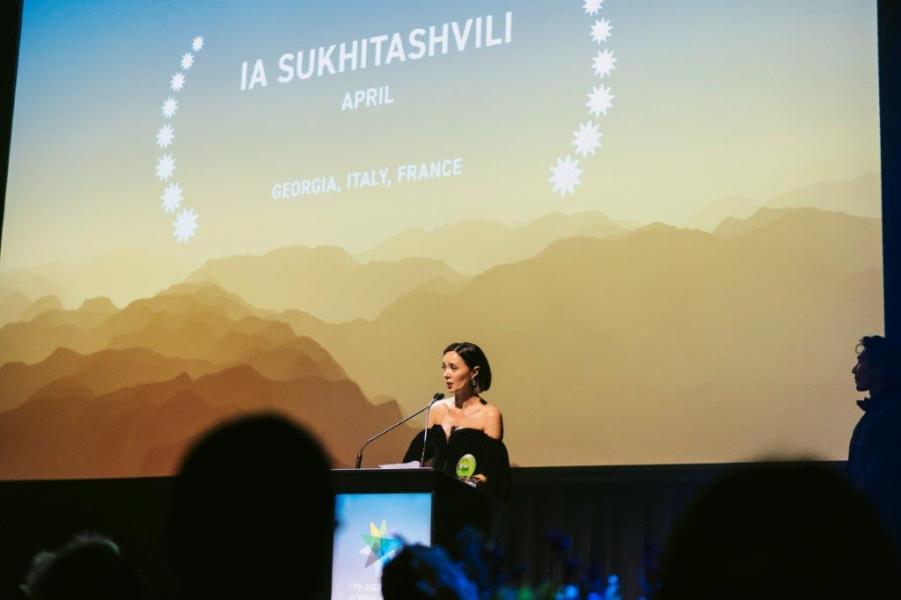 Ia Sukhitashvili for April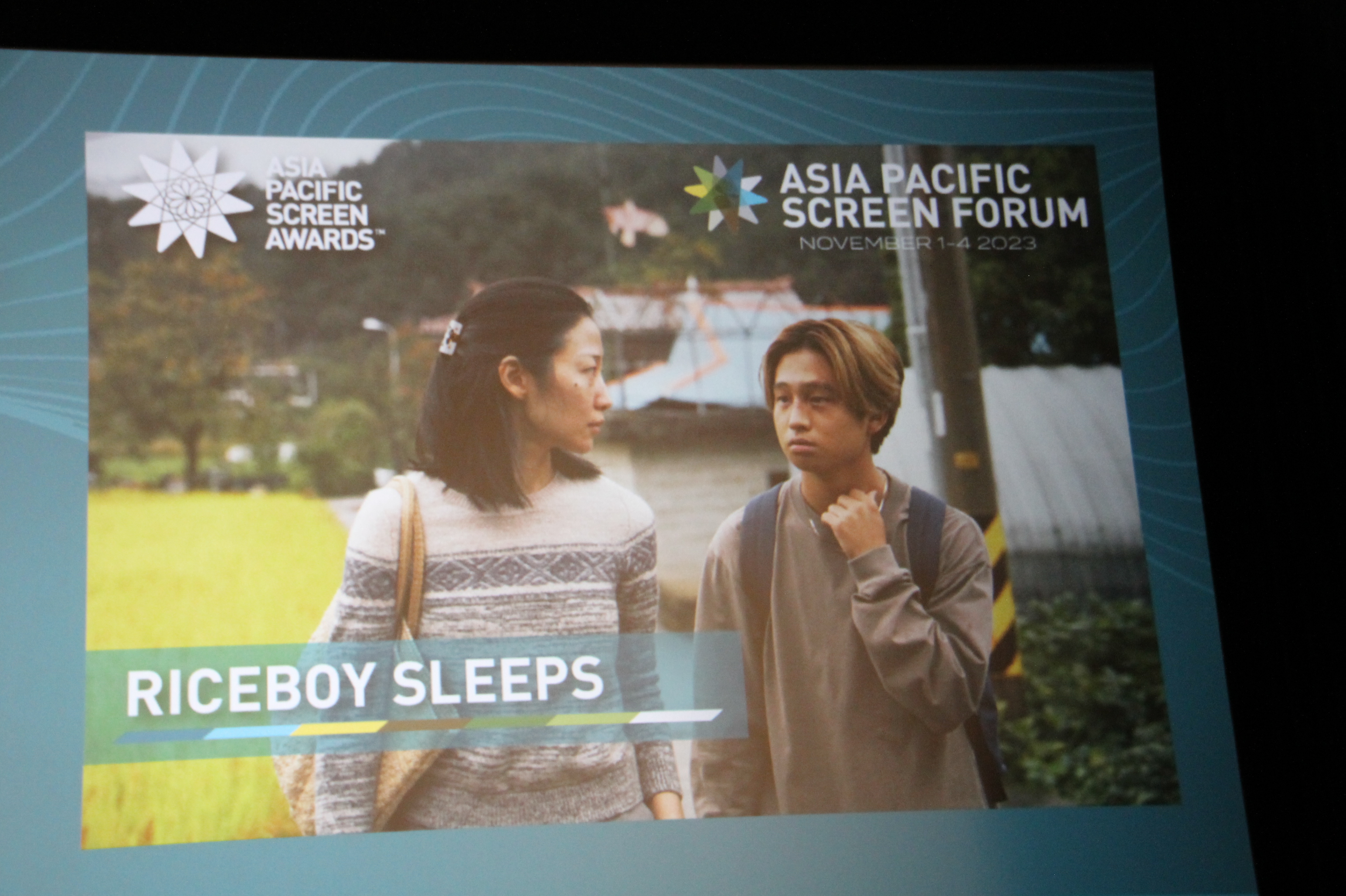


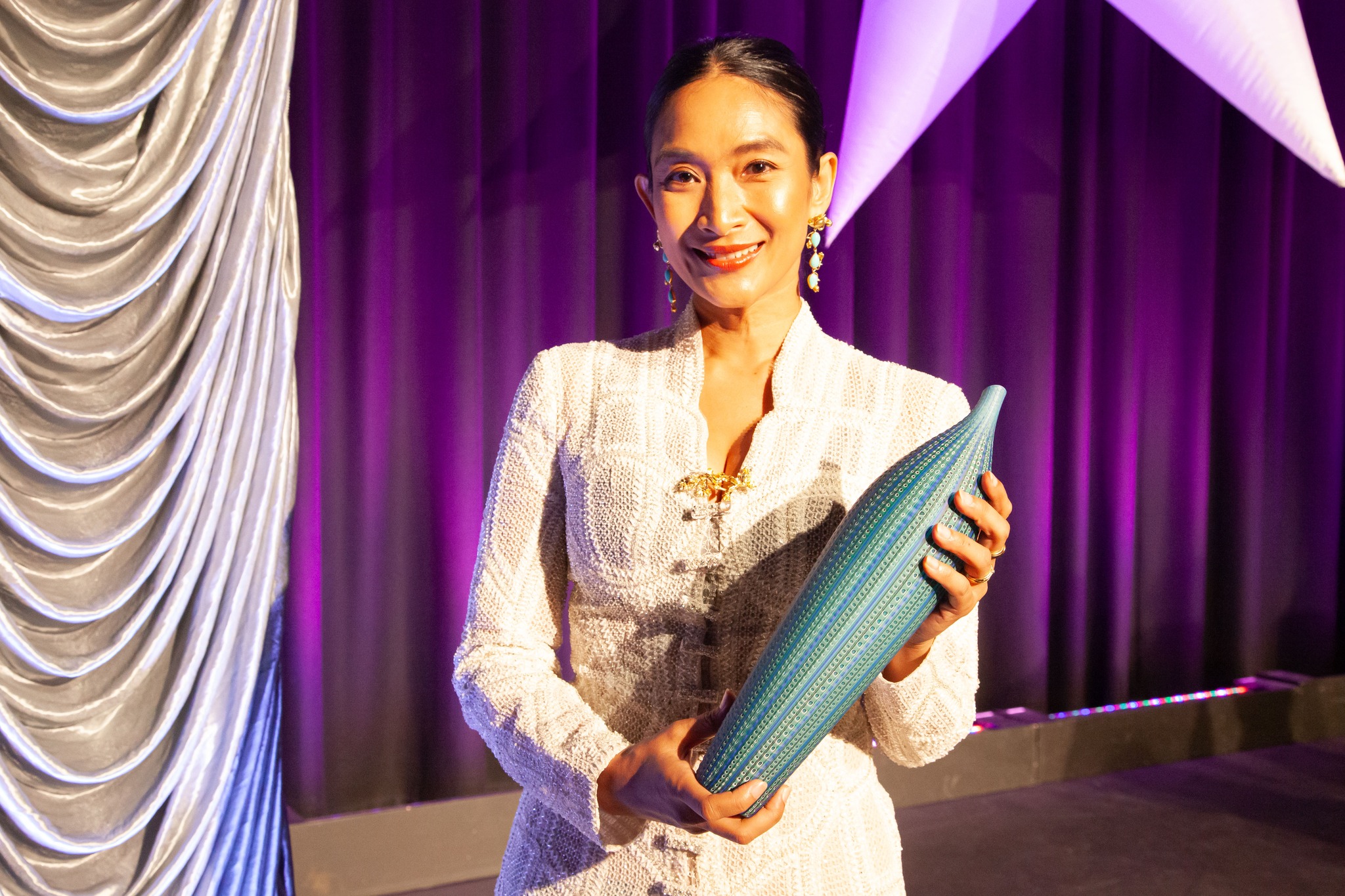
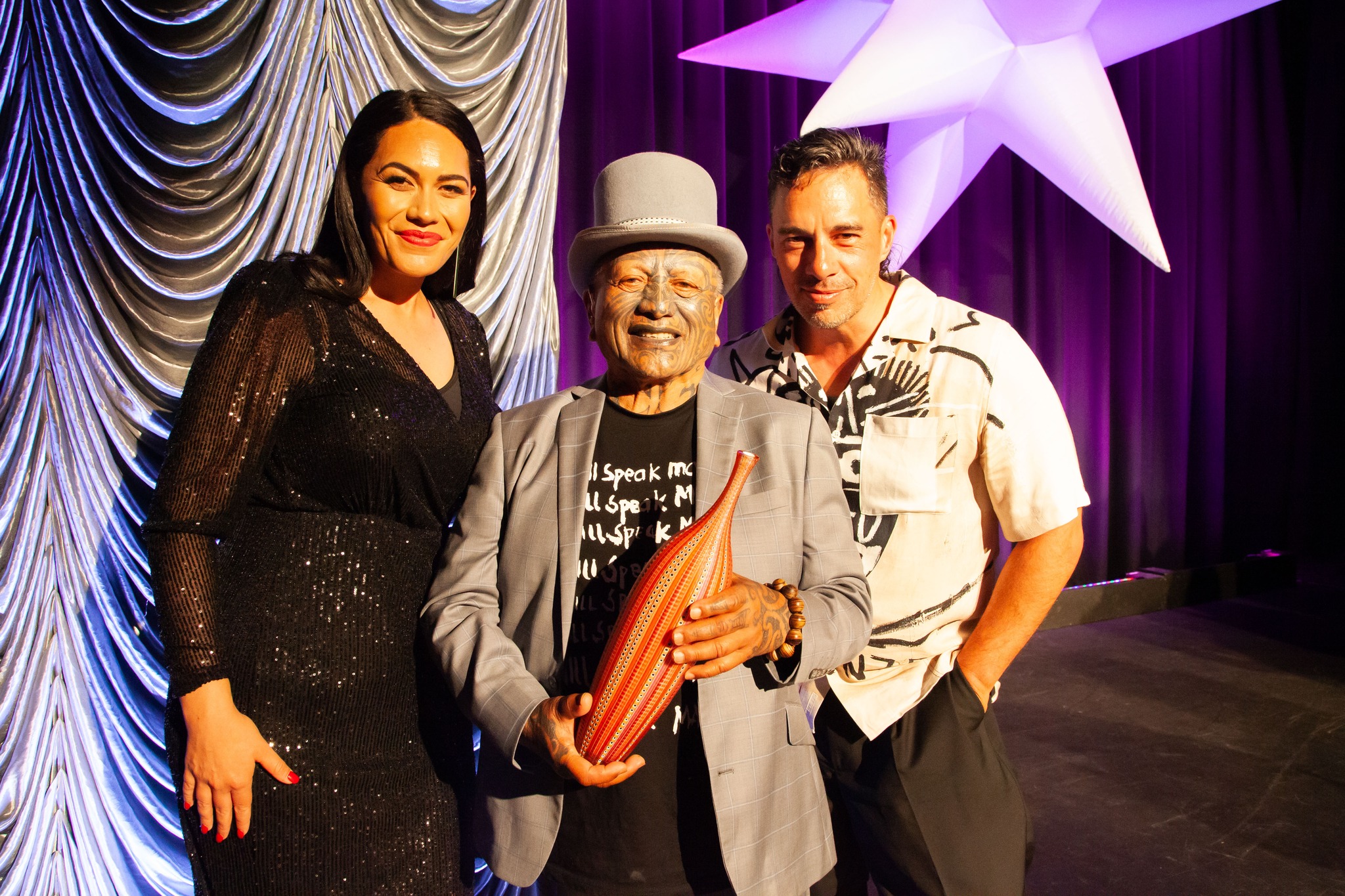


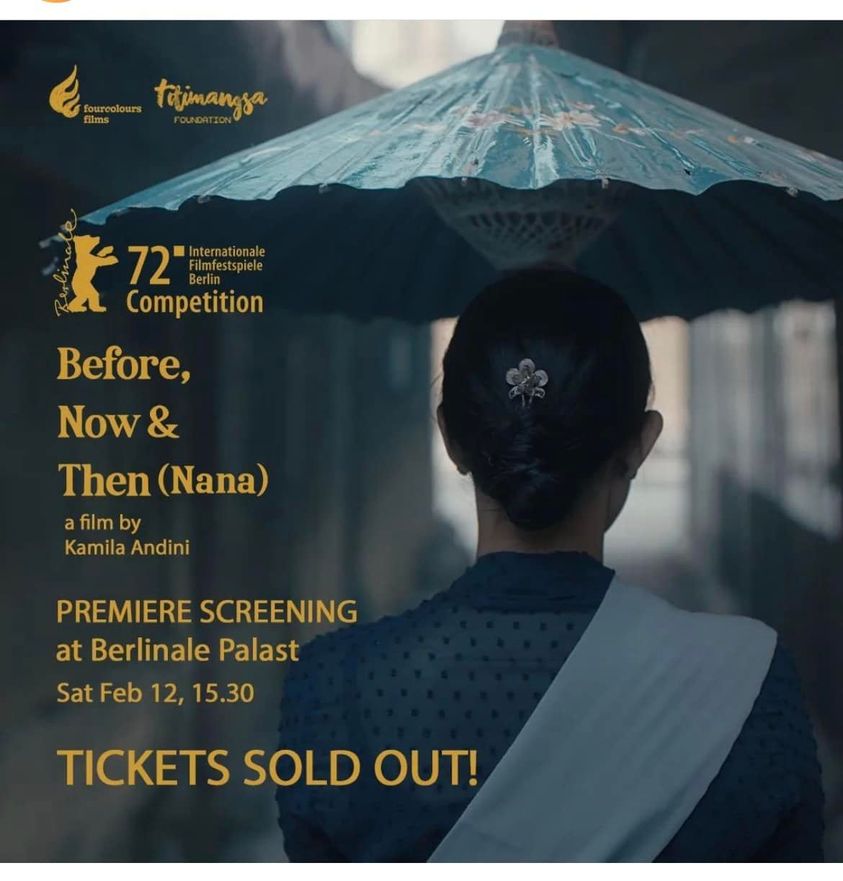

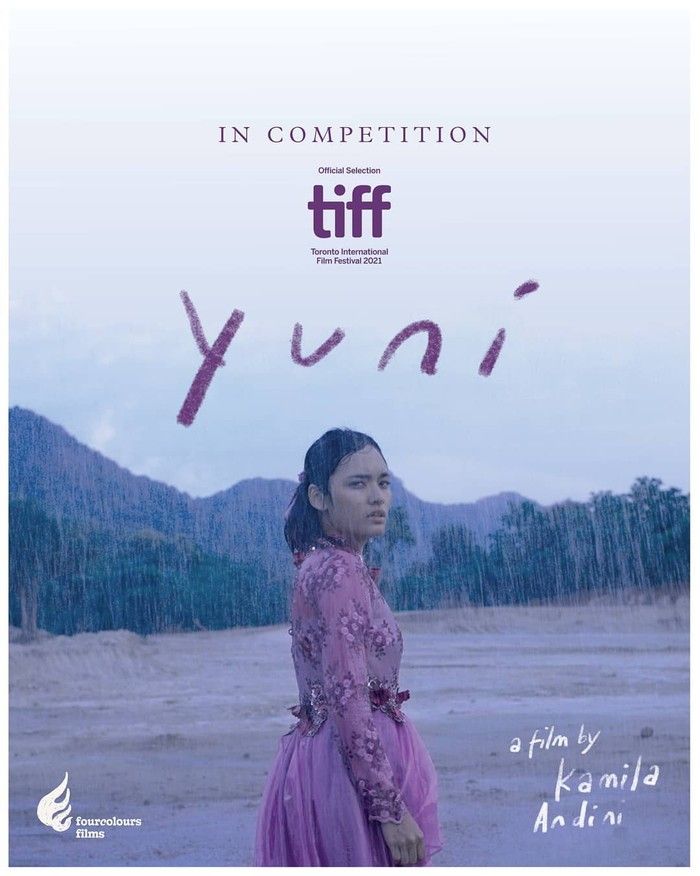
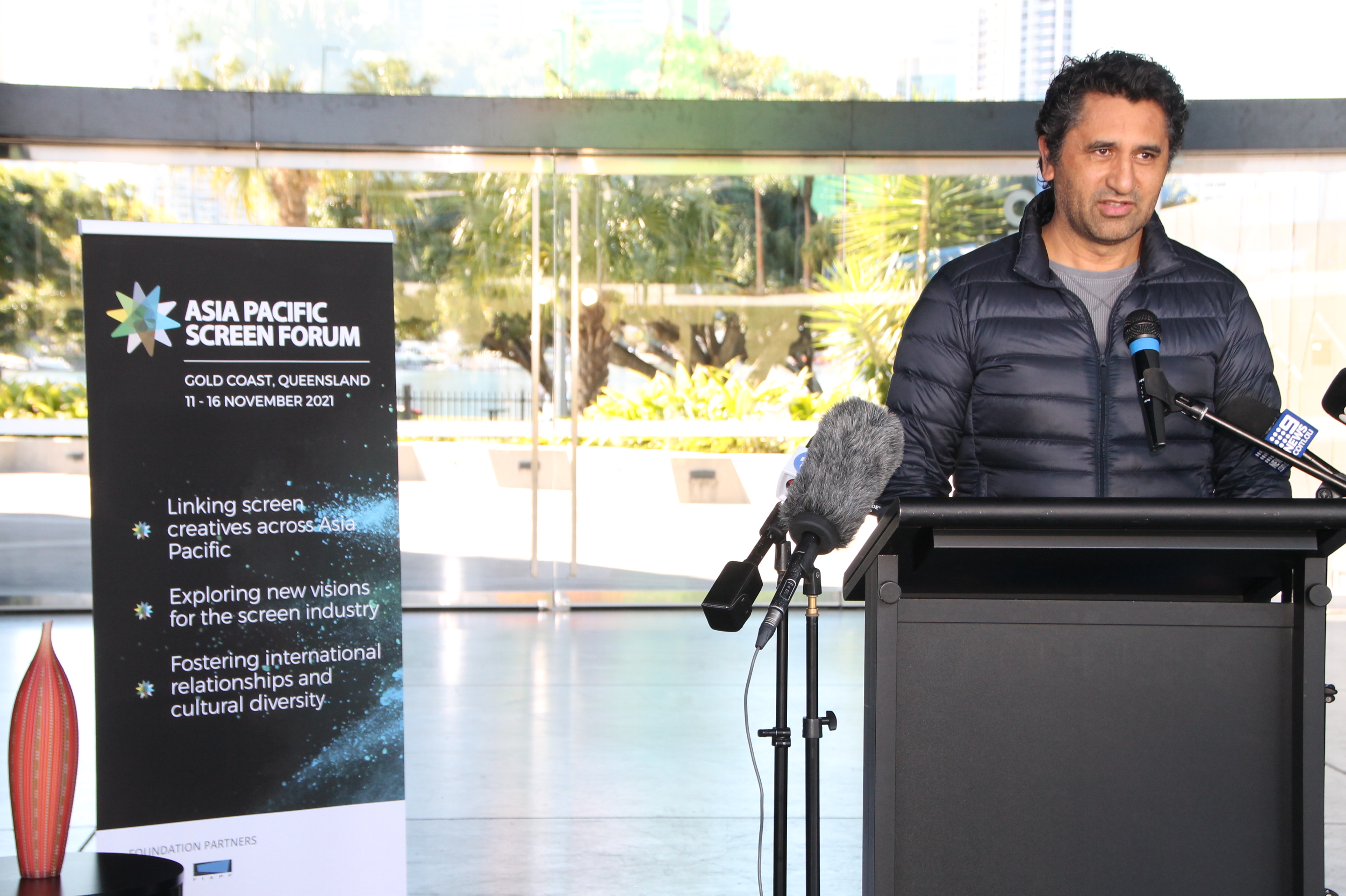
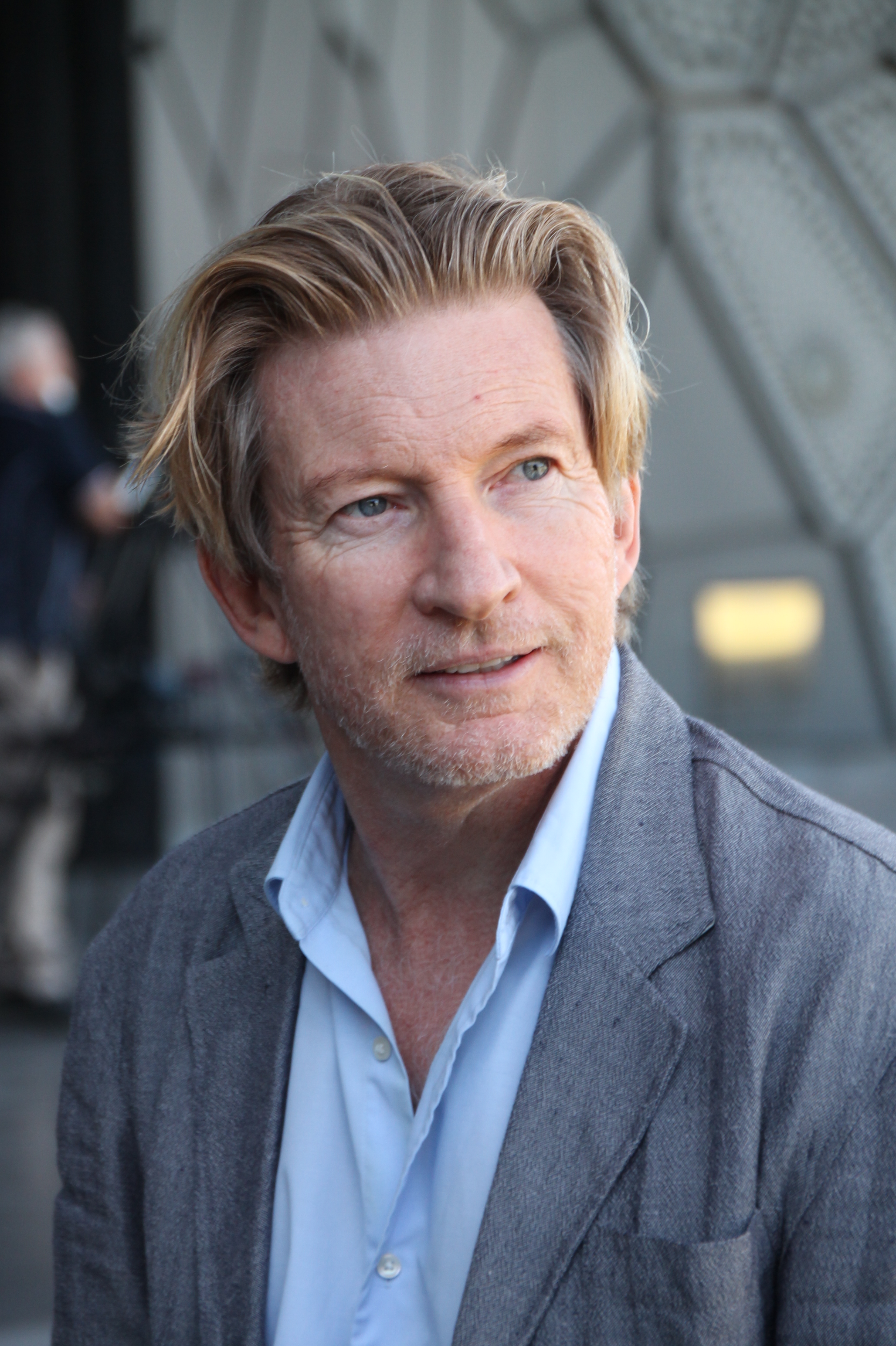
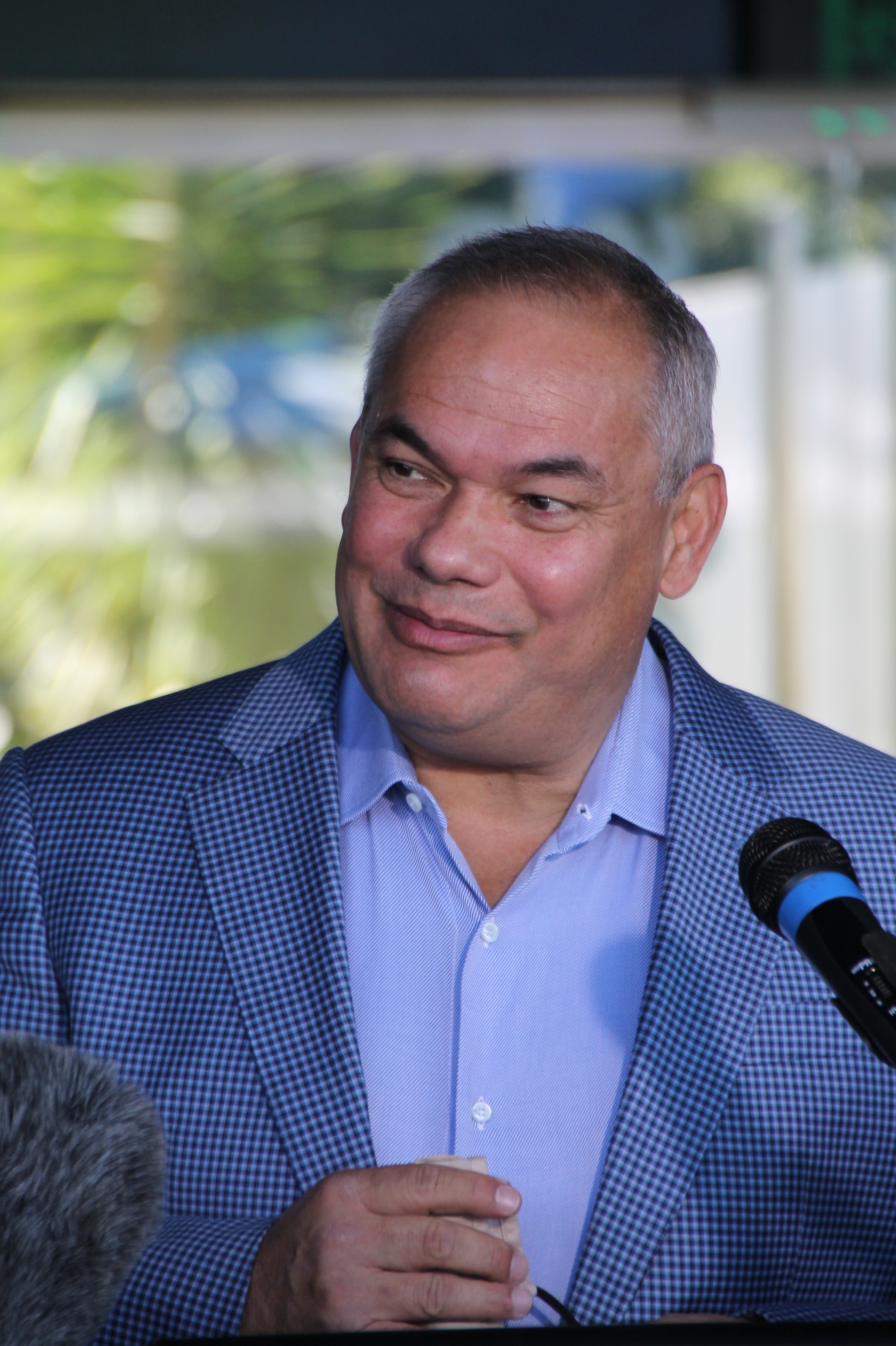
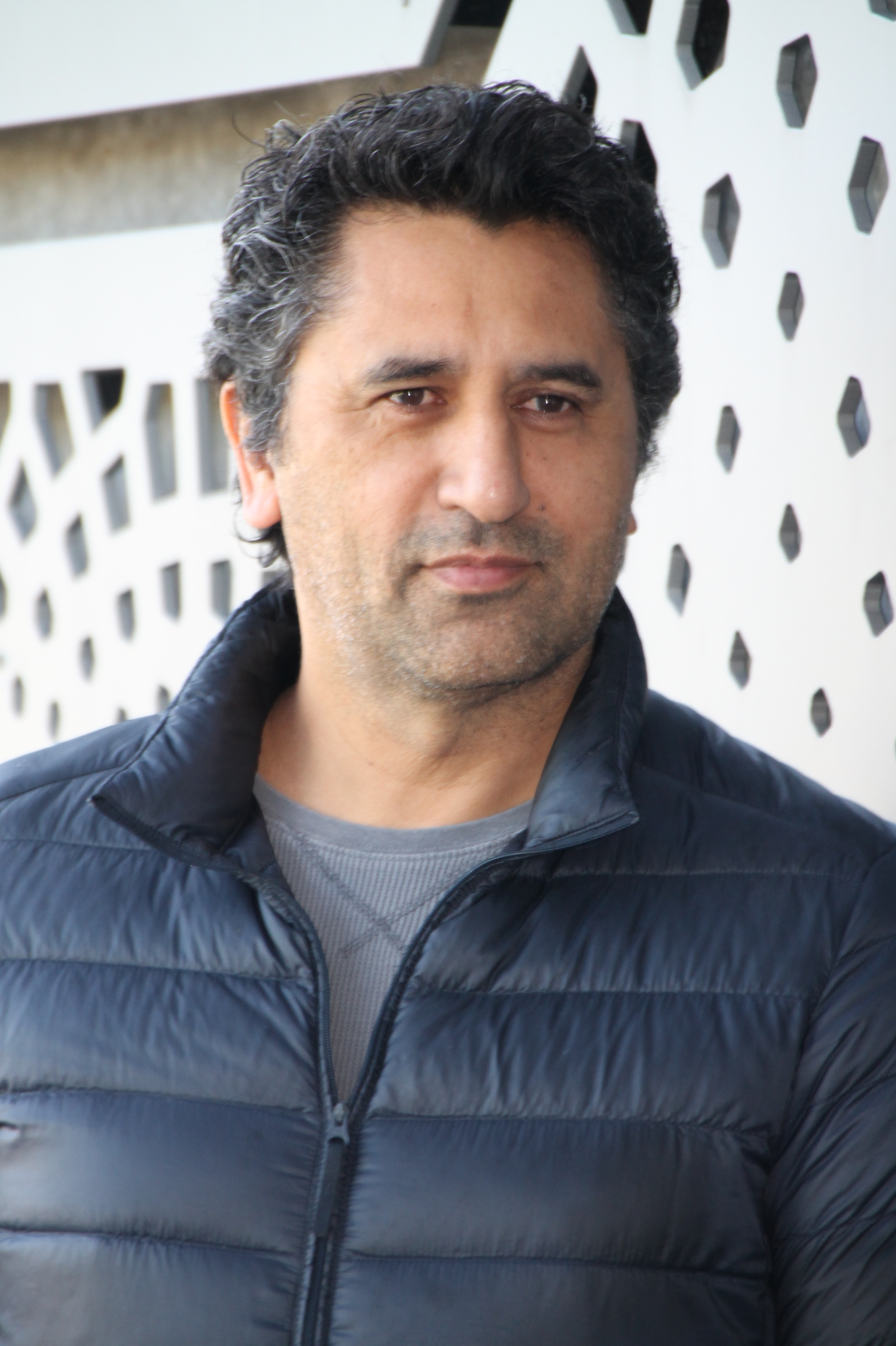
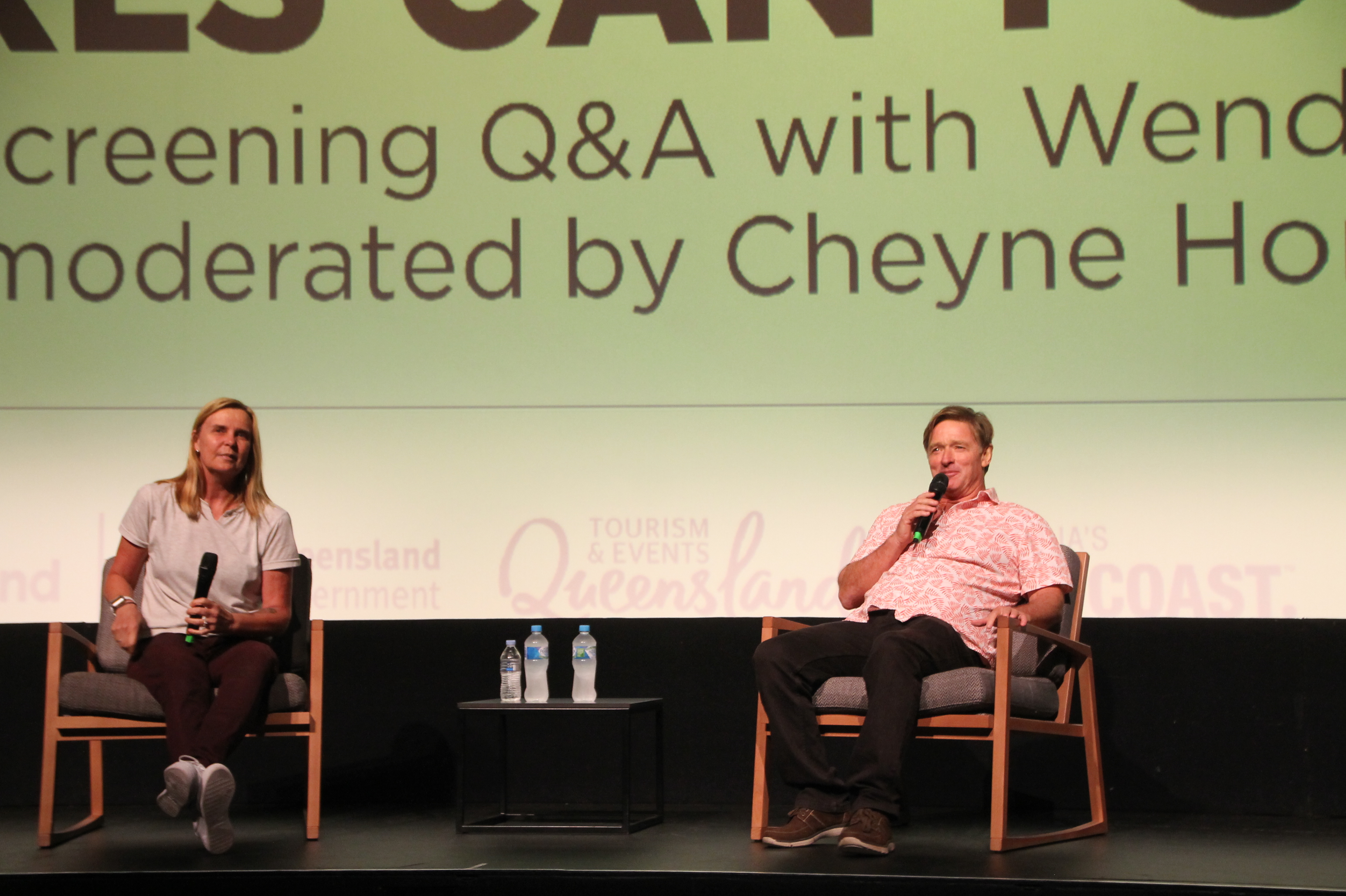
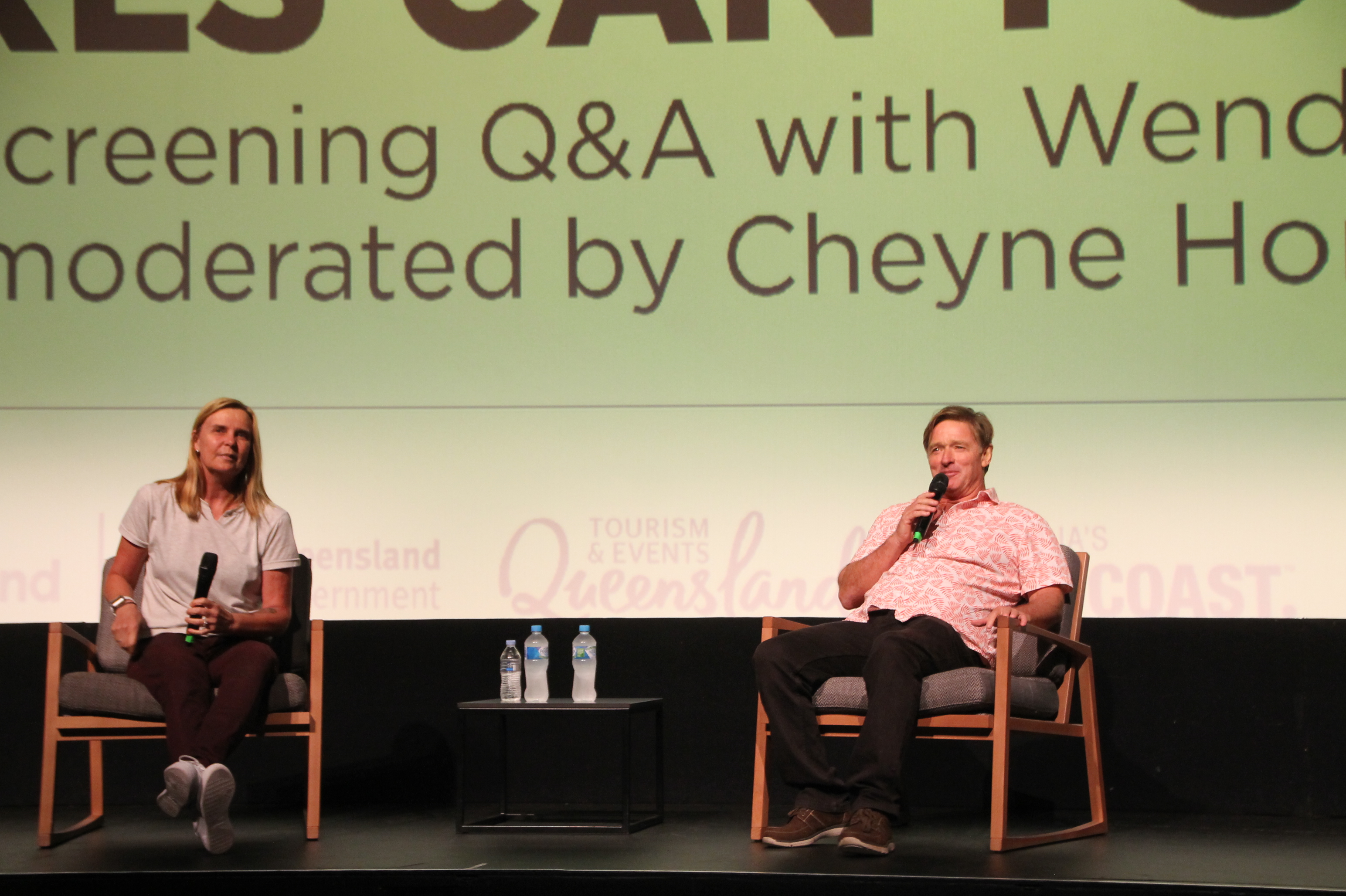

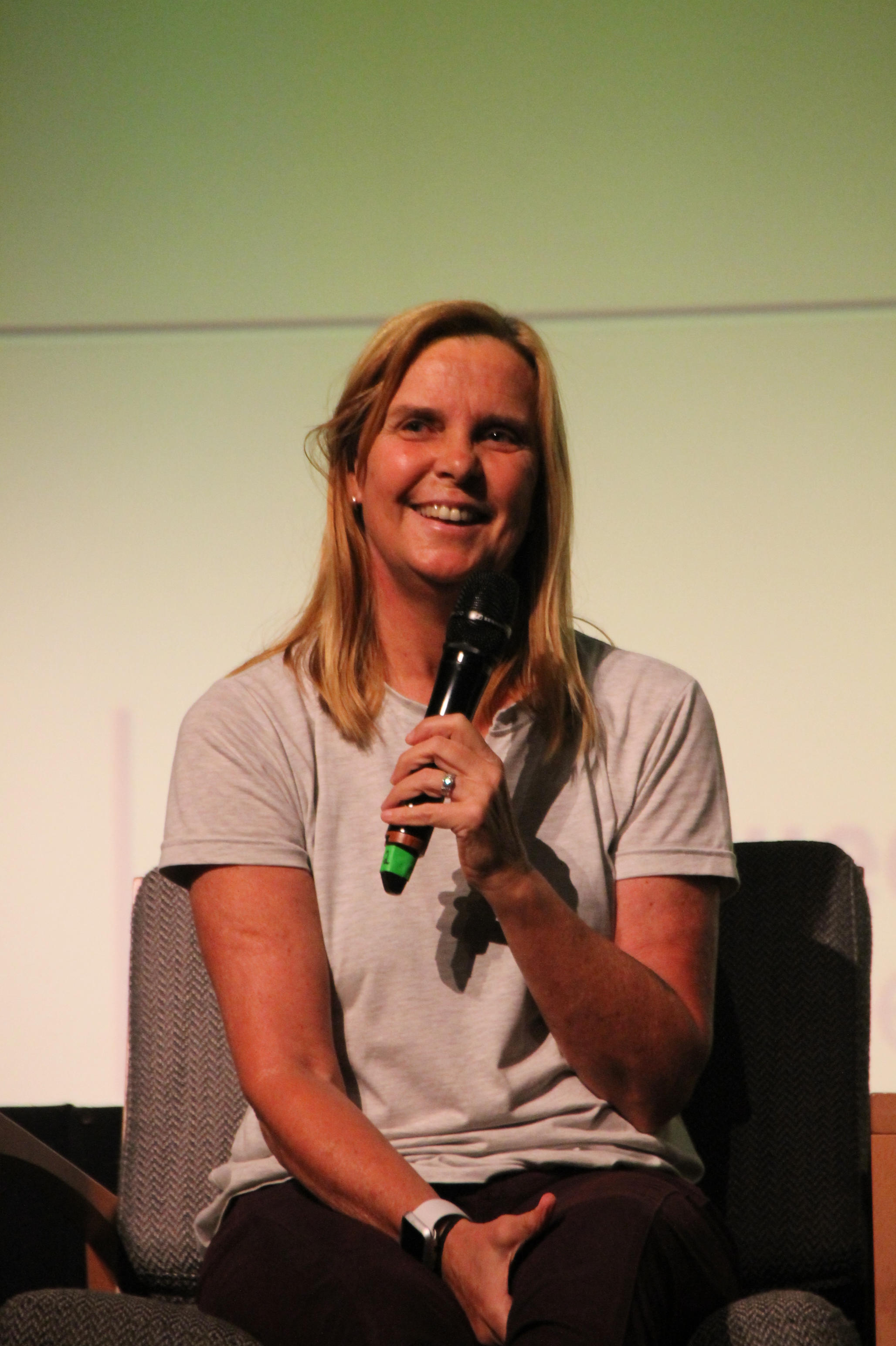
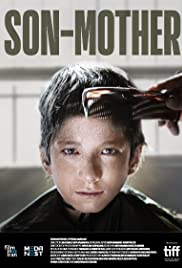
 “THE BEACH”(2020) produced and directed by Warwick Thornton (Australia)


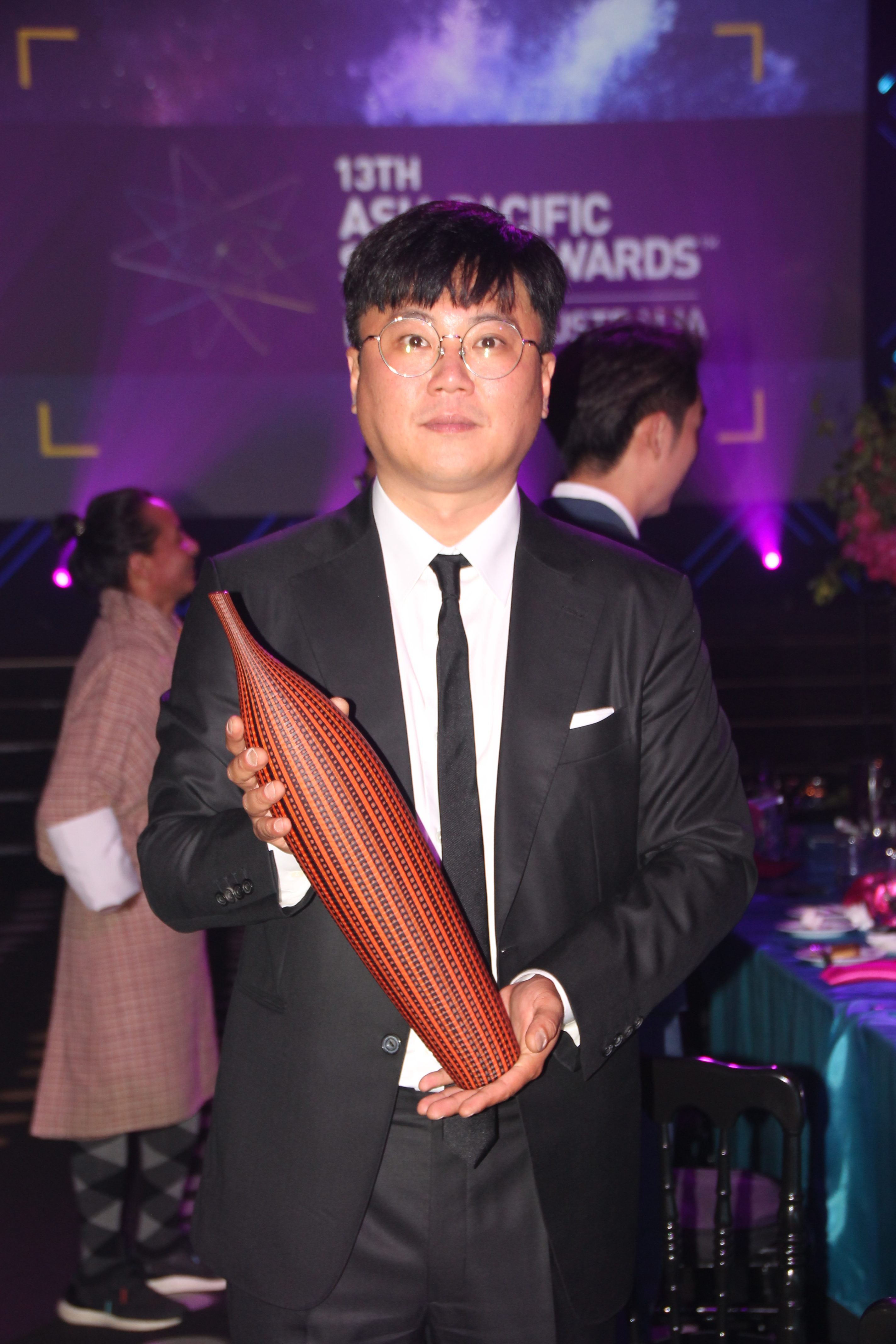
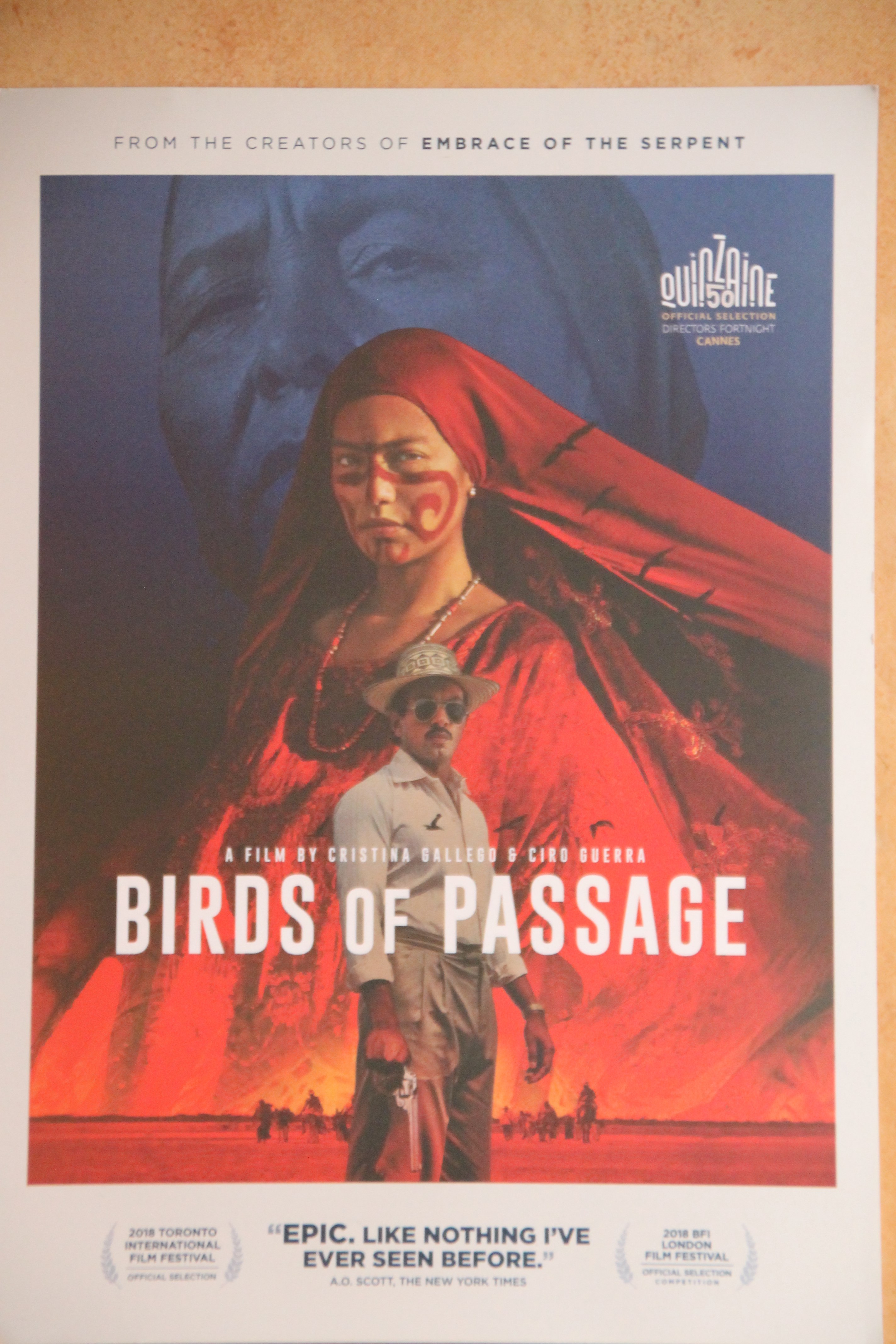
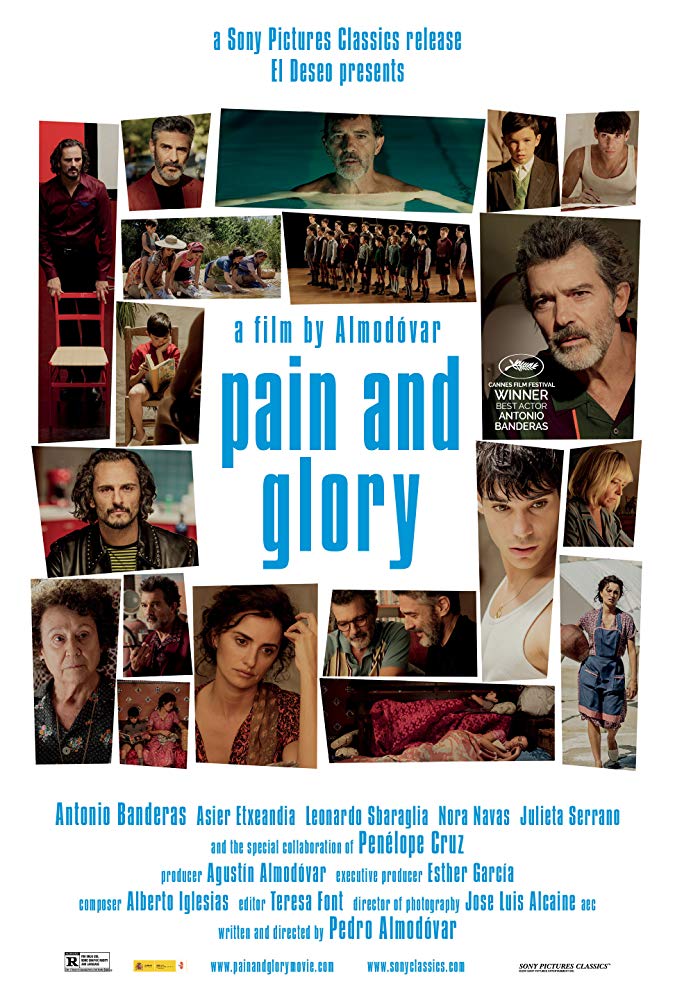




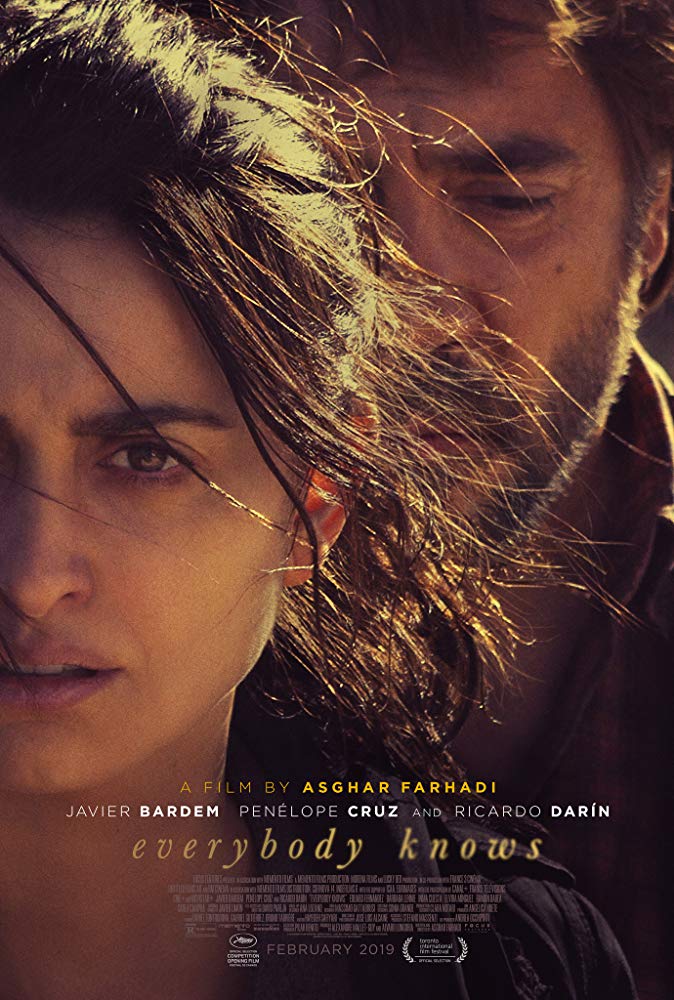
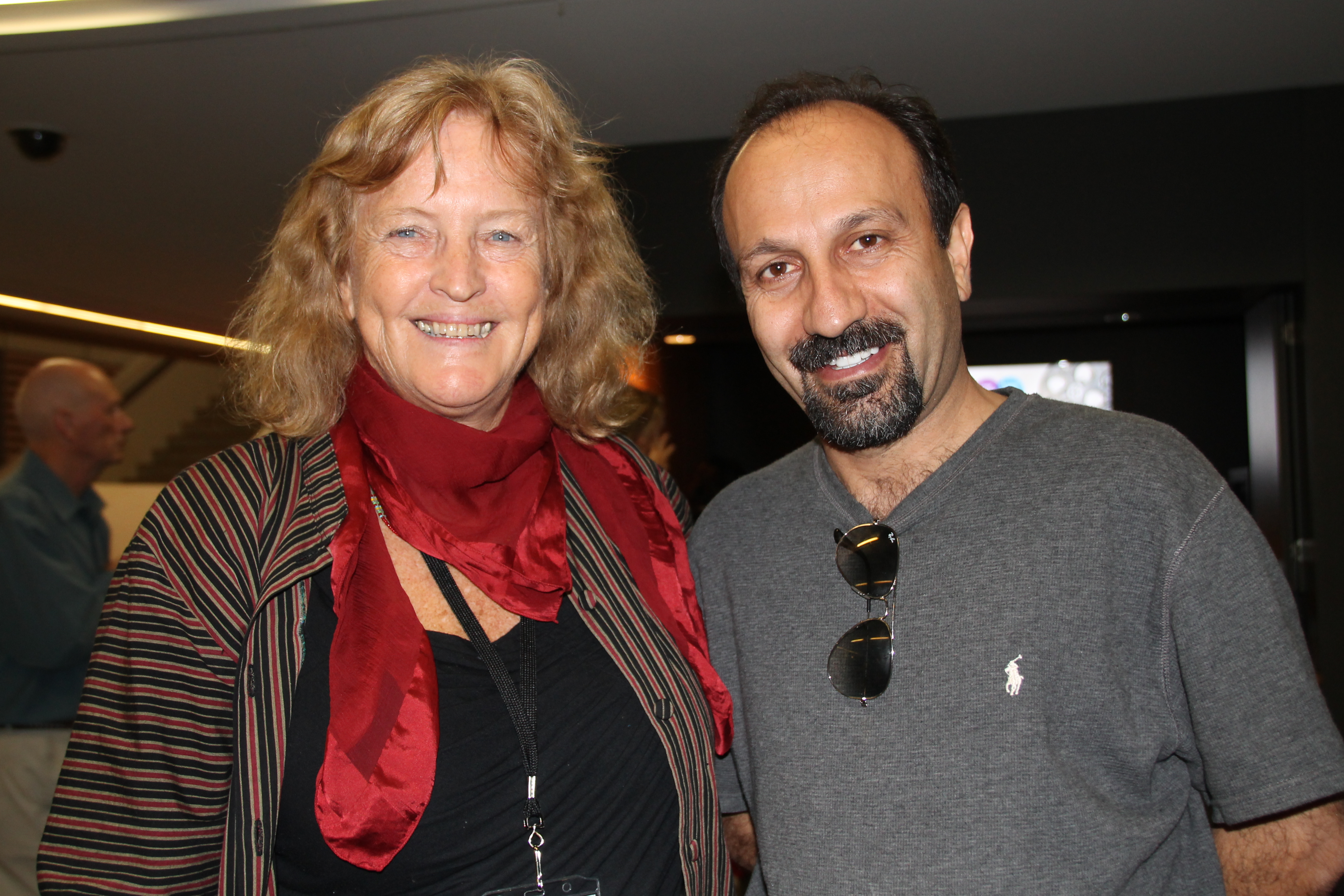

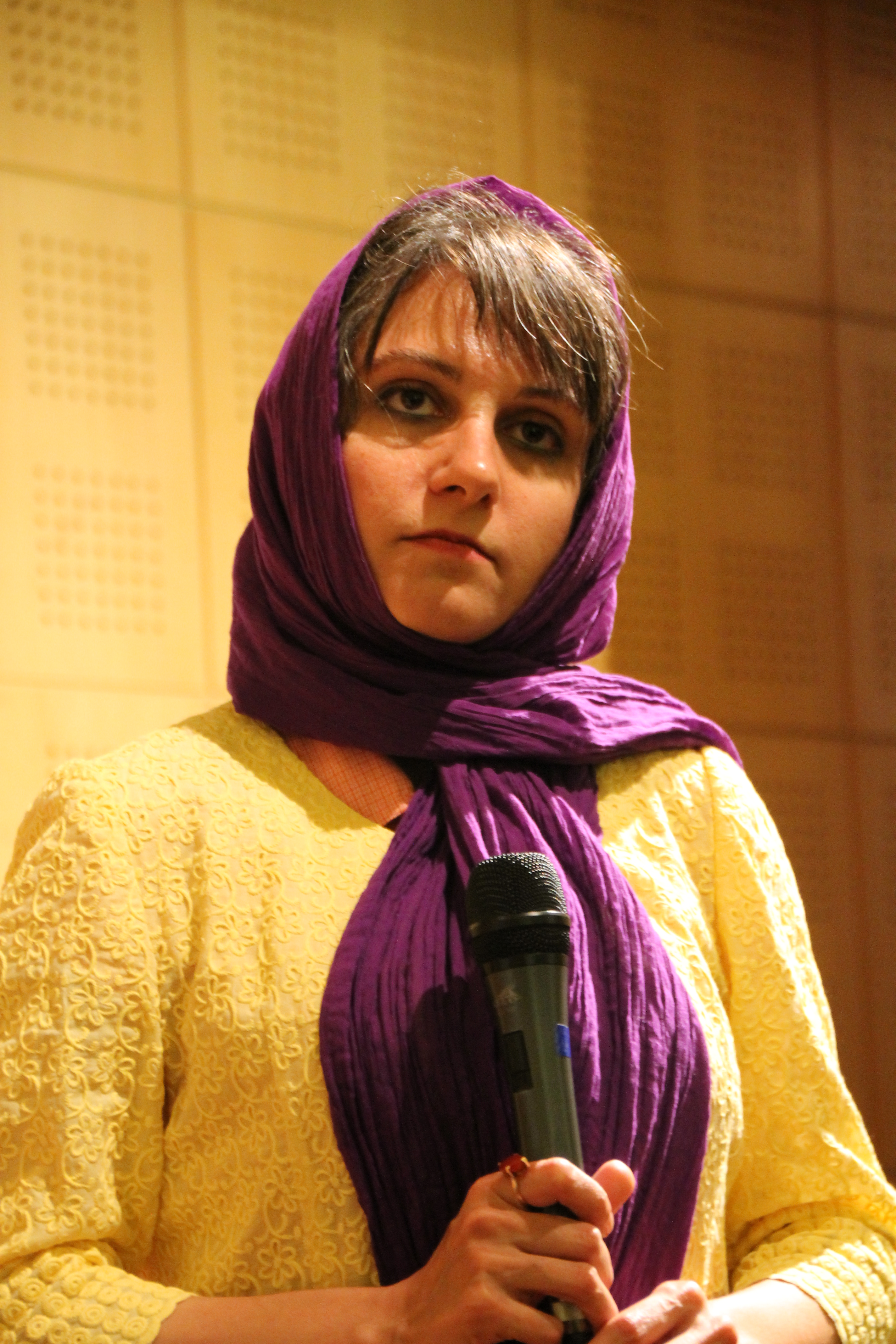




 cynephilia