
by Cynthia Webb — Gold Coast, QLD, Australia
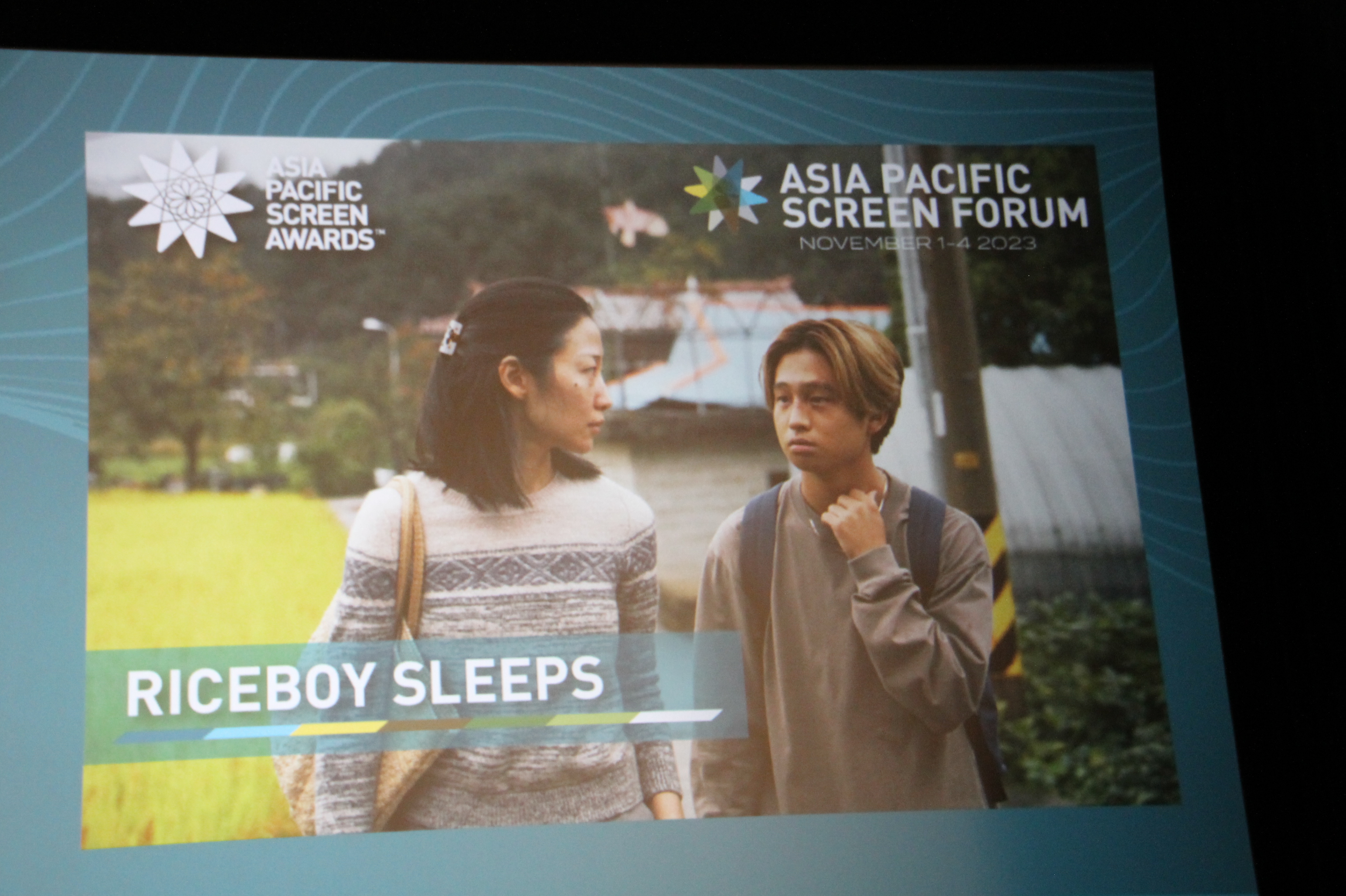
APSA has a reason for existence, and that is to provide a platform where film-makers from the nominal region which makes up one third of the world, and has within it, all three of the biggest film-making and television series distributing countries of contemporary times – India, South Korea, and Turkey. Yes, it is these three who have been supplying more cinema and television to the world, than the entire English speaking sector, or Europe for well over a decade. This is according to the research of Fatimah Bhutto, for her 2019 book, “New Kings of the World”.
Since the advent of massive change in the way people view their video entertainment (at home, on Streaming platforms, mainly) people are overcoming their dislike of subtitles and this has opened up the world of international film and television. This is absolutely GREAT!
However this was not the situation in 2007 when APSA began, to provide a competitive platform, so that the Asia Pacific films could go into competition in a high level awards event. They were mostly not able to get their films into the European Film festivals or competitions, nor into the Academy Awards, nor the BAFTAs. Strange the way we who live in the English speaking world, thought that we were “the main event”. No, not so.
Consequently, submissions flooded in to APSA from such places as Kazahkstan, Kyrgystan, Saudi Arabia, Bangladesh, Sri Langka, Indonesia, Vietnam, Thailand, Afghanistan, South Korea, Turkey, Iran, China, Turkey, India, Iran, Lebanon, Israel, Palestine – and more. It is a long list of places and some of which we had never before had the opportunity to see a film from. APSA’s territory is 60% of the earth’s population, half the world’s film output, and 4.5 billion people… 71 countries and areas, one-third of Planet Earth’s land masses. Now do you see why it matters?
A tragic thing I must now mention is that four countries who frequently submitted in the past to APSA, (an organisation aiming to unite and create friendship and understanding between cultures,) have not appeared in the nominations this year, because they have been at war with each other! You all know who I mean if you are not living in a cave or in a remote Asian monastery! This is heart-breaking to me and I think, to all of us involved in APSA who have previously had friendly relations with filmmakers from all four of these nations and hope to again.
Sometimes a journalist just has to write an “Opinion Piece” and all the great newspapers have a place for those as they are so effective. I had one published in The Jakarta Post once, not about cinema, but about matter of the Islamic face-covering in some countries but not others, and how covering the face also leads into a quagmire of misunderstanding. That piece was in response to a film about the issue by a previous APSA guest filmmaker, Nurman Hakim, whose film “Khalifah” was a religiously clever screenplay talking about what turned out to be a “hot-potato” subject. This director had a previous film submitted to APSA, and that is what brought it to my attention. When my piece was published, I saw the massive tirade of Indonesian readers’ responses under my Opinion Piece, on The Jakarta Post’s Website. Politics, Art and Religion went to war online! The paper closed down the option for readers’ remarks after a day, as it got a bit out of hand. I might just say for your information to help you understand why it was so controversial, is that covering the face entirely with only a narrow gap for the eyes, is NOT popular in Indonesia, and Muslim women who wish to wear a headscarf, cover their hair, but not their face. It’s a personal choice. Very few Indonesian women would wear the Saudi style face-covering niqab, because it has an association with terrorism in Indonesia. Some years ago the police shot a black-robed terrorist and underneath the niqab was a man with explosive belt.
Even in Saudi Arabia, the face covering niqab is no longer necessary. In my writing a lot of reasons, but non-religious ones, why it is not a good a thing, for “the human race” as a species considering that most of our person to person communication involves facial expression, including the smallest of expression and or difference. This story also demonstrates the power of the cinema to talk about something controversial, but in a nuanced way.
Back to APSA now – I am going to commit myself again, and say that I personally do not agree with ever having politics deny us access to art, so I did not feel it was right to refuse the Russian Federation’s previously welcome submissions to APSA in 2022. That was a political decision, not an artistic one.
Here are my reasons for saying so, and it is made topical again by the current situation with Palestine/Israel, two nations whose films we have previously welcomed with open arms to APSA.
Art holds up a mirror to the world, and survives into the future, to tell the people as yet unborn, about what happened before their time, in the hope that we humans might learn from this, wake up one day and rise above all the deception and lies of politics. All the people of a country are never responsible for the actions of their politicians, even if they did vote for them. Things are much more complex than that.
We have seen that making films under censorship and repression in Iran, in contemporary times, has led to subtlety and brilliance in film making, where the brave Iranians found ways to speak their opinion, and tell the world what is happening in their country, and even to slip it past the censors who read their screenplays before giving permission to go ahead and make the films. This sub text trick was used by filmmakers in Eastern Europe during the Soviet Era too, because political or religious censors are usually not as smart as the filmmakers at knowing how to read and understand a screenplay. Eastern European comedies often told us more about their governments than dramas, as did Charlie Chaplin with The Great Dictator!
Because of my close connection with Indonesia over 30 years, I saw for myself and wrote in The Jakarta Post about the artists of Indonesia, including filmmakers, who were courageous enough to continue holding up that mirror to the society they lived in, via the various arts, and did so at risk of being killed or jailed in the Suharto era. The 2009 documentary film, “Kantata Takwa” told the story of the immensely popular music group of the same name and their courage but also, their terror, in taking a stand against the Government.
The artists of Indonesia continued to use socio-political themes in the years after the Reformasi, (Revolution), of May 1998. They were musicians, painters, film-makers, writers, poets, many of whom became my friends and still are. There were some years of shifting sands and dangerous times between Dictatorship and Democracy in Indonesia. These Indonesian artists showed me that ART is sometimes the only thing left that is still telling the truth.
Back to today: The risk to APSA’s international image would have been clear, if their nominations council had chosen films from Palestine and Israel this year, as has happened in past years. I do not know if that decision cropped up or not. However I have been thinking that to be consistent with their anti-Russian action in 2021/2022, they’d have been in deep trouble trying to choose a side in 2023, having always been pro-Palestine even up until just last year, and also having welcomed and awarded Israeli films too. Or would they again, follow the Australian government, who followed the USA’s stated views?
I see APSA as a friend of the art form of cinema, not to be involved in taking sides in any conflict in other peoples’ countries. History has shown us, without doubt that many world conflicts are not what the public is told, and that there have been lies told by governments to justify going into wars on the basis of those lies.
I believe that it is not APSA’s task to concern itself with anything but the matter of the quality of Asia-Pacific countries’ cinema, and leave their politics to them. APSA exists to identify and award the best films and appreciate their cultural contribution to peace and understanding, not to concern itself when that latter aspect goes horribly wrong somewhere. As much as I hate to say so, it is a volatile region and this issue is possibly going to be cropping up again in the future. APSA might again find itself stuck between its own stated raison d’etre and politics.
Last year’s Best Youth Film, was Darin J. Sallam’s “Farha”. Her film tells the story of a teenage girl’s experience of “the Nakba/catastrophe” for the Palestinians in 1948, when the Zionists/Israelis entered their lands, villages, streets, and homes and their lives, and not without violence either. This issue is the very issue at the top of world headlines today.
This is how you can get stuck in that deadly quicksand of entangling political opinions with access to Art. Art comes from the hearts of the people – individuals and often their collaborators and friends. The film “Farha” can be found to view now, on Netflix. It is highly recommended by APSA and by me, at any time, but especially right now. It is a first feature film from a young woman director, Darin J. Sallam, who is of Palestinian heritage but lives in Jordan. She has told me that 60% of the population living in Jordan now are of Palestinian heritage, having had to leave their homeland for a better life, and this figure does not include the current wave of refugees, being told to get out, although there is no place to go.
For me, thinking about APSA in 2023 puts a focus on two major issues this year.
The other issue is that of the rapid revolution in the way people are viewing films and television, the shift from the cinemas to home viewing, on streaming web sites. This provides great potential for films from the Asia-Pacific region. Many of these Asia Pacific region films which have in the past been entered into APSA and even won major awards, have now ended up on Streaming services, such as Netflix, Amazon-Prime, Apple-tv, Mubi and others.
These streaming platforms have provided what APSA originally tried to help with! APSA at first wanted to provide the awards and recognition, to help the Asia Pacific films get distribution, in the old system which also used Film Festivals, to try to get to the attention of the world’s major film distributors. Before 2007, films of such then remote (to The West) countries were almost invisible to the wider world, except for a very small number of the region’s directors who had managed to make the break through, via the European film festivals, or the “Oscars” category of Best International Film. Such people as Jafar Panahi, Nuri Bilge Ceylan, Lee Chang Dong, even Australia’s own Warwick Thornton.
It’s interesting, the way my two issues link together, because films can be about “political matters”, but they are presented to us through an art-form. It takes an artist to make a film, (or a painting, or write a novel etc). Think of Francisco Goya, whose drawing series told the horrors of the wars during his time… or Picasso’s “Guernica” which is widely recognizable to the whole world, including its meaning.
How can we mere mortals be expected to understand this world and its politics, except by using the world of Art, which speaks so clearly to the masses and does not lie. OK, yes, it CAN be used to lie. There have been notorious incidences of using art to create propaganda and lies. Hitler’s regime hired Leni Reifenstahl to film the Berlin Olympics in the Pre WW2 era. There’s an example in Indonesia, where Suharto’s government hired a film director to create a film telling about the infamous night of 30th September 1965, the night of the Military Coup that brought him to power – except that it was a total fabrication of lies. It was compulsorily screened to schools and to the public on large outdoor screens, on the annual anniversary of 30 September for almost 40 years, to brainwash the population. I saw it myself on such an open air screen in Yogyakarta, Java, one year with a crowd of the local people.
Interesting and relevant information following: It was a film which was submitted to APSA, by Joshua Oppenheimer, “The Act of Killing”, which finally destroyed the Indonesian peoples’ deceitfully implanted concept of what had happened that dark night. Of course the Oppenheimer film was banned in Indonesia, but this was the time of the internet, so the producers made the film available for free download, in Indonesia only. Vast numbers of the huge Indonesian population watched it, and this created an opening for the long established and highly respected Indonesian magazine TEMPO to publish an entire issue telling the real story! I still remember reading it in a café in Yogyakarta, amazed that at last the time had come, when truths hidden for about 38 years were in the magazine in front of me, and by this previously unthinkable act of daring. Here is an example of the power of cinema, which in this case actually changed history of a nation by destroying a web of lies created by Suharto’s New Order government, and giving much more strength to Indonesia’s relatively new (at the time) Democracy. Oppenheimer’s second instalment of his two part work, “The Look of Silence” was also submitted to APSA, and both films were awarded at APSA and around the world.
So in today’s cinematically democratic era, the streaming services have now provided a “short-cut” for the films of the Asia-Pacific. A lot of these films can find an audience via Netflix, or Amazon-Prime which covers so many countries and languages. This is great news for the film-makers that only APSA has recognized up until now, by their coveted awards. Also it is great news for many as yet unknown directors who will submit their work to APSA in future, because APSA serves as an important step up on the ladder used by an as yet not internationally known director.
One of APSA’s most frequently awarded young directors who has three times received the APSA Best Youth Feature Film award, is now the talk of all Indonesia, and the Indonesian diaspora. She and her producer/director husband Ifa Isfansyah, have just launched a new five episode series on Netflix, “Gadis Kretek”/Cigarette Girl. Here is a demonstration of how APSA has played a part in the career of a talented young woman, Kamila Andini, to help her gain an international reputation.
APSA 2023 publically screened to the public, five of the nominated films, and for attendees at APSA’s Forum Events. All of the films were of a high standard, and this year one of them just took my breath away. Ryusuke Hamaguchi, of Japan, has been entering his work into APSA since 2016. Last year’s “Drive My Car” won the top award at APSA, as well as awards other international festivals in Europe and Asia. Now this year’s entry from him, “Evil Does Not Exist” has surpassed all his previous work and for me it’s a masterpiece.
While Hollywood sinks into a low standard and lack of variety of movies, (now known as “content” – very insulting terminology), international cinema is replacing Hollywood’s frequently repetitive, formulaic film output with works of film art that if made in Hollywood, would be feted, and awarded and raved about. The Asia Pacific region is creating a large proportion of them and they are what used to be called “Indie films”. I must add that there are exceptions, when a film of quality emerges from Hollywood, thanks to Martin Scorsese, or Christopher Nolan, or Greta Gerwig. Nolan has recently put an end to his long connection with Warner Bros Studio, and even Scorsese is losing hope, because he has recently made a widely reported speech about “theme park movies” and saying he fears that real cinema according to his definition, might be dying.
This profits-driven lack of originality or variety from Hollywood passes the responsibility to the Indie Filmmakers. Now it is up to them, to save the situation, and they will. They will become the new leaders, to fix a situation where in a list of the 50 top grossing films made over the last ten years, only three of them were films of original source – not a prequel, sequel, Marvel film, or super hero thing. (I think it was a list from a couple of years ago, or surely Barbie and Oppenheimer would have been in there!) The three films were “Zootopia”, “The Secret Life of Pets”, and for the grownups “Bohemian Rhapsody”. One film for the grown-ups in such a list! However even if that list is a couple of years out of date, refers to American box office, and came from a discussion on Youtube, this is a dire situation.
So to dear Martin Scorsese, I would like to tell him, (but it’s unlikely he will read this), that the films of the Asia Pacific can definitely help redeem the situation. There is so much talent, and passion out there and heart out there. The film makers of the Asia Pacific come from a totally different world than Martin Scorsese, who is an American true lover of the art of Cinema, but is of its precious past. The Indie film-makers come from worlds that are just opening up to the possibilities of the cinema, whereas his country, the USA, is in let’s just say a whole different phase of its film-making history. What was known and thought of as Hollywood the source of great cinema, has succumbed to the corruption of the profit motive. The Hollywood which created the definition in our minds, was long ago, in the 1970s, sold off, when television became such a threat, and was purchased by corporations, e.g. when Columbia was bought by SONY corporation. In the last 40 years there have been multiple sales, mergers and changes of hands. If you look up the many changes of hands of just Warner Bros, you’ll be aghast! They are money machines now, not what we think of when we say ‘Film Studios’. There are few, if any people there in today’s Hollywood, who still feel a true love for the art of cinema as did dear old Jack L. Warner, one of the four Warner Bros. He was ‘a tough cookie’ but he DID love making movies and his studio created a lot of good films for the cinephiles of the world. I bring him up, I suppose because I once worked for Warner Bros, at WB Movie World Theme Park, at Gold Coast, 1991 until 1998. It was Warner Bros Studio, Hollywood, that made a lot of superb Film Noir, Gangster Films, and gave Australia’s Errol Flynn a chance, which he grabbed with both hands and became a legend.
All in all, we need to view the story of Cinema from a “big picture” perspective because all things here on earth are always changing, including the precious world of the cinema throughout its history since 1895 and even more rapid and revolutionary change has come to our consumption of cinema in the contemporary era. Twenty-first century technology has speeded the process up immensely of course.
BUT – APSA is positioned right in the crucial place, to identify, assist, and award the up and coming film-makers of the Asia Pacific who are showing us films such as Ryusuke Hamaguchi’s “Evil Does Not Exist”.
May APSA “live long and prosper” (with apologies to STAR TREK’s Spock and his Vulcan culture)… because APSA is NOT narrow-minded, nor is it trying to make a profit. APSA is not looking at Hollywood, or Europe, but has a wider field of vision.
APSA’s focus region is far bigger and more diverse than all of the others. It is the region of our planet that is coming into its own, dare I mention the nasty word, ‘politically’, in the twenty-first century and so it is the region we need to hear from. It has been ‘coming into its own’ cinematically for well over a decade. We need to listen carefully, take notice of, and especially pay attention to its cinema. Cinema speaks with more humanity, eloquence, understanding and truth than the social media platforms, newspapers and government press releases we are drowning in each day.
copyright November 2023 – Cynthia Webb


 cynephilia